The Magic of Untranslatable Words

I’ve always believed that written or spoken words, with their ability to communicate our thoughts, wishes, discoveries, joys, and sorrows — sometimes across time and space — carry with them a bit of magic. On the printed page, whispered into a waiting ear, or shouted from the rooftops, language forms the bedrock upon which society and culture are built. 

I’m particularly captivated by words from other languages that cannot be easily translated into English. These often convey ideas and situations we’re all familiar with, but for some reason, when it came to creating English words to describe them, they never quite made the cut. 

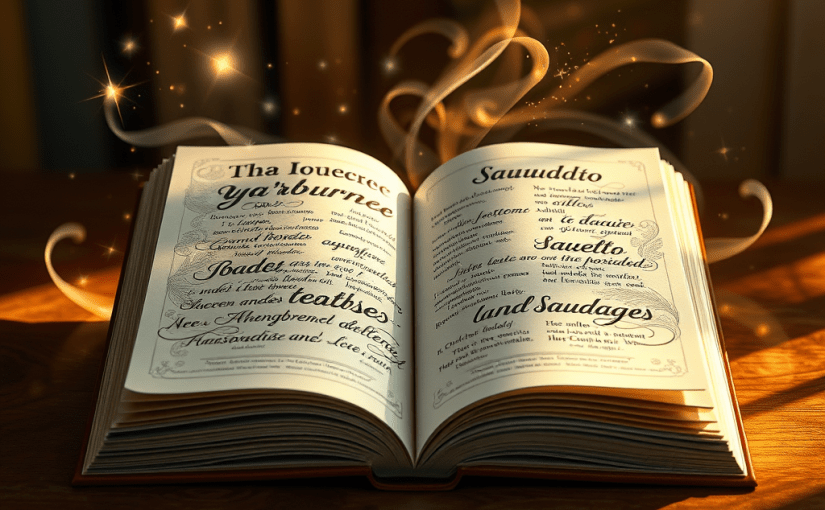
For example, ya’arburnee, an Arabic word, expresses the hope that you will die before someone you love because you wouldn’t be able to bear living without them. Literally, it means “may you bury me.” The Japanese have boketto, which describes the act of staring blankly into the distance. From Yiddish there is luftmensch, which refers to someone who is not successful in life or business due to his or her unrealistic ideas and goals. The French have voisinages, a word that refers to the relationships among or between neighbors. And in Brazilian Portuguese, there’s cafuné, a word that describes the motion one makes when running their fingers through a lover’s hair. (Leave it to the Brazilians to require a word just for this.)

Perhaps one of my favorite, and I think one of the most beautiful “untranslatable” words, is saudade, a Portuguese term that conveys a longing for a person, place or time you recollect fondly but know you will very likely never be able to experience again. Derived from the Latin solitate, or “solitude,” saudade acknowledges, mourns, even celebrates the discarded bits of ourselves that lie scattered across the landscape of our lives. 

Saudade also implies a feeling of gratefulness, the glow we feel in our hearts when we remember how lucky we are to have had particular experiences and people in our lives. Like an empty chair at the family dinner table that reminds us of the person who once filled it, the empty spaces within us take on the silhouettes of those who left them behind.

Saudade is different than nostalgia or reminiscences, which are often about remembering with a sort of affection occurrences and relationships no longer relevant in our lives. Even if it’s rooted in the past, saudade lives in the present.

Portuguese art, literature and traditional fado music, which literally means “fate” or “destiny,” are all heavily informed by the concept of saudade. The Portuguese, along with the people living in Portugal’s former colonies, such as Cape Verde and Brazil, have built an entire culture around their unapologetic, deep and passionate feelings about just about everything, from romantic love to sports teams. They approach life with the notion that all emotions, happy or sad, are worth experiencing because collectively they are what make us human. 

Since my daughter moved into her own condo, I’ve come to know saudade well. Madelaine’s absence from our house has often been difficult, as her absence is often a presence all its own. I sometimes find myself thinking about the days before she started kindergarten, when I was a stay-at-home mom. Back then, we were together all the time, sometimes 24 hours a day for weeks on end when my husband was traveling for work. We ate all our meals together. I helped her get dressed every morning. We shopped together and went for walks around the neighborhood. In the wintertime, we snuggled on the couch under a blanket while we watched her favorite show, “Arthur,” on TV. Some days I longed to get away, to have another adult to talk to. There were times when I lost my patience and did things I now regret. 

I grieve the loss of the baby that Madelaine was, and the loss of myself as a young mother. But these memories also bring with them a powerful and bittersweet happiness. I’m grateful I was able to spend so much time with her when she was young, and I believe the time we spent together helped her become the intelligent, thoughtful, successful young woman she is today. The sadness my memories bring helps me better appreciate the time she and I spend together now. Because I know someday I’ll look back at these moments with longing, too.

ENP

Success and Perseverance

It feels like I’ve been editing the manuscript of my third novel for ages now. With every pass I make on it, I keep thinking it will be the last time I’ll need to go through its 300+ pages. But I always seem to find more sections that need to be rewritten, more passive voice that needs to be removed, more modifiers to kill. I’ve actually lost track of the number of times I’ve gone over the entire thing.

As frustrating as this can be, with every round I complete, I know the manuscript is improving and that, eventually, it will be done.

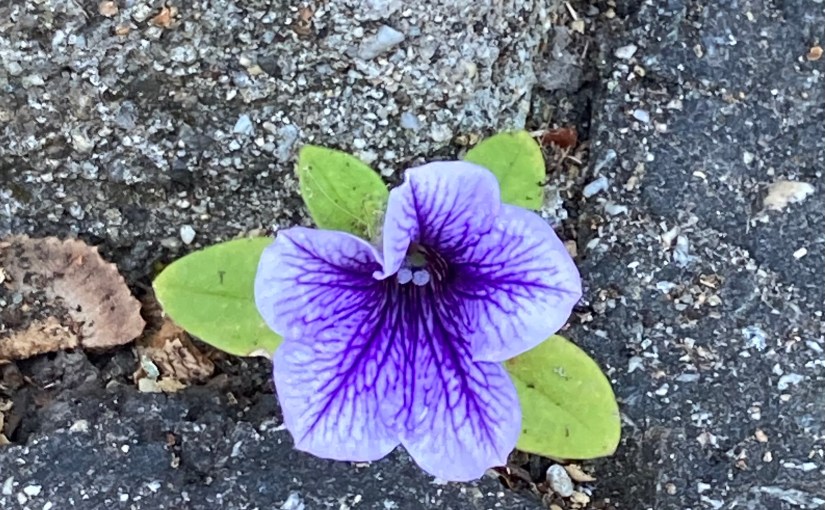
I found this petunia growing out from the foundation of my garage this morning. I haven’t had petunias in years, so I don’t know how it got there. But it reminded me that almost anything is possible if we refuse to be deterred from our goals.

My novel will be finished soon, and it will represent the best work I can do. I won’t settle for less than that just because rewriting and editing are tedious and time consuming, just because I really want it to be done. Almost anything worthwhile requires work.

May you refuse to be deterred from your goals no matter how long it takes to reach them.

ENP

Crossroads

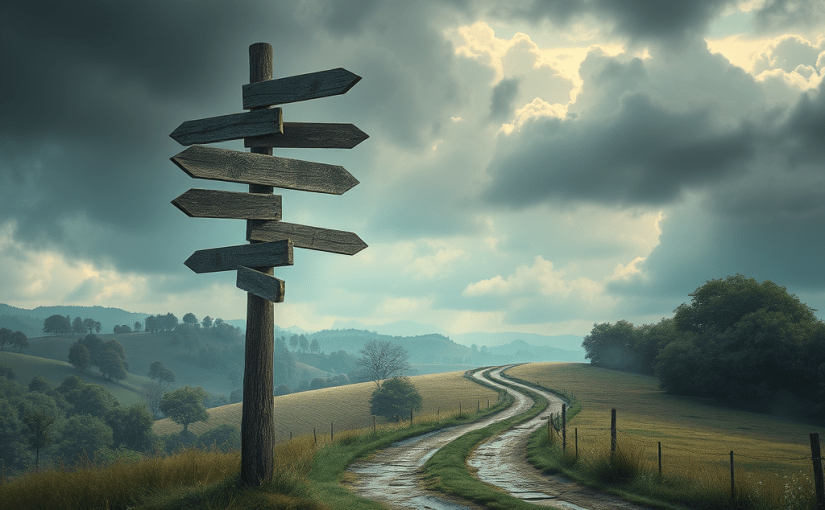
The beginning of 2025 finds my life at a crossroads. I’m very close to finishing my third novel, a project on which I’ve been working for years and desperately want to complete. At the same time, I seem unable to focus on it. My husband was laid off from his job at the end of September, leaving us adrift in a gulf of uncertainty.

Do I sequester myself in some quiet place where I won’t be distracted for a couple of weeks to finish my book? Should I put the book aside for the time being and look for steady nine-to-five work? Or should I try to find more freelance jobs so I can have a flexible schedule and make more money at the same time, allowing me to still work on the novel? If I do this, will I be too tired to work on the book anyway?

Perhaps I should try to bushwhack my own path, combining these options in such a way that I’ll be able to accomplish most of what I want?

I’ve been stuck, waiting for a sign, for some sort of messenger to point the way, getting nothing done in the meantime.

In Western folklore, crossroads often symbolize liminal spaces, places between worlds, middle passages that are neither in one realm nor another. In medieval Europe, the bodies of executed criminals and people who had committed suicide were often buried at crossroads as they were considered a sort of no man’s land, places set apart from the world from which the souls of the dead would be unable to escape.

Lacking a map or any sense of direction, I’ve discovered that exiting a crossroads, where no path is clearly defined, can be almost as difficult for the living.

In many cultures, crossroads are places where demons and spirits appear unexpectedly. In the early 20th century American South, many African Americans believed visiting a crossroads at certain times of day meant encountering the Devil. It brings to mind the frequently covered song, Cross Road Blues, by blues guitar pioneer Robert Johnson, originally released in 1937. According to legend, Johnson, who died mysteriously at age 27, acquired his impressive musical skills after selling his soul to the Devil at a crossroads.

Robert Frost’s famous poem The Road Not Taken, published in 1916, also comes to mind, as crossroads often symbolize indecision, uncertainty, or even regret in literature.

But crossroads can also be places of opportunity. By their nature, they are places where chance meetings are likely to occur, perhaps allowing favorable circumstances to unexpectedly manifest themselves.

Modern psychology says when we find ourselves at a crossroads, unable to decide which direction to take, it often means we are preparing to let go of something to which we are emotionally attached. I often feel this way lately. Whichever direction I choose to go, I’ll be leaving something behind. And because whatever I stand to potentially gain remains undefined, the risk involved in taking any one road seems great.

Robert Frost felt called to take the road “less traveled by,” knowing he’d probably never learn what he might have discovered had he chosen the other path. One of these days, the voice of wisdom will prevail and I’ll know what I should do, too. In the meantime, I’ll be keeping an eye out for the Devil.

ENP

New Podcast Interview

I was recently a guest on the Trevor Roberts Talkfest podcast. We discussed Franco-American history and culture and my second novel The River Is Everywhere. It’s especially exciting because the podcast is based on the West Coast, where few people know anything about Franco-Americans or French Canadians. Trevor was a great host and I enjoyed talking with him.

Episode 40 – Rivers, Roots, and Revelation: Emilie-Noelle Provost’s Franco-American Coming-of-Age Tale is available now on Apple Podcasts, Spotify, iHeart Radio, Amazon Music, Buzzsprout, Podchaser and anywhere else you can listen to podcasts. A video version of my conversation with Trevor will be out soon.

ENP

Pen & Ink

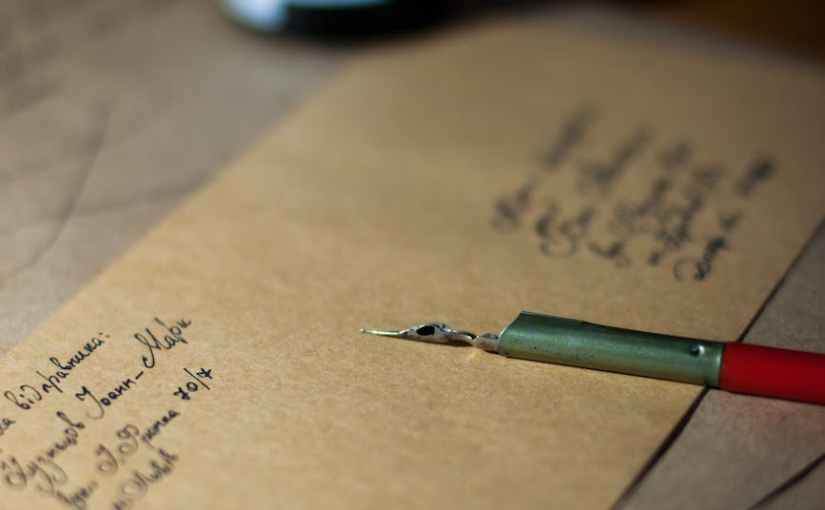
I recently returned home from a weekend away to discover that an unexpected package had come in the mail. It was from an old college friend who lives in northern Maine. She still means a lot to me, though we don’t see one another often. Inside the package was a book, an illustrated copy of the French fairy tale The White Cat, along with a beautiful handwritten letter and a photograph of her two teenage sons.

“When I saw this book, I thought of you,” my friend wrote. It was one of the nicest surprises I’ve had in a long time.

In this age of text messages, email, and Zoom calls, handwritten letters almost seem like outdated relics of communication, items to be shelved alongside rotary-dial telephones and telegraph machines. And while I think having the ability to send some forms of correspondence electronically is a godsend, paying my electricity bill online, for example, I believe it’s time for the handwritten personal letter to make a comeback. 

I can think of few better ways to let someone know how much you care about them than to sit down in a quiet place away from distractions, choose a beautiful piece of stationery, and spend time creating a document in your own handwriting that’s meant for that person alone.

Growing up, I wrote letters constantly, sometimes two or three a day. It was the only way I could communicate with friends who lived too far away to call, which in some cases was only a few towns over. (“Long distance” calls cost a bundle then, and were generally reserved for special occasions or emergencies.) I had a large collection of stationery, pens, and note cards, and relatives would often give me books of postage stamps as Christmas or birthday gifts.

In addition to writing letters to friends, I had pen pals in far away places, some of whom I never met. One of my pen pals in high school, a person I wrote to for years, lived in a small town in Vermont, a place so vastly different from my urban neighborhood near Boston that I had trouble imagining what it was like. Through his letters, I came to know Vermont’s culture, food, weather, and landscape in a way that was second only to being there.

In college, I corresponded with a friend who was studying in Japan, amassing a collection of exotic postage stamps and snapshots. I received letters weekly from another friend, a Mormon who was serving his mission in Las Vegas’ underbelly. I still remember the sad and sometimes grisly tales he told about things he saw and experienced there.

When I was a senior in college, I often wrote letters to my sister, who was a homesick freshman at a different university. I still have her replies. Among the only letters I have ever received from her, they tell the story of the time we became friends, rather than siblings who had no choice about our relationship.

I also have shoeboxes full of letters from high school and college boyfriends, some of them serious and more than an inch thick when folded into their envelopes. Others are humorous. One of them begins, “I can’t wait to see what you look like after you get your braces off.”

When my daughter, Madelaine, started college in 2016, I sent her several letters. They sat in her mailbox for months because it never occurred to her to check it. Although I love my smartphone and can’t imagine living or working without texting or the internet, I feel lucky to be a Gen Xer — fluent in both 20th and 21st century technology. Most people Madelaine’s age will never know what it’s like to stand by the window waiting for the mail to be delivered, or the thrill of opening the mailbox to find a much-anticipated envelope. 

Along with the news of the day, letters deliver their writers. Individual personalities, tastes, and moods are revealed by the choice of paper, the color of the ink, and in the unique slant of someone’s handwriting. Each is a singular creation, making a handwritten letter to communication what “slow food” is to cuisine. Like home-baked bread or a plump heirloom tomato, I’d forgotten how good letters could be until I received one.

ENP

Note: A version of this essay appeared in the September-October 2019 issue of Merrimack Valley Magazine.

*NO AI TRAINING

Book Award Finalist

I’m excited to announce that The River Is Everywhere has been named a finalist for the 2023 National Indie Excellence Award in literary fiction. The National Indie Excellence Awards are the gold standard for books published by independent publishers in the U.S. I’m very happy, and I’m even prouder of this book than I already was.

The River Is Everywhere is available from all major booksellers including Amazon and Barnes and Noble as well as from several indie stores including the Lowell Book Company. If you’ve read the book and liked it, please consider leaving a review on Goodreads or Amazon, or drop me a note via this website’s contact page.

ENP

*NO AI TRAINING

Cover Art

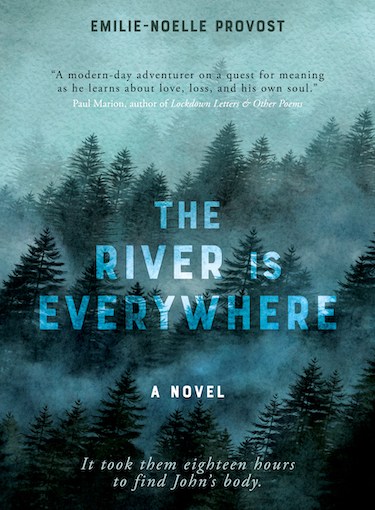
I don’t usually like to write posts that have no purpose other than to promote things I’m doing, even though I suppose that’s kind of the point of having an author website. Keeping that in mind, I’m very excited to share the cover of my second novel, The River Is Everywhere, which will be published in March by Vine Leaves Press.

A friend and fellow author told me that the cover was “me” when she saw it, which made me laugh because it’s kind of dark and moody, and a little mysterious. I’m definitely prone to the first two, and maybe the third, but I don’t think I’m the best judge of that.

Anyway, I think the cover is perfect. The folks at Vine Leaves did a great job taking the ideas I sent them and creating something that really conveys the mood of the book, and, I guess, me.

I’ll post updates about The River Is Everywhere as I get them. Thanks again to everyone who follows this blog, and to all the people who have helped the book along its journey to becoming a real, tangible thing.

ENP

The Sound of Silence

I don’t like loud or repetitive noises. In fact, a lot of sounds bother me, regardless of their volume. I especially dislike electronic devices, household appliances, and toys that beep, buzz, or talk unnecessarily. I have disabled the sound-making capability of just about everything in my house that I can. I mute videos on social media. I’m one of the few people I know who can sit in the car for hours without the radio on without even noticing that it’s been turned off.

When my daughter was a toddler, I took the batteries out of her talking Cookie Monster toy and told her it was broken. I still feel kind of badly about it, but I was a stay-at-home mom who was often alone twelve or more hours a day while my husband was at work. It was either a quiet Cookie or a nervous breakdown.

I even removed the whistle from our tea kettle, which drives my husband crazy. “How am I supposed to know when it’s boiling?” he asked. “When a lot of steam comes out of the spout,” I said. “You just have to watch it.”

I’ve always been this way. A couple of years back, I learned that there’s a name for my supersenstivity to sounds, an issue I also have with bright lights (I’ll save this for another post): sensory processing sensitivity or SPS.

Sensory processing sensitivity is an inherited trait, just like being tall or having blonde hair. People who have SPS are born with hypersensitive nervous systems. SPS is one of the traits common among highly sensitive people, of which I am one.

One of the most problematic issues my SPS causes is an aversion to the sound of my own voice. I don’t usually notice it if I’m having a conversation with someone because most of the time I’m concentrating on what the other person is saying. But I have a real problem with things like public speaking and reading aloud.

When I was in school, the issue was most noticeable in my foreign language classes. I always did well on written exams and homework, but could hardly ever bring myself to say anything out loud. I think it’s one of the reasons I’ve never been able to effectively learn to speak French even though I’d really like to.

My second novel, The River Is Everywhere, will be published this March. Among the things I need to do to market the book is plan author readings at bookstores and libraries, events that will require me to both engage in public speaking and read aloud. Although I know how important these types of events are, I’m dreading having to do them.

I’ve asked other authors I know for advice regarding this, and most of them have told me the best thing I can do is practice reading aloud from the book, and keep in mind that anyone who comes to a reading is there because they want to hear what I have to say. This makes a lot of sense, but I know it won’t be easy. Still, I’m going to give it my best shot.

Until then, I’m going to enjoy living and working in my quiet house.

ENP

Traveling Along the River

On August 4, I lost my friend Mario to cancer. He was the third friend of mine to die of the disease this year. His death wasn’t unexpected. He was diagnosed with late stage pancreatic cancer in July 2021, and the last time I saw him, this past April at another friend’s funeral, I barely recognized him. Still, Mario was one of those larger-than-life people you can’t imagine not being in the world.

Without meaning to, Mario became the center of attention in any room he walked into. He was intelligent, talented, had dozens of friends, and a heart big enough to make Santa Claus jealous. I met Mario more than 30 years ago, when I was 18, when we were both freshman in college—kids. We didn’t see each other all the time, but it’s still hard for me to imagine my life as an adult without him in it.

I was in the middle of working on developmental edits for my second novel, The River Is Everywhere, when Mario died. (The book will be released in March 2023 by Vine Leaves Press.) Before sitting down to work on it near the end of July, it had been more than a year since I’d looked at the manuscript. The book’s main character, Ernest, is a 16-year-old high school student who loses his best friend in an accident. He spends much of the story trying to make sense of his friend’s death.

I wrote the book years ago, before any of my friends had cancer, before I could have imagined any of them ever meeting such terrible fates. And yet, when I was re-reading the manuscript, I found myself drawn into Ernest’s world: Here was someone who was dealing with the some of same feelings that I was. The fact that I had made Ernest and his story up didn’t seem to matter at all.

As hard as it was at times to motivate myself to get my butt in the chair, working on the book helped me begin to heal from the loss of my friends in ways I hadn’t expected. At its heart, the novel is a coming-of-age tale and adventure story. When I wrote it, helping readers deal with loss and grief wasn’t one of my intentions.

I suppose that’s one of the things that makes art so important: Often, it’s much more powerful and meaningful than it appears on the surface.

This experience has made me hope that someday The River Is Everywhere might help someone else in the same way it’s helped me.

ENP

Every Idle Hour

My mother took every opportunity she could to complain about winter. She hated the cold, snow, and the short days we experience here in New England so much that her negativity spilled over into autumn. She could never understand why anyone would get excited about the foliage changing from green to red or would look forward to a crackling fire on a fall evening when these things meant ice and darkness were lurking around the corner.

I’ve always liked winter, though. During the rest of the year, I often long for the stillness the season brings. I love staring out the picture window in our living room when it snows, watching the swirling white flakes pile up and form drifts in the wind.

I never learned how to ski and I’m a subpar ice skater, but my husband and I hike frequently in the wintertime. The first time I remember experiencing complete silence was a few years ago, on a trail coming off of Hedgehog Mountain in New Hampshire. We paused to look at some animal tracks and when the crunching of our snowshoes stopped, we heard nothing but the sound of our own breathing: no cars, no airplanes, no people, no wind. It was one of the best moments of my life.

Nothing makes me feel more alive than the cold air on my face while I’m walking among the bare bones of the trees. I love cuddling up to my husband between our fluffy flannel sheets, cozy and warm as the temperature drops below zero outside. Rarely do I feel more privileged than when I’m the first being to make tracks across a snow-covered landscape. I like wearing sweaters and knit hats and wool long underwear. Few things are more spectacular than the pink-and-orange glow of a winter sunset.

Winter allows me the space and time to think, work, rest, and recharge. As the snow falls, I’m working to finish two book manuscripts that have been sitting on my hard drive since before the COVID-19 pandemic started, when concentrating on anything became nearly impossible.

If you’re anything like my mother, don’t let the cold get you down. If you let it, this enchanted season can warm your heart and bones.

ENP

NOTE: If you were a fan of my Living Madly column in Merrimack Valley Magazine, which ceased publication as of December 2021, you’ll be happy to know that I’ll still be writing the column. Beginning on January 20, 2022, Living Madly will be published the third Thursday of each month on RichardHowe.com.