Summertime Magic

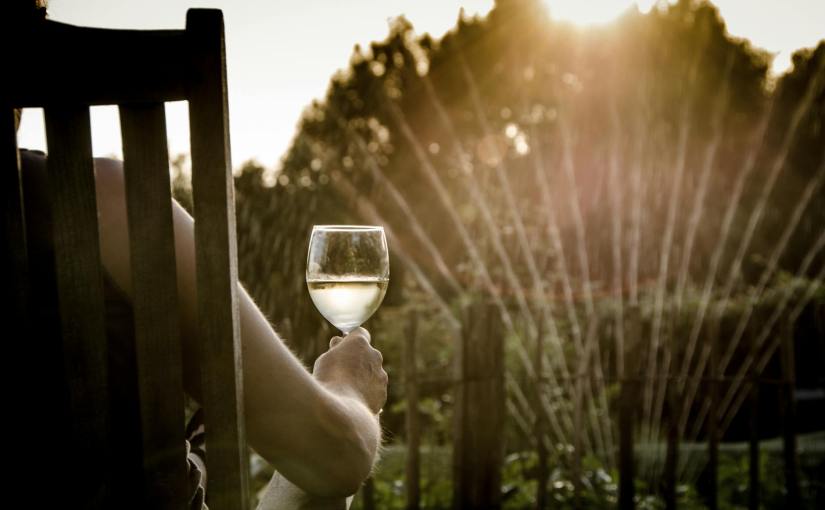
I still remember the satisfying feeling brought on by cleaning all the papers out of my desk and tossing them directly into the trash on the last day of school — no need to so much as glance at any of them. The day’s rising heat brought with it the promise of beach days, long, lazy afternoons punctuated by grape Popsicles, and running leaps through the backyard sprinkler. 

Summer meant visits from the neighborhood ice cream truck, rainbow-colored snow cones, and clusters of sweaty kids clutching damp dollar bills. My sister and I raced around the neighborhood on our bikes (no helmets! no shoes!), completely disregarded all advice regarding sunscreen, and stayed up well past our bedtime every night waiting for the sun to finally go down. Everything we did seemed to have an aura of magic to it.

I’ve spent a lot of time thinking about that magic and how I might try to recapture some of it.

When I was growing up, my friends and I were fully present during our summer vacations, no matter what we were doing. We weren’t thinking about all the chores we were supposed to do or that school was starting soon. Whether we were playing kickball with the neighborhood kids, making Italian ice runs to the corner store, or just hanging out on the porch trying to keep cool, that time was ours. We weren’t going to let anyone or anything take it away from us.

It’s rare these days to have any amount of time that’s truly our own. We’re accessible 24/7 on our phones. Our attention is constantly being drawn in ten directions at once by television monitors, emails, the daily news cycle. We’re always worried about the state of our country, the possibility of war, corrupt, evil politicians, the bills we have to pay, the kind of world we’ll leave behind for our kids.

All of those things are pressing, but they’re not going away, at least not anytime soon.

Summer is fleeting. It’s time we took all took a step back and carved out some time to enjoy the smell of freshly cut grass, the way the air smells when a sudden rainstorm hits the hot pavement. We can count the fireflies as they hover and flash on summer nights, and wake up early to hear the songs of morning birds.

We can dig holes in the sand and eat ice cream cones, read novels, stare at the sky, turn the music up loud in the car. We can do whatever we want if we let ourselves, even if it’s just for an hour or a lunch break or between phone calls. It doesn’t even need to cost anything.

The magic is still out there. Go and find it.

ENP

Lost World II

When I was growing up, there was a woman who went to our church whose family owned an old farm in central Massachusetts. One day each winter, she would invite anyone who wanted to come to go sledding in the farm’s apple orchard. Everyone looked forward to this outing, especially the kids. The orchard’s sledding hill was steep and wide. It seemed to go on almost forever, ending only at the point where its snow-covered grass met the January sky.

I can still remember the smell of the woodsmoke drifting out of the farmhouse’s chimney when we dragged our sleds out of the car. My sister and I had the cheap plastic ones you could buy at the grocery store, the red kind with yellow handles on the sides. One family always brought a four-seat toboggin, which was fun the first few times you tried it. But the enormous wooden sled would inevitably be abandoned once we got tired of dragging it back up the hill.

Some kids had the round, inflatable sleds that mimicked the look of tires. These were by far the fastest, barely skimming the surface of the snow as they flew by. The flat, plastic blue sleds were our least favorite. They were hard to straighten out after spending months rolled into tubes for storage. They were so lightweight, if you weren’t paying attention they would often slide right down the hill without you.

Most of the adults hung out in the warm farmhouse, sipping mulled wine as they watched us through its antique windows, their wavy glass panes distorting the view like the mirrors in a funhouse. But a few grownups always came outside with us, usually fathers. Sometimes they would sled, too, but mostly they supervised, standing at the top of the hill before the rows of dark, gnarled trees, arms folded, ready to jump at the first sign of a crash or injury. 

Eventually, a pair of mothers would be seen climbing the hill—there always seemed to be two. They’d converse for a bit with the fathers, their long down coats brushing at their ankles, before telling us we needed to come inside and warm up. 

Even on sunny days, it was always bitterly cold. Your hair and mittens would freeze solid and you’d lose the feeling in your fingers and toes. It wasn’t like our winters are now, where the temperature often rises to well above freezing, melting all the snow and ice and leaving behind yawning pools of mud.

Inside, the farmhouse smelled like wet wool and smoldering maple logs. Built in the seventeenth century, its floors were made from foot-wide old growth pine boards, grooved in the places where countless feet had walked across them: farmers wearing handmade boots, running toddlers, women carrying pies. You could feel the centuries of life in the place. It leaked right out of the horsehair plaster walls.

We drank hot cocoa from paper cups and ate cookies sprinkled with sugar while sitting on a hand-braided rug in the front of the woodstove, our boots piled up by the door. Steaming mittens and damp socks decorated the stove’s cast iron surface. Some kids, mostly boys, kept their snow pants on, waiting for the moment they would be allowed to go outside again. 

Our second time out never lasted as long as the first. We always seemed to get cold faster, most likely because we were soaked to the skin, but also because the temperature would start to drop as night came on. Our last sled run of the day often ended just as the sun settled on the western horizon.

On the drive home, my sister and I would usually fall asleep in the car. 

The last time I went sledding at the farm, I was in the sixth grade. The family who owned the land sold it after that. Today, the old farmhouse is long gone. The apple orchard is occupied by a Target store. It was built high on the sledding hill, so you can see it from the highway. 

I drive by the place sometimes. I always wonder if there’s anything left that I might recognize, a stray apple tree maybe, or a glacial erratic that was too large to move. I’ve never checked, though, even after all these years. I suppose I don’t really want to know. I prefer to remember the farm the way it was, full of laughter and magic, all covered in a deep layer of snow.

ENP

*NO AI TRAINING

Lost World

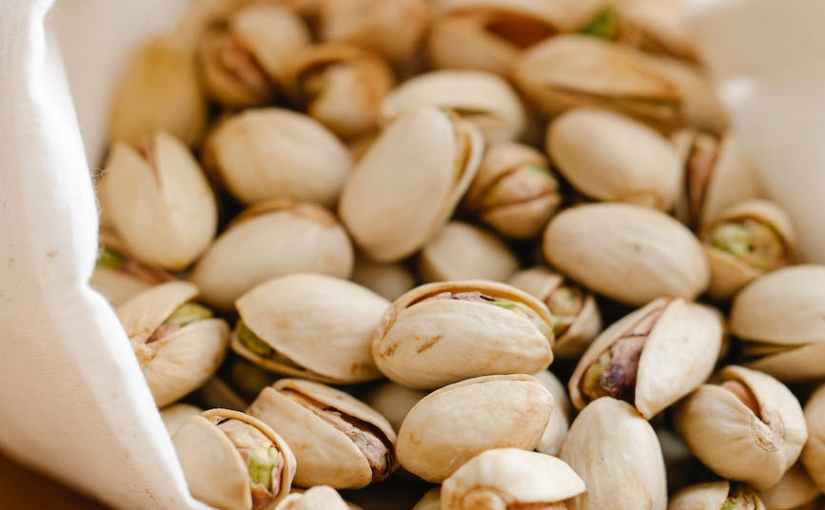
The other day, I was sitting at my kitchen table eating pistachios. The small pile of shells that formed as I ate them triggered a memory of my mother, something I hadn’t thought about in a long time: When I was two or three years old, before my younger sister was born, I used to go with my mother to buy pistachios at the department store candy counter. Unlike today, you couldn’t just walk into a grocery store and buy them. Pistachios were a luxury. You had to make a special trip to get them.

The woman who worked at the candy counter was an older lady. She wore her gray hair pulled back into a bun and sometimes had a Band-Aid stuck to the side of her nose. I never knew what the Band-Aid was for, but I always found it fascinating. A Band-Aid on your nose!

The woman would ask my mother if she wanted the red pistachios or the natural ones. They had both kinds on display, piled up into mounds behind the glass. My mother always chose the natural ones, just one pound because of their price. The lady would scoop the nuts into a white paper bag with red stripes on it. Then she would place the bag on a scale to weigh it, and would either add more nuts or remove a few until the amount was just right.

The candy counter also sold balloons. These were not filled with helium, just regular air. Because they couldn’t float on their own, the balloons were attached to long wooden sticks so that you could carry one around and it would look like it was floating. Sometimes when my mother bought pistachios she would offer to get me something, too. I never wanted candy. Always, I chose a balloon, preferably a red one.

When we got home, my mother would sit in the living room and eat her pistachios while she watched her favorite television shows. These were mostly soap operas, nothing I found that interesting. After making sure my balloon was stored in a safe place, I used to sit on the floor and play with my toys or look at a book while a small pile of pistachio shells formed on the coffee table.

At the time, my mother was the same age that my daughter is now.

My mother died of lung cancer in September 2020. She was a lifelong smoker. She never quit, even after she was diagnosed with cancer. Up until recently, I’ve mostly been angry with her about it. But sometimes an old memory comes back to me unexpectedly, and for a while the anger disappears.

ENP