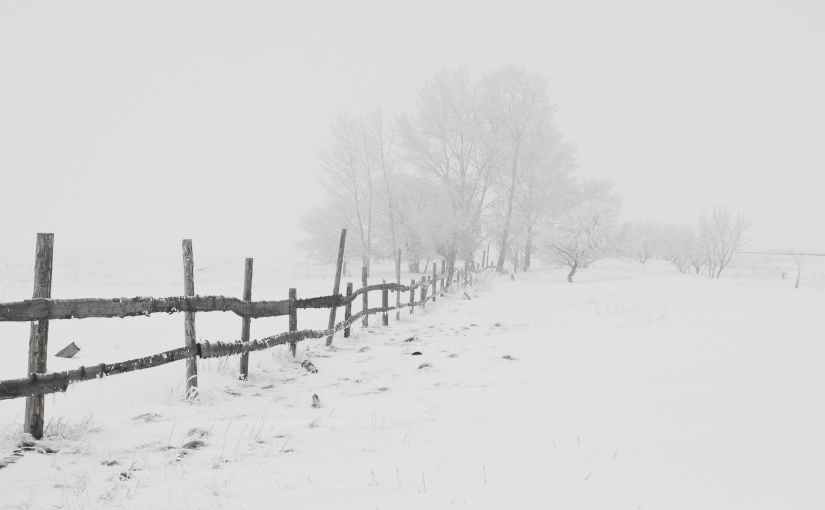
Winter

I’ve never been one of those people who dislikes winter. I don’t really mind the cold, and I love snowshoeing and cross-country skiing, even though I’m pretty bad at the latter. There’s something invigorating about being out in the woods in the cold air. I love seeing animal tracks and deer beds, and tiny red-breasted nuthatches and chickadees eating the seeds from pine cones. There are usually very few other people around. It’s peaceful. It helps me get my thoughts in order.

So far, this winter has been tough, though. Even though we’ve had a lot of snow, it’s been too dangerously cold and windy in the mountains to spend any time up there. Even getting out in our local forests hasn’t been easy because of the weather. And I’ve been sick. Since the end of January, I’ve had some kind of awful virus that just won’t quit. It’s wearing on me, and it’s making it difficult to get anything done. I’m getting better, at least I think so. It’s just not happening quickly.

I’ve decided to take next week off to finally goddamn finish my third novel and get it off to beta readers. It’s so close to being done. I’ll work twelve hours a day if I have to in order to get it finished by the end of the month. At this point, it’s the best I can do to try to redeem at least part of the winter.

ENP

Lost World II

When I was growing up, there was a woman who went to our church whose family owned an old farm in central Massachusetts. One day each winter, she would invite anyone who wanted to come to go sledding in the farm’s apple orchard. Everyone looked forward to this outing, especially the kids. The orchard’s sledding hill was steep and wide. It seemed to go on almost forever, ending only at the point where its snow-covered grass met the January sky.

I can still remember the smell of the woodsmoke drifting out of the farmhouse’s chimney when we dragged our sleds out of the car. My sister and I had the cheap plastic ones you could buy at the grocery store, the red kind with yellow handles on the sides. One family always brought a four-seat toboggin, which was fun the first few times you tried it. But the enormous wooden sled would inevitably be abandoned once we got tired of dragging it back up the hill.

Some kids had the round, inflatable sleds that mimicked the look of tires. These were by far the fastest, barely skimming the surface of the snow as they flew by. The flat, plastic blue sleds were our least favorite. They were hard to straighten out after spending months rolled into tubes for storage. They were so lightweight, if you weren’t paying attention they would often slide right down the hill without you.

Most of the adults hung out in the warm farmhouse, sipping mulled wine as they watched us through its antique windows, their wavy glass panes distorting the view like the mirrors in a funhouse. But a few grownups always came outside with us, usually fathers. Sometimes they would sled, too, but mostly they supervised, standing at the top of the hill before the rows of dark, gnarled trees, arms folded, ready to jump at the first sign of a crash or injury. 

Eventually, a pair of mothers would be seen climbing the hill—there always seemed to be two. They’d converse for a bit with the fathers, their long down coats brushing at their ankles, before telling us we needed to come inside and warm up. 

Even on sunny days, it was always bitterly cold. Your hair and mittens would freeze solid and you’d lose the feeling in your fingers and toes. It wasn’t like our winters are now, where the temperature often rises to well above freezing, melting all the snow and ice and leaving behind yawning pools of mud.

Inside, the farmhouse smelled like wet wool and smoldering maple logs. Built in the seventeenth century, its floors were made from foot-wide old growth pine boards, grooved in the places where countless feet had walked across them: farmers wearing handmade boots, running toddlers, women carrying pies. You could feel the centuries of life in the place. It leaked right out of the horsehair plaster walls.

We drank hot cocoa from paper cups and ate cookies sprinkled with sugar while sitting on a hand-braided rug in the front of the woodstove, our boots piled up by the door. Steaming mittens and damp socks decorated the stove’s cast iron surface. Some kids, mostly boys, kept their snow pants on, waiting for the moment they would be allowed to go outside again. 

Our second time out never lasted as long as the first. We always seemed to get cold faster, most likely because we were soaked to the skin, but also because the temperature would start to drop as night came on. Our last sled run of the day often ended just as the sun settled on the western horizon.

On the drive home, my sister and I would usually fall asleep in the car. 

The last time I went sledding at the farm, I was in the sixth grade. The family who owned the land sold it after that. Today, the old farmhouse is long gone. The apple orchard is occupied by a Target store. It was built high on the sledding hill, so you can see it from the highway. 

I drive by the place sometimes. I always wonder if there’s anything left that I might recognize, a stray apple tree maybe, or a glacial erratic that was too large to move. I’ve never checked, though, even after all these years. I suppose I don’t really want to know. I prefer to remember the farm the way it was, full of laughter and magic, all covered in a deep layer of snow.

ENP

*NO AI TRAINING

Every Idle Hour

My mother took every opportunity she could to complain about winter. She hated the cold, snow, and the short days we experience here in New England so much that her negativity spilled over into autumn. She could never understand why anyone would get excited about the foliage changing from green to red or would look forward to a crackling fire on a fall evening when these things meant ice and darkness were lurking around the corner.

I’ve always liked winter, though. During the rest of the year, I often long for the stillness the season brings. I love staring out the picture window in our living room when it snows, watching the swirling white flakes pile up and form drifts in the wind.

I never learned how to ski and I’m a subpar ice skater, but my husband and I hike frequently in the wintertime. The first time I remember experiencing complete silence was a few years ago, on a trail coming off of Hedgehog Mountain in New Hampshire. We paused to look at some animal tracks and when the crunching of our snowshoes stopped, we heard nothing but the sound of our own breathing: no cars, no airplanes, no people, no wind. It was one of the best moments of my life.

Nothing makes me feel more alive than the cold air on my face while I’m walking among the bare bones of the trees. I love cuddling up to my husband between our fluffy flannel sheets, cozy and warm as the temperature drops below zero outside. Rarely do I feel more privileged than when I’m the first being to make tracks across a snow-covered landscape. I like wearing sweaters and knit hats and wool long underwear. Few things are more spectacular than the pink-and-orange glow of a winter sunset.

Winter allows me the space and time to think, work, rest, and recharge. As the snow falls, I’m working to finish two book manuscripts that have been sitting on my hard drive since before the COVID-19 pandemic started, when concentrating on anything became nearly impossible.

If you’re anything like my mother, don’t let the cold get you down. If you let it, this enchanted season can warm your heart and bones.

ENP

NOTE: If you were a fan of my Living Madly column in Merrimack Valley Magazine, which ceased publication as of December 2021, you’ll be happy to know that I’ll still be writing the column. Beginning on January 20, 2022, Living Madly will be published the third Thursday of each month on RichardHowe.com.

Let There Be Light

By the time December rolls around in New England, where I live, the days are just a scant nine hours long. Although I’ve lived here my entire life, the prolonged hours of darkness are always hard to get used to. Dawn doesn’t break until 7 a.m. The shadow of the yew tree outside my office window starts growing long around 3:15, with the sun setting completely by 4.

I often have trouble getting out of bed in the morning. And even though we live in an era when we can shine light anywhere we want at any time, the shortened days make it difficult for me to get work done. I’ve barely digested my lunch by the time dusk begins to fall but the gathering darkness always makes me lose my motivation.

This time of year, I sometimes think about another December day, many years ago when I was 17. I was driving down a residential street in the Boston suburb where I grew up. It was late afternoon. The sun had begun to set, and the holiday lights strewn around people’s shrubs and trees were flickering to life.

At that moment, for the first time in my life, I understood why the lights were there. They had nothing to do with Christmas or Hanukah or any other early winter holiday, not really. People spent hours stringing colored lights around their homes and yards, willingly jacking up their electric bills, to ward off the darkness.

Our ongoing quest to illuminate December’s long nights is ancient and universal. More than anything else, we are creatures of the light.

People around the world have celebrated the returning of the sun on the winter solstice for millennia. Stone circles in Ireland, Wales, Britain, and Scotland are aligned to capture the first of the sun’s rays on the northern hemisphere’s shortest day.

On the solstice, the ancient Romans celebrated Saturn, the god of agriculture, with the feast of Saturnalia, a term that even today remains synonymous with debauched partying.

These days, our winter solstice celebrations live on in often unexpected ways. On December 13, people in northern Europe celebrate Saint Lucia Day. Marking the beginning of the Christmas season, processions of young women wear wreaths of candles on their heads, lighting the way through winter’s darkness.

The Dongzhi Festival, celebrated on the winter solstice in China, Taiwan, Korea, Japan, and Vietnam, marks the return of proper balance to the world along with the sun’s yang energy.

I’m also anticipating the return of the light. Luckily, I’ll only have to wait a few more weeks. In the meantime, I’ll end my workdays early and enjoy my family by the glow of our Christmas tree and the electric candles brightening the windows in our old house.

Happy solstice and blessed holidays.

ENP