The Chairs of Summer

Over the past few years, my husband and I have spent several weekends at the Eagle Mountain House in Jackson, New Hampshire. We began staying at the hotel because it’s close to many of the places we like to go hiking. One of the best things about the hotel, built in 1879, is its enormous wrap-around front porch lined with wooden rocking chairs.

As we sipped coffee on the hotel’s porch on a recent Sunday morning, I started thinking about these chairs: the generations of summer visitors who have sat in them; the conversations they’ve had; the marriage proposals; the breaking of bad news; the cocktails people have enjoyed while taking in the mountain views.

Eagle Mountain’s sturdy rockers reminded me of similar ones on the porch of the historic Gosport Hotel on Star Island, located off the coast of Portsmouth, New Hampshire. I spent several summers hanging out in these chairs growing up. As much as my life changed over those years, the chairs, solid and hard-worn, were always the same.

At the house where I lived as a kid, we had a set of heavy wooden outdoor chairs with removable vinyl cushions. Hand-me-downs from a family member who no longer wanted them, these chairs were monstrosities. It took two adults to move one. The cushions soaked up rainwater like sponges, and if you happened to stub a toe on one of the chairs’ legs, you’d be hopping around for ten minutes, howling. When my friends came over, we usually sat on the lawn.

The first summer I lived on my own, after graduating from college, I bought two green plastic chairs at a hardware store. I lived in Boston and didn’t have a car, so I carried them the three blocks back to my apartment. My roommate and I put the chairs out on our miniature back porch, which overlooked the kitchen of a Chinese restaurant. We spent much of that summer sitting in them while grilling burgers on our rickety hibachi and drinking gin and tonics out of plastic cups.

My husband bought me a foldable canvas sand chair with the Rolling Rock beer logo on it—a promotional item he’d found at a liquor store—when I was pregnant with our daughter. It’s one of the most comfortable beach chairs I’ve owned, but as that summer wore on and my belly grew bigger, I frequently needed his help to get out of it and back into a standing position.

When our daughter was a toddler, we got her a pint-size white resin chair, just the right size for a two-year-old. She used to like to sit outside in it to eat lunch, a 5-gallon bucket serving as her dining table. We were living in our first house at the time. When we sold it we got rid of most of our outdoor furniture, but not that chair. She’ll be 25 this year, and that little seat is still stored up in the rafters of our garage.

For a number of summers, my husband complained about the fact that it’s nearly impossible to find the old fashioned aluminum-frame chairs—the foldable kind with backs and seats woven from vinyl straps—that his parents had when he was growing up. Several years ago, quite by accident, my daughter and I found these chairs for sale at a discount store, and bought one for him for Father’s Day. As a surprise, we put a fancy bow on the chair and set it up in the middle of the garage so he’d find it when he took the trash out. Its metal frame digs into the back of your legs after you’ve been sitting in it for a while, but it’s still the only chair he uses whenever we host a barbecue.

We’ve wiled away many pleasant summer afternoons in the four red plastic Adirondack chairs we bought when we moved into the house where we live now. But they only seem to last a season or two before they have to be replaced. We’re down to two of these chairs now—both sure to break soon. We’re not home a lot on weekends anymore, so we still haven’t decided what to replace them with.

Weighing a mere two pounds each and folding neatly into custom carrying cases, our newest summer chairs are stored in the back of our car. Made of polyester mesh and steel, these two comfy high-tech seats are ideal for relaxing and enjoying drinks and snacks after a long hike. They weren’t inexpensive, but they were worth every penny.

Note: A version of this essay appeared in the July/August 2021 issue of Merrimack Valley Magazine.

ENP

*NO AI TRAINING

Book Award Finalist

I’m excited to announce that The River Is Everywhere has been named a finalist for the 2023 National Indie Excellence Award in literary fiction. The National Indie Excellence Awards are the gold standard for books published by independent publishers in the U.S. I’m very happy, and I’m even prouder of this book than I already was.

The River Is Everywhere is available from all major booksellers including Amazon and Barnes and Noble as well as from several indie stores including the Lowell Book Company. If you’ve read the book and liked it, please consider leaving a review on Goodreads or Amazon, or drop me a note via this website’s contact page.

ENP

*NO AI TRAINING

ÃŽle d’Orléans

I’ve been working on a new novel. Because it looks like I *might* actually have the first draft of the manuscript done soon, I thought I’d write a post about it.

The novel—a wild, suspenseful, character-driven romance featuring strong female characters—is set in ÃŽle d’Orleans, a pastoral island in the Saint Lawrence River near Québec City. It’s one of my favorite places in the world.

Many of the houses and churches on the island were built in the 17th and 18th centuries by the original settlers of New France. Development in ÃŽle d’Orleans is heavily restricted, so it still looks much as I imagine it has for the last few hundred years. If you suddenly found yourself on the island and didn’t know where you were, you could easily think you were someplace in rural France.

Église Sainte-Famille, built in 1743. This church appears in the novel, which is partly set in the village of Sainte-Famille. Photo credit: Marc Lautenbacher, Wikimedia Commons

ÃŽle d’Orleans is home to six historic villages, each with its own unique charm. Since it was settled by Europeans more than 400 years ago, the island has been a farming community. Today, it is famous for the quality of its products especially strawberries, apples, maple syrup, and wine.

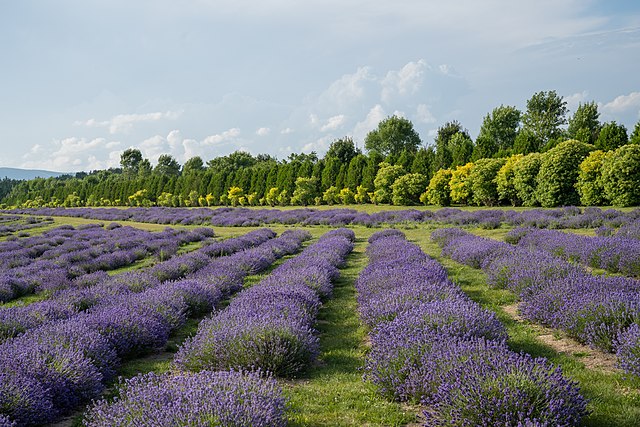
ÃŽle d’Orléans lavender field. Photo credit: Wilfredo Rafael Rodriguez Hernandez, Wikimedia Commons

I like big, dramatic, steamy romances (think Masterpiece Theatre) but most of the romance novels out there are very poorly written, not to mention loaded with tropes, clichés, and sexist BS, making them pretty much unreadable.

I started writing this book a couple of years ago as a challenge: I wanted to see if I could write a romance novel that I would not only want to read but wouldn’t be able to put down once I started. I figured if I were successful, other people would want to read it, too. So far, I think I’m on the right track. The novel doesn’t have a title yet, but I’m working on that, too.

ÃŽle d’Orléans strawberry harvest. Photo credit: Marc Lautenbacher, Wikimedia Commons

I’m considering the idea of making this novel the first in a series. It’s a little early yet to tell if that will be feasible, but the possibility is definitely there.

Stay tuned for news about this exciting new novel as it develops. I hope to have the first draft of the manuscript completed by July and to have an edited version done by the end of the summer.

ENP

*NO AI TRAINING

#Crime

If you’ve read my bio on this website you know that I’m a big fan of European crime dramas. One of the reasons I like these shows so much is because of how intelligently written many of them are. The best crime series have creative, air-tight plots, lots of nail-biting suspense, and enough twists and turns to make most roller coaster enthusiasts get motion sickness. The acting has to be spot-on, as do the subtitles if the original language isn’t English. A bad translation can really kill the whole vibe.

I also like that these series don’t rely on violence, such as loud, bloody gun battles, to move their plots along. They instead tend to lean on the strengths of their writers and actors to create thrilling, often terrifying, tales.

Sometimes called “Nordic Noir,” the Scandinavians are masters of the genre, especially the Danes and Swedes. One of the best European crime series of all time is The Bridge (Broen in Danish), created in 2011 by Swedish writer Hans Rosenfeldt. The series is so mindblowingly good that it’s inspired several spinoffs, including shows tailored for audiences in the UK, US, central Europe, Russia, and Asia. Don’t be fooled, though. If you’re going to watch this series don’t settle for anything other than the original.

Some of my other favorite European crime series include both the Swedish and BBC versions of Wallander, based on the mystery novels by Swedish writer Henning Mankell. Both versions of this series are worth watching. The BBC series, starring Kenneth Branagh, is a little darker and creepier than the Swedish version, while I think the latter is a bit truer to Mankell’s work.

I’m also a sucker for the American version of the Danish series, The Crime, called The Killing. Although it’s set and filmed in the Pacific northwest, it features a talented European cast and some of the best writing and acting I’ve seen on any television series. The night I started watching it, I stayed up until one o’clock in the morning binge-watching episode after episode, and that’s not something I usually do.

Other European crime series I’ve enjoyed include the BBC’s The Fall, set in Northern Ireland. It stars Gillian Anderson, who plays one of the most bad-ass female detectives I’ve seen anywhere. Broadchurch, also made by the BBC, gets part of its creep factor from its remote setting on the Dorset coast. And if you like creepy, remote settings like I do, you’ll probably also like Shetland, a Scottish crime series set in the Shetland Islands.

The French also make some good crime dramas, though being French they occasionally lean more toward philosophizing than toward crime-solving. One of my favorite French series is La Forêt or The Forest. I’ve recently started watching Mountain Detective, a French crime series set in the Hautes-Alpes. I like it so far.

For as many excellent European crime dramas as there are out there, and there are many more good ones than I’ve mentioned here, there are also a lot of duds. If I don’t like a series after the first episode, out it goes. I’ve even been known to turn a show off after only a few minutes if I don’t think it’s going anywhere or if the plot seems too canned (usually I’m right).

Send me a note if you you have recommendations for new European crime series. I’m always looking for shows that pique my interest enough to make me want to stay up past my bedtime.

ENP

Merci Beaucoup!

Thank you to everyone who came to The River Is Everywhere book launch event on March 22. It was amazing to actually see the room full, and I still can’t believe the books sold out! Special thanks to the Dracut Library for hosting the event, and to the Lowell Book Company for handling book sales. Thanks as well to Kevin Harkins of Harkins Photography for taking photos. I very much appreciate all the support.

ENP

Book Release Event

Just a short post to announce that the book release event for The River Is Everywhere will be held on March 22 at 6:30 p.m. at the Parker Memorial Library in Dracut, Mass. I’d love to see you there if you are in the area. Special thanks to the Lowell Book Company for helping me make it happen. Now I just need to remember how to speak in front of group of people.

ENP

Lost World

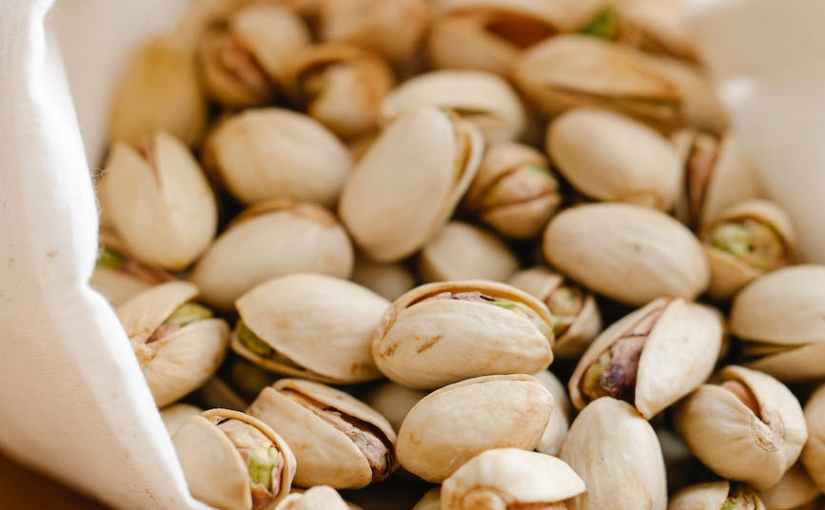
The other day, I was sitting at my kitchen table eating pistachios. The small pile of shells that formed as I ate them triggered a memory of my mother, something I hadn’t thought about in a long time: When I was two or three years old, before my younger sister was born, I used to go with my mother to buy pistachios at the department store candy counter. Unlike today, you couldn’t just walk into a grocery store and buy them. Pistachios were a luxury. You had to make a special trip to get them.

The woman who worked at the candy counter was an older lady. She wore her gray hair pulled back into a bun and sometimes had a Band-Aid stuck to the side of her nose. I never knew what the Band-Aid was for, but I always found it fascinating. A Band-Aid on your nose!

The woman would ask my mother if she wanted the red pistachios or the natural ones. They had both kinds on display, piled up into mounds behind the glass. My mother always chose the natural ones, just one pound because of their price. The lady would scoop the nuts into a white paper bag with red stripes on it. Then she would place the bag on a scale to weigh it, and would either add more nuts or remove a few until the amount was just right.

The candy counter also sold balloons. These were not filled with helium, just regular air. Because they couldn’t float on their own, the balloons were attached to long wooden sticks so that you could carry one around and it would look like it was floating. Sometimes when my mother bought pistachios she would offer to get me something, too. I never wanted candy. Always, I chose a balloon, preferably a red one.

When we got home, my mother would sit in the living room and eat her pistachios while she watched her favorite television shows. These were mostly soap operas, nothing I found that interesting. After making sure my balloon was stored in a safe place, I used to sit on the floor and play with my toys or look at a book while a small pile of pistachio shells formed on the coffee table.

At the time, my mother was the same age that my daughter is now.

My mother died of lung cancer in September 2020. She was a lifelong smoker. She never quit, even after she was diagnosed with cancer. Up until recently, I’ve mostly been angry with her about it. But sometimes an old memory comes back to me unexpectedly, and for a while the anger disappears.

ENP

New Novel Coming Soon!

This is just a quick post to let everyone know that, at long last, The River Is Everywhere will be released on March 14. The book is currently available for pre-order on Amazon and Barnes and Noble. I should have information about the book’s launch event soon. When I do, I’ll post it here.

In the meantime, you can check out some of the book’s early reviews on Goodreads.

Once the book is launched, I will be available for readings and to meet with book clubs, either in person or virtually. For more information about either of these, send me a message via my contact page and I’ll get back to you soon.

If you are a member of the media who would like to write a review of The River Is Everywhere, send me a message and I will arrange for you to receive an advanced reader copy of the book.

ENP

Cover Art

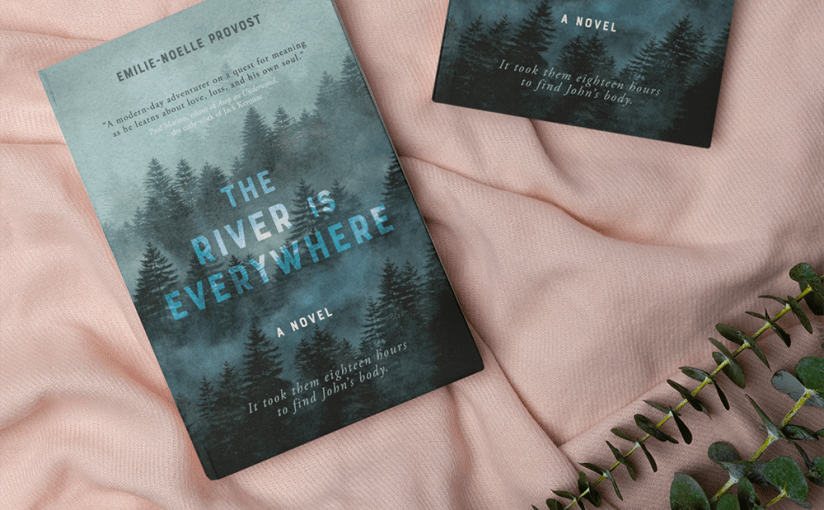
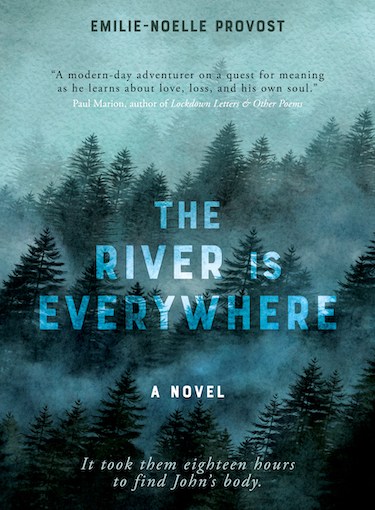
I don’t usually like to write posts that have no purpose other than to promote things I’m doing, even though I suppose that’s kind of the point of having an author website. Keeping that in mind, I’m very excited to share the cover of my second novel, The River Is Everywhere, which will be published in March by Vine Leaves Press.

A friend and fellow author told me that the cover was “me” when she saw it, which made me laugh because it’s kind of dark and moody, and a little mysterious. I’m definitely prone to the first two, and maybe the third, but I don’t think I’m the best judge of that.

Anyway, I think the cover is perfect. The folks at Vine Leaves did a great job taking the ideas I sent them and creating something that really conveys the mood of the book, and, I guess, me.

I’ll post updates about The River Is Everywhere as I get them. Thanks again to everyone who follows this blog, and to all the people who have helped the book along its journey to becoming a real, tangible thing.

ENP

The Sound of Silence

I don’t like loud or repetitive noises. In fact, a lot of sounds bother me, regardless of their volume. I especially dislike electronic devices, household appliances, and toys that beep, buzz, or talk unnecessarily. I have disabled the sound-making capability of just about everything in my house that I can. I mute videos on social media. I’m one of the few people I know who can sit in the car for hours without the radio on without even noticing that it’s been turned off.

When my daughter was a toddler, I took the batteries out of her talking Cookie Monster toy and told her it was broken. I still feel kind of badly about it, but I was a stay-at-home mom who was often alone twelve or more hours a day while my husband was at work. It was either a quiet Cookie or a nervous breakdown.

I even removed the whistle from our tea kettle, which drives my husband crazy. “How am I supposed to know when it’s boiling?” he asked. “When a lot of steam comes out of the spout,” I said. “You just have to watch it.”

I’ve always been this way. A couple of years back, I learned that there’s a name for my supersenstivity to sounds, an issue I also have with bright lights (I’ll save this for another post): sensory processing sensitivity or SPS.

Sensory processing sensitivity is an inherited trait, just like being tall or having blonde hair. People who have SPS are born with hypersensitive nervous systems. SPS is one of the traits common among highly sensitive people, of which I am one.

One of the most problematic issues my SPS causes is an aversion to the sound of my own voice. I don’t usually notice it if I’m having a conversation with someone because most of the time I’m concentrating on what the other person is saying. But I have a real problem with things like public speaking and reading aloud.

When I was in school, the issue was most noticeable in my foreign language classes. I always did well on written exams and homework, but could hardly ever bring myself to say anything out loud. I think it’s one of the reasons I’ve never been able to effectively learn to speak French even though I’d really like to.

My second novel, The River Is Everywhere, will be published this March. Among the things I need to do to market the book is plan author readings at bookstores and libraries, events that will require me to both engage in public speaking and read aloud. Although I know how important these types of events are, I’m dreading having to do them.

I’ve asked other authors I know for advice regarding this, and most of them have told me the best thing I can do is practice reading aloud from the book, and keep in mind that anyone who comes to a reading is there because they want to hear what I have to say. This makes a lot of sense, but I know it won’t be easy. Still, I’m going to give it my best shot.

Until then, I’m going to enjoy living and working in my quiet house.

ENP