Signed Copies of “The River Is Everywhere” Available

Due to the cancellation of the Leominster French Canadian Festival last Saturday, I have some extra copies of The River Is Everywhere on hand. If you were planning to pick up a copy of the book at the festival, or even if you weren’t, I’m offering signed copies of the book for $20 including sales tax and U.S. shipping. (Shipping is also available outside the U.S. but the cost varies depending on the country,) Send me a note if you’re interested.

FYI, The Leominster French Canadian Festival will take place next year on June 21, 2025.

ENP

French-Canadian Legacy Podcast

I’m happy to share that French-Canadian Legacy Podcast episode 102, featuring my interview with Jesse Martineau, is now live. We talked about my second novel, The River Is Everywhere, the coming-of-age story of a Franco-American teenager, and some other things, too. Visit this link for details and ways to listen.

Leominster French Canadian Festival: Upcoming Reading and Book Signing

This is just a quick post to announce that I will be at the Leominster French Canadian Festival in Leominster, Massachusetts on June 22. I’ll be reading from my second novel, The River Is Everywhere, and will be on hand to chat and sign copies of the book, which will be available for purchase.

The Leominster French Canadian Festival, which celebrates the cultural heritage of central Massachusetts’ large Franco-American population, is being held at the city’s Mechanic Street Park from 3 to 7 p.m. It will feature live music, food, and a variety of vendors. Admission is free. For more information visit the festival’s Facebook page.

ENP

*NO AI TRAINING

Lost World II

When I was growing up, there was a woman who went to our church whose family owned an old farm in central Massachusetts. One day each winter, she would invite anyone who wanted to come to go sledding in the farm’s apple orchard. Everyone looked forward to this outing, especially the kids. The orchard’s sledding hill was steep and wide. It seemed to go on almost forever, ending only at the point where its snow-covered grass met the January sky.

I can still remember the smell of the woodsmoke drifting out of the farmhouse’s chimney when we dragged our sleds out of the car. My sister and I had the cheap plastic ones you could buy at the grocery store, the red kind with yellow handles on the sides. One family always brought a four-seat toboggin, which was fun the first few times you tried it. But the enormous wooden sled would inevitably be abandoned once we got tired of dragging it back up the hill.

Some kids had the round, inflatable sleds that mimicked the look of tires. These were by far the fastest, barely skimming the surface of the snow as they flew by. The flat, plastic blue sleds were our least favorite. They were hard to straighten out after spending months rolled into tubes for storage. They were so lightweight, if you weren’t paying attention they would often slide right down the hill without you.

Most of the adults hung out in the warm farmhouse, sipping mulled wine as they watched us through its antique windows, their wavy glass panes distorting the view like the mirrors in a funhouse. But a few grownups always came outside with us, usually fathers. Sometimes they would sled, too, but mostly they supervised, standing at the top of the hill before the rows of dark, gnarled trees, arms folded, ready to jump at the first sign of a crash or injury. 

Eventually, a pair of mothers would be seen climbing the hill—there always seemed to be two. They’d converse for a bit with the fathers, their long down coats brushing at their ankles, before telling us we needed to come inside and warm up. 

Even on sunny days, it was always bitterly cold. Your hair and mittens would freeze solid and you’d lose the feeling in your fingers and toes. It wasn’t like our winters are now, where the temperature often rises to well above freezing, melting all the snow and ice and leaving behind yawning pools of mud.

Inside, the farmhouse smelled like wet wool and smoldering maple logs. Built in the seventeenth century, its floors were made from foot-wide old growth pine boards, grooved in the places where countless feet had walked across them: farmers wearing handmade boots, running toddlers, women carrying pies. You could feel the centuries of life in the place. It leaked right out of the horsehair plaster walls.

We drank hot cocoa from paper cups and ate cookies sprinkled with sugar while sitting on a hand-braided rug in the front of the woodstove, our boots piled up by the door. Steaming mittens and damp socks decorated the stove’s cast iron surface. Some kids, mostly boys, kept their snow pants on, waiting for the moment they would be allowed to go outside again. 

Our second time out never lasted as long as the first. We always seemed to get cold faster, most likely because we were soaked to the skin, but also because the temperature would start to drop as night came on. Our last sled run of the day often ended just as the sun settled on the western horizon.

On the drive home, my sister and I would usually fall asleep in the car. 

The last time I went sledding at the farm, I was in the sixth grade. The family who owned the land sold it after that. Today, the old farmhouse is long gone. The apple orchard is occupied by a Target store. It was built high on the sledding hill, so you can see it from the highway. 

I drive by the place sometimes. I always wonder if there’s anything left that I might recognize, a stray apple tree maybe, or a glacial erratic that was too large to move. I’ve never checked, though, even after all these years. I suppose I don’t really want to know. I prefer to remember the farm the way it was, full of laughter and magic, all covered in a deep layer of snow.

ENP

*NO AI TRAINING

Author Talk

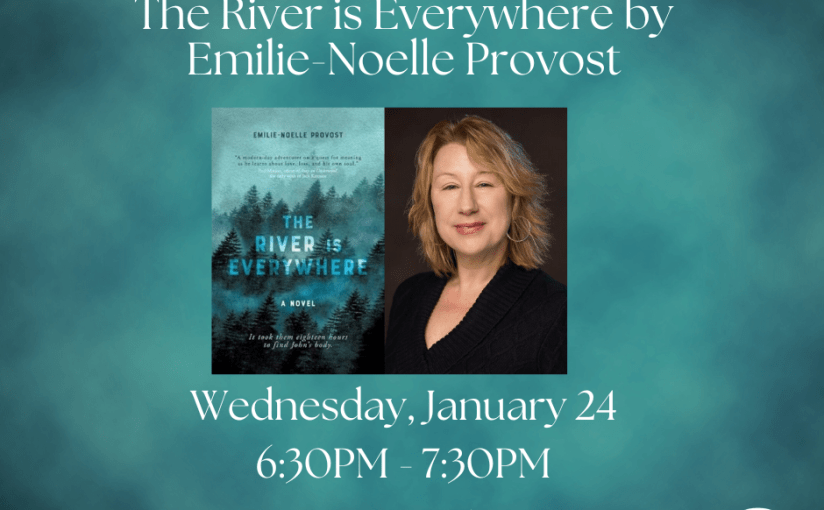
I’ll be at the Pollard Memorial Library in Lowell on January 24 from 6:30 to 7:30 p.m. to talk about my novel, The River Is Everywhere. I’ll also be doing a short reading from the book. Bring your copies for signing. In the event of inclement weather, the talk will be held virtually.

Admission is free, but registration is required so that the library can email the Zoom link to participants if the talk is moved to a virtual platform.

I hope to see you there!

*NO AI TRAINING

Stick Season

Up in the White Mountains, locals call this time of year “stick season.” As you might guess, the name comes from the deciduous trees, now bare after a brief few weeks of showing off their colorful foliage. From a distance, the green of the conifer trees growing on the mountainsides—spruce, balsam, hemlock, and white pine—stands out among the patches of gray created by the stands of naked maple and beech trees. Golden tamaracks, the only deciduous conifer trees I know of, can occasionally be spotted among the swaths of green as they prepare to shed their needles for the winter.

Stick season is my favorite time of year in the mountains. Blocked by foliage during the summer, the views stretch far and wide. In spite of sunset coming earlier, the forest is brighter. There’s no snow yet, at least not much, so the ski areas are still closed. Traffic, even on weekends, is at a minimum. Hotel rooms are cheap and plentiful. Parking at trailheads is almost always open.

The best thing about stick season is the quiet. I can hike in the still forest and listen to the calls of boreal chickadees and imagine the mountains as they were before people flocked to them. Occasionally, I cross paths with another person on the trail who, like me, can see beauty in places where many others don’t. We nod and say hello, fellow travelers among the sticks.

ENP

*NO AI TRAINING

Pen & Ink

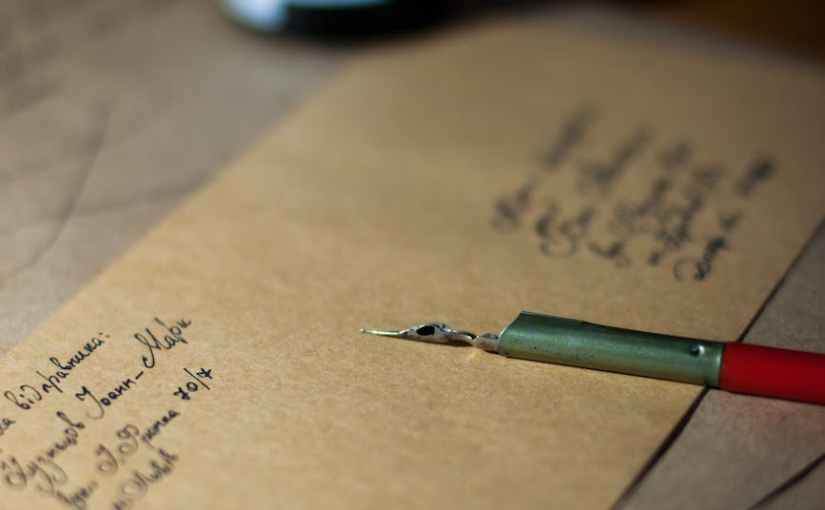
I recently returned home from a weekend away to discover that an unexpected package had come in the mail. It was from an old college friend who lives in northern Maine. She still means a lot to me, though we don’t see one another often. Inside the package was a book, an illustrated copy of the French fairy tale The White Cat, along with a beautiful handwritten letter and a photograph of her two teenage sons.

“When I saw this book, I thought of you,” my friend wrote. It was one of the nicest surprises I’ve had in a long time.

In this age of text messages, email, and Zoom calls, handwritten letters almost seem like outdated relics of communication, items to be shelved alongside rotary-dial telephones and telegraph machines. And while I think having the ability to send some forms of correspondence electronically is a godsend, paying my electricity bill online, for example, I believe it’s time for the handwritten personal letter to make a comeback. 

I can think of few better ways to let someone know how much you care about them than to sit down in a quiet place away from distractions, choose a beautiful piece of stationery, and spend time creating a document in your own handwriting that’s meant for that person alone.

Growing up, I wrote letters constantly, sometimes two or three a day. It was the only way I could communicate with friends who lived too far away to call, which in some cases was only a few towns over. (“Long distance” calls cost a bundle then, and were generally reserved for special occasions or emergencies.) I had a large collection of stationery, pens, and note cards, and relatives would often give me books of postage stamps as Christmas or birthday gifts.

In addition to writing letters to friends, I had pen pals in far away places, some of whom I never met. One of my pen pals in high school, a person I wrote to for years, lived in a small town in Vermont, a place so vastly different from my urban neighborhood near Boston that I had trouble imagining what it was like. Through his letters, I came to know Vermont’s culture, food, weather, and landscape in a way that was second only to being there.

In college, I corresponded with a friend who was studying in Japan, amassing a collection of exotic postage stamps and snapshots. I received letters weekly from another friend, a Mormon who was serving his mission in Las Vegas’ underbelly. I still remember the sad and sometimes grisly tales he told about things he saw and experienced there.

When I was a senior in college, I often wrote letters to my sister, who was a homesick freshman at a different university. I still have her replies. Among the only letters I have ever received from her, they tell the story of the time we became friends, rather than siblings who had no choice about our relationship.

I also have shoeboxes full of letters from high school and college boyfriends, some of them serious and more than an inch thick when folded into their envelopes. Others are humorous. One of them begins, “I can’t wait to see what you look like after you get your braces off.”

When my daughter, Madelaine, started college in 2016, I sent her several letters. They sat in her mailbox for months because it never occurred to her to check it. Although I love my smartphone and can’t imagine living or working without texting or the internet, I feel lucky to be a Gen Xer — fluent in both 20th and 21st century technology. Most people Madelaine’s age will never know what it’s like to stand by the window waiting for the mail to be delivered, or the thrill of opening the mailbox to find a much-anticipated envelope. 

Along with the news of the day, letters deliver their writers. Individual personalities, tastes, and moods are revealed by the choice of paper, the color of the ink, and in the unique slant of someone’s handwriting. Each is a singular creation, making a handwritten letter to communication what “slow food” is to cuisine. Like home-baked bread or a plump heirloom tomato, I’d forgotten how good letters could be until I received one.

ENP

Note: A version of this essay appeared in the September-October 2019 issue of Merrimack Valley Magazine.

*NO AI TRAINING

The Chairs of Summer

Over the past few years, my husband and I have spent several weekends at the Eagle Mountain House in Jackson, New Hampshire. We began staying at the hotel because it’s close to many of the places we like to go hiking. One of the best things about the hotel, built in 1879, is its enormous wrap-around front porch lined with wooden rocking chairs.

As we sipped coffee on the hotel’s porch on a recent Sunday morning, I started thinking about these chairs: the generations of summer visitors who have sat in them; the conversations they’ve had; the marriage proposals; the breaking of bad news; the cocktails people have enjoyed while taking in the mountain views.

Eagle Mountain’s sturdy rockers reminded me of similar ones on the porch of the historic Gosport Hotel on Star Island, located off the coast of Portsmouth, New Hampshire. I spent several summers hanging out in these chairs growing up. As much as my life changed over those years, the chairs, solid and hard-worn, were always the same.

At the house where I lived as a kid, we had a set of heavy wooden outdoor chairs with removable vinyl cushions. Hand-me-downs from a family member who no longer wanted them, these chairs were monstrosities. It took two adults to move one. The cushions soaked up rainwater like sponges, and if you happened to stub a toe on one of the chairs’ legs, you’d be hopping around for ten minutes, howling. When my friends came over, we usually sat on the lawn.

The first summer I lived on my own, after graduating from college, I bought two green plastic chairs at a hardware store. I lived in Boston and didn’t have a car, so I carried them the three blocks back to my apartment. My roommate and I put the chairs out on our miniature back porch, which overlooked the kitchen of a Chinese restaurant. We spent much of that summer sitting in them while grilling burgers on our rickety hibachi and drinking gin and tonics out of plastic cups.

My husband bought me a foldable canvas sand chair with the Rolling Rock beer logo on it—a promotional item he’d found at a liquor store—when I was pregnant with our daughter. It’s one of the most comfortable beach chairs I’ve owned, but as that summer wore on and my belly grew bigger, I frequently needed his help to get out of it and back into a standing position.

When our daughter was a toddler, we got her a pint-size white resin chair, just the right size for a two-year-old. She used to like to sit outside in it to eat lunch, a 5-gallon bucket serving as her dining table. We were living in our first house at the time. When we sold it we got rid of most of our outdoor furniture, but not that chair. She’ll be 25 this year, and that little seat is still stored up in the rafters of our garage.

For a number of summers, my husband complained about the fact that it’s nearly impossible to find the old fashioned aluminum-frame chairs—the foldable kind with backs and seats woven from vinyl straps—that his parents had when he was growing up. Several years ago, quite by accident, my daughter and I found these chairs for sale at a discount store, and bought one for him for Father’s Day. As a surprise, we put a fancy bow on the chair and set it up in the middle of the garage so he’d find it when he took the trash out. Its metal frame digs into the back of your legs after you’ve been sitting in it for a while, but it’s still the only chair he uses whenever we host a barbecue.

We’ve wiled away many pleasant summer afternoons in the four red plastic Adirondack chairs we bought when we moved into the house where we live now. But they only seem to last a season or two before they have to be replaced. We’re down to two of these chairs now—both sure to break soon. We’re not home a lot on weekends anymore, so we still haven’t decided what to replace them with.

Weighing a mere two pounds each and folding neatly into custom carrying cases, our newest summer chairs are stored in the back of our car. Made of polyester mesh and steel, these two comfy high-tech seats are ideal for relaxing and enjoying drinks and snacks after a long hike. They weren’t inexpensive, but they were worth every penny.

Note: A version of this essay appeared in the July/August 2021 issue of Merrimack Valley Magazine.

ENP

*NO AI TRAINING

Book Award Finalist

I’m excited to announce that The River Is Everywhere has been named a finalist for the 2023 National Indie Excellence Award in literary fiction. The National Indie Excellence Awards are the gold standard for books published by independent publishers in the U.S. I’m very happy, and I’m even prouder of this book than I already was.

The River Is Everywhere is available from all major booksellers including Amazon and Barnes and Noble as well as from several indie stores including the Lowell Book Company. If you’ve read the book and liked it, please consider leaving a review on Goodreads or Amazon, or drop me a note via this website’s contact page.

ENP

*NO AI TRAINING

Île d’Orléans

I’ve been working on a new novel. Because it looks like I *might* actually have the first draft of the manuscript done soon, I thought I’d write a post about it.

The novel—a wild, suspenseful, character-driven romance featuring strong female characters—is set in Île d’Orleans, a pastoral island in the Saint Lawrence River near Québec City. It’s one of my favorite places in the world.

Many of the houses and churches on the island were built in the 17th and 18th centuries by the original settlers of New France. Development in Île d’Orleans is heavily restricted, so it still looks much as I imagine it has for the last few hundred years. If you suddenly found yourself on the island and didn’t know where you were, you could easily think you were someplace in rural France.

Église Sainte-Famille, built in 1743. This church appears in the novel, which is partly set in the village of Sainte-Famille. Photo credit: Marc Lautenbacher, Wikimedia Commons

Île d’Orleans is home to six historic villages, each with its own unique charm. Since it was settled by Europeans more than 400 years ago, the island has been a farming community. Today, it is famous for the quality of its products especially strawberries, apples, maple syrup, and wine.

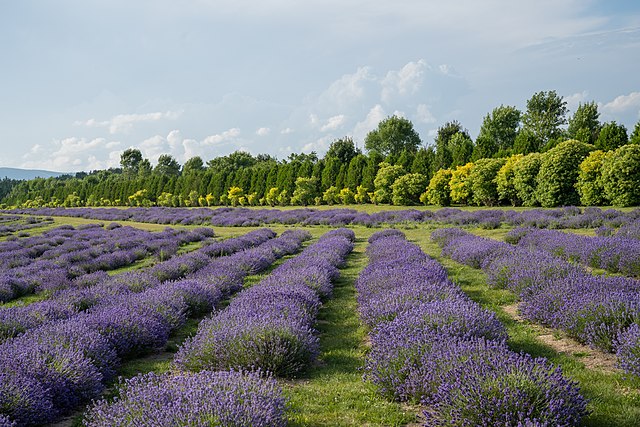
Île d’Orléans lavender field. Photo credit: Wilfredo Rafael Rodriguez Hernandez, Wikimedia Commons

I like big, dramatic, steamy romances (think Masterpiece Theatre) but most of the romance novels out there are very poorly written, not to mention loaded with tropes, clichés, and sexist BS, making them pretty much unreadable.

I started writing this book a couple of years ago as a challenge: I wanted to see if I could write a romance novel that I would not only want to read but wouldn’t be able to put down once I started. I figured if I were successful, other people would want to read it, too. So far, I think I’m on the right track. The novel doesn’t have a title yet, but I’m working on that, too.

Île d’Orléans strawberry harvest. Photo credit: Marc Lautenbacher, Wikimedia Commons

I’m considering the idea of making this novel the first in a series. It’s a little early yet to tell if that will be feasible, but the possibility is definitely there.

Stay tuned for news about this exciting new novel as it develops. I hope to have the first draft of the manuscript completed by July and to have an edited version done by the end of the summer.

ENP

*NO AI TRAINING