Crossroads

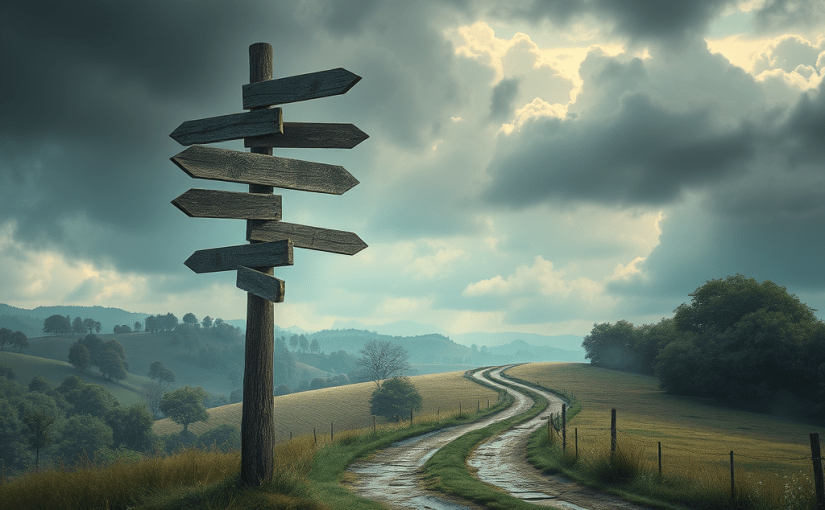
The beginning of 2025 finds my life at a crossroads. I’m very close to finishing my third novel, a project on which I’ve been working for years and desperately want to complete. At the same time, I seem unable to focus on it. My husband was laid off from his job at the end of September, leaving us adrift in a gulf of uncertainty.

Do I sequester myself in some quiet place where I won’t be distracted for a couple of weeks to finish my book? Should I put the book aside for the time being and look for steady nine-to-five work? Or should I try to find more freelance jobs so I can have a flexible schedule and make more money at the same time, allowing me to still work on the novel? If I do this, will I be too tired to work on the book anyway?

Perhaps I should try to bushwhack my own path, combining these options in such a way that I’ll be able to accomplish most of what I want?

I’ve been stuck, waiting for a sign, for some sort of messenger to point the way, getting nothing done in the meantime.

In Western folklore, crossroads often symbolize liminal spaces, places between worlds, middle passages that are neither in one realm nor another. In medieval Europe, the bodies of executed criminals and people who had committed suicide were often buried at crossroads as they were considered a sort of no man’s land, places set apart from the world from which the souls of the dead would be unable to escape.

Lacking a map or any sense of direction, I’ve discovered that exiting a crossroads, where no path is clearly defined, can be almost as difficult for the living.

In many cultures, crossroads are places where demons and spirits appear unexpectedly. In the early 20th century American South, many African Americans believed visiting a crossroads at certain times of day meant encountering the Devil. It brings to mind the frequently covered song, Cross Road Blues, by blues guitar pioneer Robert Johnson, originally released in 1937. According to legend, Johnson, who died mysteriously at age 27, acquired his impressive musical skills after selling his soul to the Devil at a crossroads.

Robert Frost’s famous poem The Road Not Taken, published in 1916, also comes to mind, as crossroads often symbolize indecision, uncertainty, or even regret in literature.

But crossroads can also be places of opportunity. By their nature, they are places where chance meetings are likely to occur, perhaps allowing favorable circumstances to unexpectedly manifest themselves.

Modern psychology says when we find ourselves at a crossroads, unable to decide which direction to take, it often means we are preparing to let go of something to which we are emotionally attached. I often feel this way lately. Whichever direction I choose to go, I’ll be leaving something behind. And because whatever I stand to potentially gain remains undefined, the risk involved in taking any one road seems great.

Robert Frost felt called to take the road “less traveled by,” knowing he’d probably never learn what he might have discovered had he chosen the other path. One of these days, the voice of wisdom will prevail and I’ll know what I should do, too. In the meantime, I’ll be keeping an eye out for the Devil.

ENP

The Shortest Day

You hear a lot about seasonal affective disorder this time of year. Many people find the lack of sunlight depressing, but I don’t mind December’s dark days.

I love how quiet our neighborhood is after the sun sets. No one is outside mowing their lawn. There are no leaf blowers drowning out the music on the radio; no dogs barking at passing strangers. The kids are all inside, their bicycles and baseball gloves tucked away until spring.

I like to spend time in the woods late on December afternoons. The bare branches of sugar maples and white oaks filter the sun’s last, long shafts of light and for a few enchanted minutes the forest floor glows. Deer gather along the treeline looking to browse what’s left of last summer’s swaying grass. When the sun finally sets, the whole sky catches on fire.

On the winter solstice a few years ago, Rob and I drove to Harold Parker State Forest in Andover. The sky was overcast. The layer of crisp snow covering the trail cracked beneath our boots. We spotted the tracks of pacing coyotes by the shore of Salem Pond, and could plainly see the places where beavers had hauled themselves out of the water on the hunt for fresh twigs. We followed the trail of a rafter of turkeys for a while, the waggish birds’ tracks eventually drifting off into the brush. After the hazy white disc of the sun disappeared over the icy pond, leaving the place to the owls and fishers and other creatures of the night, we hiked back to the car feeling like we’d emerged from a dream.

Last year on the shortest day, I met my friend Liz at the Crane Estate in Ipswich. We hiked over the grassy dunes and watched as streaks of pink and lavender formed in the sky above Plum Island. Loons from the north country floated on the sea—their winter home. The air was cold and dry, the kind the makes you feel more alive just for breathing.

A lot of animals hibernate this time of year: bears, and chipmunks, and the chirping wood frogs that fill up vernal pools in the spring. Dark days are good for resting.

On December mornings, Rob and I lie in bed long past the time we normally get up, flannel sheets covering our noses. We talk quietly, waiting for the dawn, our three cats curled up on the rug by the heater. Over the years we’ve been together, these moments have come to define peace.

Long nights lend themselves to reflection. I sit by the radiator in my office and think about my friends who died this year, how much I miss them and what I would say to them if I could. In the gray silence, I reflect on the things we’ve done since last December, the places we went, people we met. I think about my young adult daughter and all the adventures she’s yet to have, and I pray for her to be happy and safe, that she’ll be able to learn from her mistakes and stay strong when life gets hard. I make plans for the future, and wonder what the following year will bring, where we might go when the sun returns.

Often, in my mind, I confuse the winter solstice with New Year’s Day. It always feels like a new beginning to me, much more so than the first of January ever has. Several civilizations celebrated the New Year on the solstice. The Old Norse had Yule, a three-day festival marking the annual return of the light. The Zuni Native American tribe has observed Shalako for centuries, a series of dances that celebrate the New Year by re-enacting the creation of the world. In Wales, the winter solstice celebration of Alban Arthan has persisted since pre-history. It marks the birth of the New Sun, which brings with it a new year and renewed life.

I know there are many people who can’t wait for spring’s longer, warmer days, but I’m happy to savor the serenity this time of year brings, to soak up its stillness so that I can recall it amid the bustle that will return soon enough.

ENP

* A version of this essay appeared on RichardHowe.com on Dec. 14, 2022.

Books Make Great Holiday Gifts

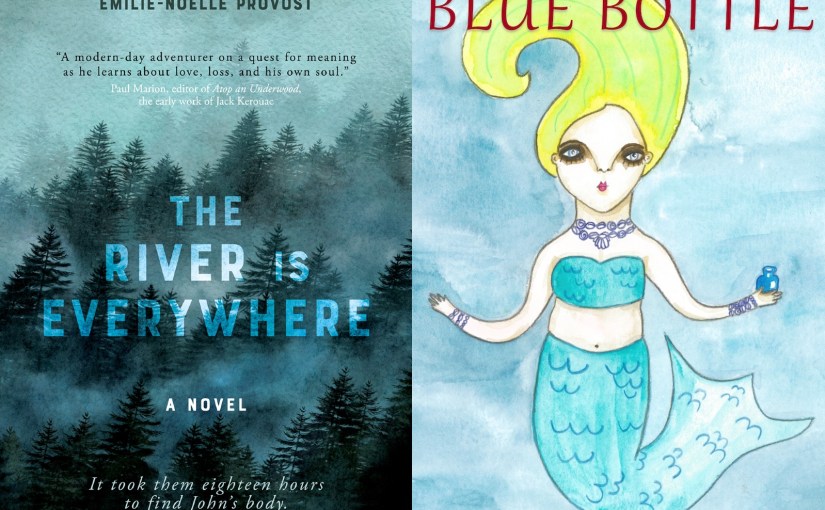
The holiday shopping season is here! If you’d like to purchase a signed copy of The River Is Everywhere or The Blue Bottle for your favorite reader or for yourself, you can buy books directly from me. Copies of either novel are $20 each including US shipping. (Shipping costs to addresses outside the US vary.) Send me a note via this site’s contact page for more info. Happy Holidays!

ENP

Art is Power

I’ve been thinking about art lately, not only visual art but also literature and music. These things are an important part of my life, not just because I’m a writer but because they make me feel connected to something larger than myself, to other people, to memories I’d forgotten about. Whether I’m listening to music, reading a novel, or looking at a mural, art makes me feel grounded.

Whatever form they might take, we have known for a long time that the arts help foster a sense of community among people by lifting up and celebrating universal human experiences. They give us hope, promote mutual understanding, and can engender feelings of strength and empowerment.

Novels, songs, photographs, and paintings let us know we’re not alone, that there’s a light, however faint, waiting for us someplace in an often too-dark world.

It doesn’t happen often, but there have been times when a painting, photograph, or piece of music has moved me to tears. I once stood in the middle of a gallery at the Addison Gallery of American Art in Andover crying uncontrollably after looking at a photograph by Sally Mann.

It was an image of a young girl, about seven or eight years old, playing outdoors in dress-up clothes, her dirt-smudged cheeks a perfect foil for the string of pearls around her neck. The expression on her face was one of pure ferocity: Try to stop me. I dare you.

The photograph evoked a time in my early life—in the young lives of nearly all women—when I was fearless, bold, when I was in full possession of my own power and could wield it at will for my own sake and enjoyment, without consideration for the way my behavior would be viewed by anyone, especially members of the opposite sex. Try to stop me. I dare you.

The girl in that photo was me, before I was told that it was time I started dressing and and acting a certain way, that I should lose ten pounds, cross my legs, keep my voice down. Until the moment I set eyes on that image, I’d forgotten all about her. In some ways, that photograph gave me back a part of myself that I’d lost.

The arts communicate thoughts and ideas in a way nothing else can, directly from the heart and mind of one person to the heart and mind of another, even across continents and centuries. It’s for this reason that the arts, and creative people themselves, have historically been viewed as threats by the governments of certain countries, especially by autocratic regimes.

In the 1930s, Hitler’s Gestapo arrested any creative person whose work didn’t conform to Nazi ideology, destroying their studios, dismissing them from their jobs, even sending them to concentration camps.

As part of their mission to squash dissent, authoritarian governments continue this practice today. In 2011, artist and filmmaker Ai Weiwei was arrested and jailed by the Chinese government. And in 2021, Cuba’s president, Miguel Diaz-Canel Bermudez, had artists Luis Manuel Otero Alcantara and Maykel Osorbo arrested on trumped up charges and imprisoned after closed-door trials.

Authoritarians have also sought to use art’s influence as a means toward their own ends.

Artists of which Hitler approved were given the task of creating pieces that supported the narrative the Nazis wished to put forth, works that often depicted strong, blond Aryans conducting wholesome work in an idyllic German countryside.

The Third Reich commissioned several musical compositions to excite crowds and celebrate their perceived achievements, some of which were performed live as Jews were marched to their graves.

A similar phenomenon has often been seen in dictators commissioning images of themselves, not only to boost their own egos but to implant in people’s minds the idea that they are omnipresent and all-powerful.

Josef Stalin ordered hundreds of images of himself to be created, paintings and sculptures that plastered the Soviet landscape during the first half of the twentieth century. The same thing can be seen today in North Korea, Syria, and Turkmenistan.

Making and consuming visual art, music, and literature can also be an act of resistance. This has historically been the case in many countries, even in the United States. Some of these American works include Andy Warhol’s 1964 silkscreen Race Riot; Keith Haring’s 1989 painting Ignorance = Fear / Silence = Death, created to protest the government’s lack of response to the AIDS epidemic; Dorothea Lange’s powerful photographs of migrant workers; and the well known The Problem We All Live With, painted by Norman Rockwell in 1964 to draw attention to the school desegregation crisis in the South.

Since the election, much has been written speculating about how the creative community in the United States will fare under a government that has historically been hostile toward it. Some have predicted art’s demise or at least its decline. But I disagree with this idea. Like the human spirit, one of art’s greatest strengths is in its resilience, in its ability to rise up under the most adverse of circumstances.

As long as the arts provide us with a source of strength, hope, and inspiration people will fight to protect and preserve them. And as long as we have them as part of our lives, our culture and we ourselves will persevere.

*A version of the essay was published on RichardHowe.com.

ENP

New Podcast Interview

I was recently a guest on the Trevor Roberts Talkfest podcast. We discussed Franco-American history and culture and my second novel The River Is Everywhere. It’s especially exciting because the podcast is based on the West Coast, where few people know anything about Franco-Americans or French Canadians. Trevor was a great host and I enjoyed talking with him.

Episode 40 – Rivers, Roots, and Revelation: Emilie-Noelle Provost’s Franco-American Coming-of-Age Tale is available now on Apple Podcasts, Spotify, iHeart Radio, Amazon Music, Buzzsprout, Podchaser and anywhere else you can listen to podcasts. A video version of my conversation with Trevor will be out soon.

ENP

Upcoming Event: Le Petit Rassemblement des Artistes Franco-Américain: A Celebration of Modern Expression

I’m proud to be among the speakers invited to present their work at the Franco-American Collection at the University of Southern Maine‘s petit-rassemblement on November 2. I will be talking about my second novel, The River Is Everywhere, and will have copies of the book for sale. The event will take place at LA Arts in Lewiston at 1 p.m. Admission is free and open to the public. I hope to see you there!

ENP

*NO AI TRAINING

The Summer of ’92

The excessive heat this season reminds of the summer after my junior year of college. I don’t know if it was as hot back then, in 1992, but it certainly felt like it. The house in which I grew up was built in the late 19th century. There was no air conditioning. 

My younger sister and I didn’t even have window AC units in our bedrooms. (Our mother did, of course.) Nat and I had to cope with cheap oscillating fans set up on our night tables. Mine squeaked and rattled every time it turned.

One of our neighbors, a guy named Leo who was a few years older than I, had recently gotten out of the Marines. He had graduated from high school when I was a sophomore, so I didn’t know him well. I had older friends who knew him, though. I’d run into him at a party at the beginning of the summer. We’d talked for a few minutes, mostly about our neighborhood and the friends we had in common. 

Leo didn’t mention anything to me about his experience in the Marines at that party, but just about everyone knew he’d been one of the first troops on the ground during the Invasion of Panama in December 1989, Operation Just Cause, during which the U.S. removed that country’s de facto dictator, notorious drug lord, General Manuel Noriega. Leo was also a veteran of the Gulf War, Operation Desert Storm, a short-lived armed conflict that lasted from August 1990 through February 1991 that almost no one remembers or cares about now.

Desert Storm was launched after Iraq’s then-dictator, Saddam Hussein, invaded and occupied the neighboring country of Kuwait on the premise that Kuwait was drilling in an Iraqi oil field. After Hussein ignored the United Nations Security Council’s demands that Iraq withdraw, the U.S. and U.K. deployed troops to the region.

Even at the time, many Americans viewed the Gulf War as a waste of resources. Some protested it, saying it was nothing but blood for oil, which, among other things, it was.

“It wasn’t a real war,” you’d hear older veterans of other wars say about Desert Storm. But Leo still got to march in our town’s Flag Day parade alongside them wearing his dress blues, a sight that brought me to tears. I’m still not sure why.

The other thing about Desert Storm that most people have forgotten, or maybe never wanted to know, is that people died. A college friend of mine named Heather, who was also a Desert Storm vet, lost her fiancé in the war. He was killed when the truck he was driving was hit by an Iraqi missile. She kept his memorial flag in a glass case in her dorm room beside a framed picture of the two of them dressed in their desert fatigues.

Like 250,000 other Desert Storm veterans, Heather suffered from Gulf War Syndrome, a chronic, multi-symptomatic disease that no one, not even the government, recognized as being real at the time, or for many years afterward. These days, you can look Gulf War Syndrome up online. Some sources say it might have been caused by exposure to chemical weapons, namely the lethal nerve agent sarin, but no one is really sure.

I don’t know whether Leo had Gulf War Syndrome, but he did have post-traumatic stress disorder.

In the early 1990s, there was an economic recession in the United States. Jobs were hard to get, especially if you were young and didn’t have a lot of work experience. After he got out of the Marines, Leo found a job driving an armored truck, delivering cash to banks. Once in a while, I’d see him driving the hulking vehicle around town.

One steamy morning in July 1992, my mother came upstairs to my bedroom to tell me someone was at the front door, asking for me. It was Leo. He’d parked the armored truck in our driveway—something no one could get away with now considering just about every commercial vehicle on the road is tracked by GPS.

“I saw your car, so I figured you were home,” he said, as we sat down on the porch steps. “I hope you don’t mind me coming over. You seem nice, someone who’s easy to talk to.”

He told me a story about the Invasion of Panama: He and a few other Marines were hiding out in a barn. The Panama Defense Forces sent a cow into the building with a bomb strapped around its middle. The bomb, and the cow, exploded within feet of Leo and the other Marines. Leo was lucky. The soldier crouched down beside him was killed.

“I can’t handle loud noises anymore,” Leo told me. “Sometimes I can’t sleep thinking about that day. I can’t even really describe it to you; it was so bad. You’re the only person I’ve talked to about it besides my mom.”

After that, Leo began stopping by on a regular basis. My mother complained about the armored truck being in the driveway, so he started parking it out front. 

Sometimes Leo would talk about other harrowing events that had taken place while he was in the Marines, but not often. He mostly told me about the places he’d gotten to travel and the people he’d met. He talked about his family—his stepfather was a cop; his younger brother played the drums—and the things he wanted to do now that he was home. We’d talk about music, the bands we liked, and whether we had seen them live. Leo was softspoken, thoughtful, polite—traits that would have seemed out of character for a Marine if I hadn’t gotten to know him.

Leo and I always sat on the porch. We never went anywhere else. He never asked me out on a date, and he never called to talk to me on the phone. I don’t even think he had my number. I know I never had his.

None of that was the point. Looking back, our relationship was perhaps of the purest kind: Our hearts were friends. Thinking about it now, I’m reminded of something the 1970s Boston storyteller, Brother Blue, used to say: “From the middle of me, to the middle of you.”

The term “post-traumatic stress disorder” didn’t mean much to me back then. At twenty-one, I had no frame of reference for it. But it was obvious that Leo had issues with which he needed help. I don’t know if treatment was available to him or, if it was, whether he ever sought it out. I never asked, mostly because I got the feeling that he liked talking to me because I listened to what he had to say without judgement, without offering half-assed advice about things I would never fully understand.

I didn’t see Leo again after I returned to college that fall. I moved to Boston right after I graduated. A year later, my mother sold our house and moved to another town forty minutes away. About fifteen years ago, I heard that Leo had gotten married and was working as a firefighter, news that made me hopeful that he was OK.

I still think about Leo sometimes, especially over the past few years, since Russia invaded Ukraine. Leo shaped the way I view war. It’s sometimes a necessary evil. But for most of history, war has been a product of governments, often fortified by private capital, flexing their muscles to get what they want—schoolyard bullies beating up little kids to get their lunch money.

All wars, justified or not, are fought by everyday human beings, people with families and friends who love them, most of them heartbreakingly young. The luckiest go home afterward and do their best to put their lives back together. In order to make it possible to go on, most manage to attach some kind of meaning to the violence and suffering. But the toll is always huge, sometimes more than any one person can afford.

ENP

*NO AI TRAINING

Signed Copies of “The River Is Everywhere” Available

Due to the cancellation of the Leominster French Canadian Festival last Saturday, I have some extra copies of The River Is Everywhere on hand. If you were planning to pick up a copy of the book at the festival, or even if you weren’t, I’m offering signed copies of the book for $20 including sales tax and U.S. shipping. (Shipping is also available outside the U.S. but the cost varies depending on the country,) Send me a note if you’re interested.

FYI, The Leominster French Canadian Festival will take place next year on June 21, 2025.

ENP

French-Canadian Legacy Podcast

I’m happy to share that French-Canadian Legacy Podcast episode 102, featuring my interview with Jesse Martineau, is now live. We talked about my second novel, The River Is Everywhere, the coming-of-age story of a Franco-American teenager, and some other things, too. Visit this link for details and ways to listen.

Leominster French Canadian Festival: Upcoming Reading and Book Signing

This is just a quick post to announce that I will be at the Leominster French Canadian Festival in Leominster, Massachusetts on June 22. I’ll be reading from my second novel, The River Is Everywhere, and will be on hand to chat and sign copies of the book, which will be available for purchase.

The Leominster French Canadian Festival, which celebrates the cultural heritage of central Massachusetts’ large Franco-American population, is being held at the city’s Mechanic Street Park from 3 to 7 p.m. It will feature live music, food, and a variety of vendors. Admission is free. For more information visit the festival’s Facebook page.

ENP

*NO AI TRAINING