Lost World II

When I was growing up, there was a woman who went to our church whose family owned an old farm in central Massachusetts. One day each winter, she would invite anyone who wanted to come to go sledding in the farm’s apple orchard. Everyone looked forward to this outing, especially the kids. The orchard’s sledding hill was steep and wide. It seemed to go on almost forever, ending only at the point where its snow-covered grass met the January sky.

I can still remember the smell of the woodsmoke drifting out of the farmhouse’s chimney when we dragged our sleds out of the car. My sister and I had the cheap plastic ones you could buy at the grocery store, the red kind with yellow handles on the sides. One family always brought a four-seat toboggin, which was fun the first few times you tried it. But the enormous wooden sled would inevitably be abandoned once we got tired of dragging it back up the hill.

Some kids had the round, inflatable sleds that mimicked the look of tires. These were by far the fastest, barely skimming the surface of the snow as they flew by. The flat, plastic blue sleds were our least favorite. They were hard to straighten out after spending months rolled into tubes for storage. They were so lightweight, if you weren’t paying attention they would often slide right down the hill without you.

Most of the adults hung out in the warm farmhouse, sipping mulled wine as they watched us through its antique windows, their wavy glass panes distorting the view like the mirrors in a funhouse. But a few grownups always came outside with us, usually fathers. Sometimes they would sled, too, but mostly they supervised, standing at the top of the hill before the rows of dark, gnarled trees, arms folded, ready to jump at the first sign of a crash or injury. 

Eventually, a pair of mothers would be seen climbing the hill—there always seemed to be two. They’d converse for a bit with the fathers, their long down coats brushing at their ankles, before telling us we needed to come inside and warm up. 

Even on sunny days, it was always bitterly cold. Your hair and mittens would freeze solid and you’d lose the feeling in your fingers and toes. It wasn’t like our winters are now, where the temperature often rises to well above freezing, melting all the snow and ice and leaving behind yawning pools of mud.

Inside, the farmhouse smelled like wet wool and smoldering maple logs. Built in the seventeenth century, its floors were made from foot-wide old growth pine boards, grooved in the places where countless feet had walked across them: farmers wearing handmade boots, running toddlers, women carrying pies. You could feel the centuries of life in the place. It leaked right out of the horsehair plaster walls.

We drank hot cocoa from paper cups and ate cookies sprinkled with sugar while sitting on a hand-braided rug in the front of the woodstove, our boots piled up by the door. Steaming mittens and damp socks decorated the stove’s cast iron surface. Some kids, mostly boys, kept their snow pants on, waiting for the moment they would be allowed to go outside again. 

Our second time out never lasted as long as the first. We always seemed to get cold faster, most likely because we were soaked to the skin, but also because the temperature would start to drop as night came on. Our last sled run of the day often ended just as the sun settled on the western horizon.

On the drive home, my sister and I would usually fall asleep in the car. 

The last time I went sledding at the farm, I was in the sixth grade. The family who owned the land sold it after that. Today, the old farmhouse is long gone. The apple orchard is occupied by a Target store. It was built high on the sledding hill, so you can see it from the highway. 

I drive by the place sometimes. I always wonder if there’s anything left that I might recognize, a stray apple tree maybe, or a glacial erratic that was too large to move. I’ve never checked, though, even after all these years. I suppose I don’t really want to know. I prefer to remember the farm the way it was, full of laughter and magic, all covered in a deep layer of snow.

ENP

*NO AI TRAINING

Author Talk

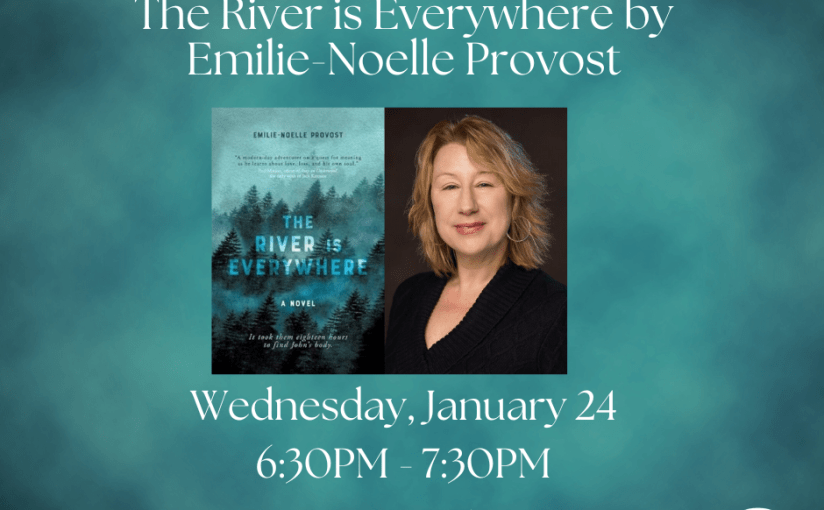
I’ll be at the Pollard Memorial Library in Lowell on January 24 from 6:30 to 7:30 p.m. to talk about my novel, The River Is Everywhere. I’ll also be doing a short reading from the book. Bring your copies for signing. In the event of inclement weather, the talk will be held virtually.

Admission is free, but registration is required so that the library can email the Zoom link to participants if the talk is moved to a virtual platform.

I hope to see you there!

*NO AI TRAINING

Stick Season

Up in the White Mountains, locals call this time of year “stick season.” As you might guess, the name comes from the deciduous trees, now bare after a brief few weeks of showing off their colorful foliage. From a distance, the green of the conifer trees growing on the mountainsides—spruce, balsam, hemlock, and white pine—stands out among the patches of gray created by the stands of naked maple and beech trees. Golden tamaracks, the only deciduous conifer trees I know of, can occasionally be spotted among the swaths of green as they prepare to shed their needles for the winter.

Stick season is my favorite time of year in the mountains. Blocked by foliage during the summer, the views stretch far and wide. In spite of sunset coming earlier, the forest is brighter. There’s no snow yet, at least not much, so the ski areas are still closed. Traffic, even on weekends, is at a minimum. Hotel rooms are cheap and plentiful. Parking at trailheads is almost always open.

The best thing about stick season is the quiet. I can hike in the still forest and listen to the calls of boreal chickadees and imagine the mountains as they were before people flocked to them. Occasionally, I cross paths with another person on the trail who, like me, can see beauty in places where many others don’t. We nod and say hello, fellow travelers among the sticks.

ENP

*NO AI TRAINING

Pen & Ink

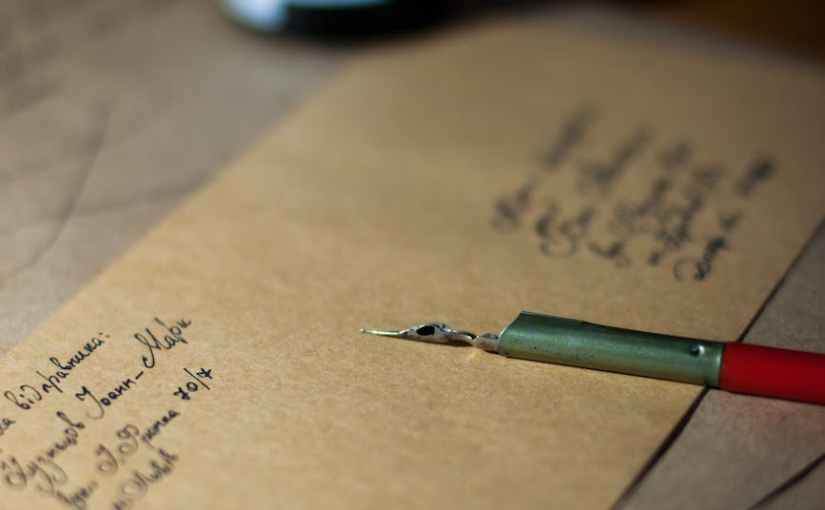
I recently returned home from a weekend away to discover that an unexpected package had come in the mail. It was from an old college friend who lives in northern Maine. She still means a lot to me, though we don’t see one another often. Inside the package was a book, an illustrated copy of the French fairy tale The White Cat, along with a beautiful handwritten letter and a photograph of her two teenage sons.

“When I saw this book, I thought of you,” my friend wrote. It was one of the nicest surprises I’ve had in a long time.

In this age of text messages, email, and Zoom calls, handwritten letters almost seem like outdated relics of communication, items to be shelved alongside rotary-dial telephones and telegraph machines. And while I think having the ability to send some forms of correspondence electronically is a godsend, paying my electricity bill online, for example, I believe it’s time for the handwritten personal letter to make a comeback. 

I can think of few better ways to let someone know how much you care about them than to sit down in a quiet place away from distractions, choose a beautiful piece of stationery, and spend time creating a document in your own handwriting that’s meant for that person alone.

Growing up, I wrote letters constantly, sometimes two or three a day. It was the only way I could communicate with friends who lived too far away to call, which in some cases was only a few towns over. (“Long distance” calls cost a bundle then, and were generally reserved for special occasions or emergencies.) I had a large collection of stationery, pens, and note cards, and relatives would often give me books of postage stamps as Christmas or birthday gifts.

In addition to writing letters to friends, I had pen pals in far away places, some of whom I never met. One of my pen pals in high school, a person I wrote to for years, lived in a small town in Vermont, a place so vastly different from my urban neighborhood near Boston that I had trouble imagining what it was like. Through his letters, I came to know Vermont’s culture, food, weather, and landscape in a way that was second only to being there.

In college, I corresponded with a friend who was studying in Japan, amassing a collection of exotic postage stamps and snapshots. I received letters weekly from another friend, a Mormon who was serving his mission in Las Vegas’ underbelly. I still remember the sad and sometimes grisly tales he told about things he saw and experienced there.

When I was a senior in college, I often wrote letters to my sister, who was a homesick freshman at a different university. I still have her replies. Among the only letters I have ever received from her, they tell the story of the time we became friends, rather than siblings who had no choice about our relationship.

I also have shoeboxes full of letters from high school and college boyfriends, some of them serious and more than an inch thick when folded into their envelopes. Others are humorous. One of them begins, “I can’t wait to see what you look like after you get your braces off.”

When my daughter, Madelaine, started college in 2016, I sent her several letters. They sat in her mailbox for months because it never occurred to her to check it. Although I love my smartphone and can’t imagine living or working without texting or the internet, I feel lucky to be a Gen Xer — fluent in both 20th and 21st century technology. Most people Madelaine’s age will never know what it’s like to stand by the window waiting for the mail to be delivered, or the thrill of opening the mailbox to find a much-anticipated envelope. 

Along with the news of the day, letters deliver their writers. Individual personalities, tastes, and moods are revealed by the choice of paper, the color of the ink, and in the unique slant of someone’s handwriting. Each is a singular creation, making a handwritten letter to communication what “slow food” is to cuisine. Like home-baked bread or a plump heirloom tomato, I’d forgotten how good letters could be until I received one.

ENP

Note: A version of this essay appeared in the September-October 2019 issue of Merrimack Valley Magazine.

*NO AI TRAINING

The Chairs of Summer

Over the past few years, my husband and I have spent several weekends at the Eagle Mountain House in Jackson, New Hampshire. We began staying at the hotel because it’s close to many of the places we like to go hiking. One of the best things about the hotel, built in 1879, is its enormous wrap-around front porch lined with wooden rocking chairs.

As we sipped coffee on the hotel’s porch on a recent Sunday morning, I started thinking about these chairs: the generations of summer visitors who have sat in them; the conversations they’ve had; the marriage proposals; the breaking of bad news; the cocktails people have enjoyed while taking in the mountain views.

Eagle Mountain’s sturdy rockers reminded me of similar ones on the porch of the historic Gosport Hotel on Star Island, located off the coast of Portsmouth, New Hampshire. I spent several summers hanging out in these chairs growing up. As much as my life changed over those years, the chairs, solid and hard-worn, were always the same.

At the house where I lived as a kid, we had a set of heavy wooden outdoor chairs with removable vinyl cushions. Hand-me-downs from a family member who no longer wanted them, these chairs were monstrosities. It took two adults to move one. The cushions soaked up rainwater like sponges, and if you happened to stub a toe on one of the chairs’ legs, you’d be hopping around for ten minutes, howling. When my friends came over, we usually sat on the lawn.

The first summer I lived on my own, after graduating from college, I bought two green plastic chairs at a hardware store. I lived in Boston and didn’t have a car, so I carried them the three blocks back to my apartment. My roommate and I put the chairs out on our miniature back porch, which overlooked the kitchen of a Chinese restaurant. We spent much of that summer sitting in them while grilling burgers on our rickety hibachi and drinking gin and tonics out of plastic cups.

My husband bought me a foldable canvas sand chair with the Rolling Rock beer logo on it—a promotional item he’d found at a liquor store—when I was pregnant with our daughter. It’s one of the most comfortable beach chairs I’ve owned, but as that summer wore on and my belly grew bigger, I frequently needed his help to get out of it and back into a standing position.

When our daughter was a toddler, we got her a pint-size white resin chair, just the right size for a two-year-old. She used to like to sit outside in it to eat lunch, a 5-gallon bucket serving as her dining table. We were living in our first house at the time. When we sold it we got rid of most of our outdoor furniture, but not that chair. She’ll be 25 this year, and that little seat is still stored up in the rafters of our garage.

For a number of summers, my husband complained about the fact that it’s nearly impossible to find the old fashioned aluminum-frame chairs—the foldable kind with backs and seats woven from vinyl straps—that his parents had when he was growing up. Several years ago, quite by accident, my daughter and I found these chairs for sale at a discount store, and bought one for him for Father’s Day. As a surprise, we put a fancy bow on the chair and set it up in the middle of the garage so he’d find it when he took the trash out. Its metal frame digs into the back of your legs after you’ve been sitting in it for a while, but it’s still the only chair he uses whenever we host a barbecue.

We’ve wiled away many pleasant summer afternoons in the four red plastic Adirondack chairs we bought when we moved into the house where we live now. But they only seem to last a season or two before they have to be replaced. We’re down to two of these chairs now—both sure to break soon. We’re not home a lot on weekends anymore, so we still haven’t decided what to replace them with.

Weighing a mere two pounds each and folding neatly into custom carrying cases, our newest summer chairs are stored in the back of our car. Made of polyester mesh and steel, these two comfy high-tech seats are ideal for relaxing and enjoying drinks and snacks after a long hike. They weren’t inexpensive, but they were worth every penny.

Note: A version of this essay appeared in the July/August 2021 issue of Merrimack Valley Magazine.

ENP

*NO AI TRAINING

#Crime

If you’ve read my bio on this website you know that I’m a big fan of European crime dramas. One of the reasons I like these shows so much is because of how intelligently written many of them are. The best crime series have creative, air-tight plots, lots of nail-biting suspense, and enough twists and turns to make most roller coaster enthusiasts get motion sickness. The acting has to be spot-on, as do the subtitles if the original language isn’t English. A bad translation can really kill the whole vibe.

I also like that these series don’t rely on violence, such as loud, bloody gun battles, to move their plots along. They instead tend to lean on the strengths of their writers and actors to create thrilling, often terrifying, tales.

Sometimes called “Nordic Noir,” the Scandinavians are masters of the genre, especially the Danes and Swedes. One of the best European crime series of all time is The Bridge (Broen in Danish), created in 2011 by Swedish writer Hans Rosenfeldt. The series is so mindblowingly good that it’s inspired several spinoffs, including shows tailored for audiences in the UK, US, central Europe, Russia, and Asia. Don’t be fooled, though. If you’re going to watch this series don’t settle for anything other than the original.

Some of my other favorite European crime series include both the Swedish and BBC versions of Wallander, based on the mystery novels by Swedish writer Henning Mankell. Both versions of this series are worth watching. The BBC series, starring Kenneth Branagh, is a little darker and creepier than the Swedish version, while I think the latter is a bit truer to Mankell’s work.

I’m also a sucker for the American version of the Danish series, The Crime, called The Killing. Although it’s set and filmed in the Pacific northwest, it features a talented European cast and some of the best writing and acting I’ve seen on any television series. The night I started watching it, I stayed up until one o’clock in the morning binge-watching episode after episode, and that’s not something I usually do.

Other European crime series I’ve enjoyed include the BBC’s The Fall, set in Northern Ireland. It stars Gillian Anderson, who plays one of the most bad-ass female detectives I’ve seen anywhere. Broadchurch, also made by the BBC, gets part of its creep factor from its remote setting on the Dorset coast. And if you like creepy, remote settings like I do, you’ll probably also like Shetland, a Scottish crime series set in the Shetland Islands.

The French also make some good crime dramas, though being French they occasionally lean more toward philosophizing than toward crime-solving. One of my favorite French series is La Forêt or The Forest. I’ve recently started watching Mountain Detective, a French crime series set in the Hautes-Alpes. I like it so far.

For as many excellent European crime dramas as there are out there, and there are many more good ones than I’ve mentioned here, there are also a lot of duds. If I don’t like a series after the first episode, out it goes. I’ve even been known to turn a show off after only a few minutes if I don’t think it’s going anywhere or if the plot seems too canned (usually I’m right).

Send me a note if you you have recommendations for new European crime series. I’m always looking for shows that pique my interest enough to make me want to stay up past my bedtime.

ENP

Merci Beaucoup!

Thank you to everyone who came to The River Is Everywhere book launch event on March 22. It was amazing to actually see the room full, and I still can’t believe the books sold out! Special thanks to the Dracut Library for hosting the event, and to the Lowell Book Company for handling book sales. Thanks as well to Kevin Harkins of Harkins Photography for taking photos. I very much appreciate all the support.

ENP

Lost World

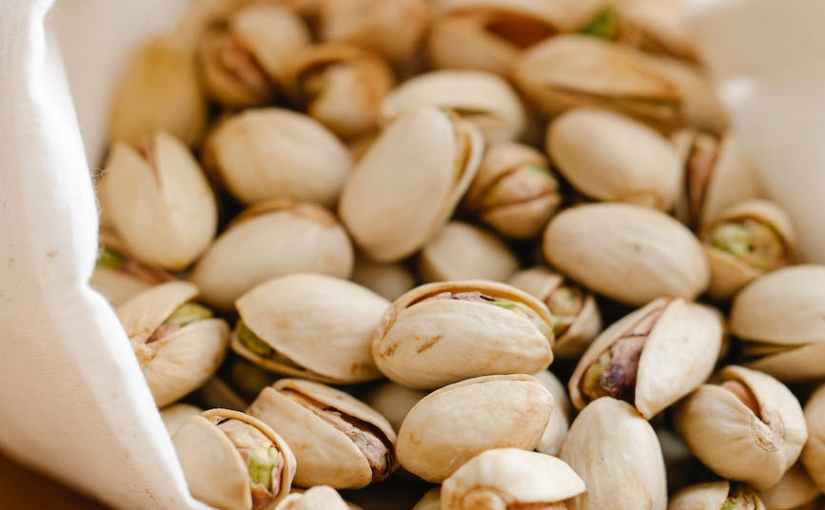
The other day, I was sitting at my kitchen table eating pistachios. The small pile of shells that formed as I ate them triggered a memory of my mother, something I hadn’t thought about in a long time: When I was two or three years old, before my younger sister was born, I used to go with my mother to buy pistachios at the department store candy counter. Unlike today, you couldn’t just walk into a grocery store and buy them. Pistachios were a luxury. You had to make a special trip to get them.

The woman who worked at the candy counter was an older lady. She wore her gray hair pulled back into a bun and sometimes had a Band-Aid stuck to the side of her nose. I never knew what the Band-Aid was for, but I always found it fascinating. A Band-Aid on your nose!

The woman would ask my mother if she wanted the red pistachios or the natural ones. They had both kinds on display, piled up into mounds behind the glass. My mother always chose the natural ones, just one pound because of their price. The lady would scoop the nuts into a white paper bag with red stripes on it. Then she would place the bag on a scale to weigh it, and would either add more nuts or remove a few until the amount was just right.

The candy counter also sold balloons. These were not filled with helium, just regular air. Because they couldn’t float on their own, the balloons were attached to long wooden sticks so that you could carry one around and it would look like it was floating. Sometimes when my mother bought pistachios she would offer to get me something, too. I never wanted candy. Always, I chose a balloon, preferably a red one.

When we got home, my mother would sit in the living room and eat her pistachios while she watched her favorite television shows. These were mostly soap operas, nothing I found that interesting. After making sure my balloon was stored in a safe place, I used to sit on the floor and play with my toys or look at a book while a small pile of pistachio shells formed on the coffee table.

At the time, my mother was the same age that my daughter is now.

My mother died of lung cancer in September 2020. She was a lifelong smoker. She never quit, even after she was diagnosed with cancer. Up until recently, I’ve mostly been angry with her about it. But sometimes an old memory comes back to me unexpectedly, and for a while the anger disappears.

ENP

New Novel Coming Soon!

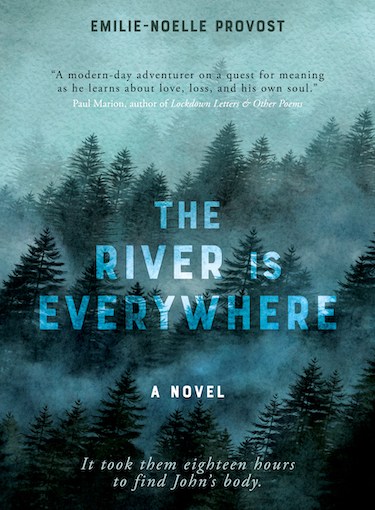
This is just a quick post to let everyone know that, at long last, The River Is Everywhere will be released on March 14. The book is currently available for pre-order on Amazon and Barnes and Noble. I should have information about the book’s launch event soon. When I do, I’ll post it here.

In the meantime, you can check out some of the book’s early reviews on Goodreads.

Once the book is launched, I will be available for readings and to meet with book clubs, either in person or virtually. For more information about either of these, send me a message via my contact page and I’ll get back to you soon.

If you are a member of the media who would like to write a review of The River Is Everywhere, send me a message and I will arrange for you to receive an advanced reader copy of the book.

ENP

Hotter than Georgia Asphalt

Released in August 1990, Wild at Heart, directed by David Lynch, is the only film I’ve paid to watch twice. I went to the theater to see it the week it came out, the summer after my freshman year of college, with my then boyfriend. I was so amazed by it that I went back and watched it again the next day by myself. Since then, the film has remained among my top 10 favorites. I’ve watched it dozens of times on DVD.

Based on a novel by the same name by American writer Barry Gifford, Wild at Heart won the Palm d’Or at the 1990 Cannes Film Festival, the event’s most coveted and prestigious prize. It features an all-star cast including Laura Dern, Nicolas Cage, Harry Dean Stanton, Diane Ladd, Crispin Glover, Isabella Rossellini, and Willem Dafoe.

Part coming-of-age story, part road movie, part crime drama, and part morality tale, Wild at Heart glamorizes and celebrates the underbelly of the American South in fluorescent fashion. It rivals a Bosch painting in its surreal and often grotesque depictions of everyday life, especially when it comes to the meaner things.

The film is chock full of hot, gratuitous sex and features several violent, blood-soaked scenes, some of which are steeped in a sort of grim humor. It’s populated by the larger-than-life oddball characters Lynch is known for: A Voodoo priestess who wears a leg brace and walks with a cane; scores of little people; pyromaniacs; a prostitute harboring an impressive hoard of assault weapons; grossly obese porn stars; and a mysterious organized crime boss named Mr. Reindeer who never seems to get off the toilet.

Dafoe plays Bobby Peru, an unhinged ex-Marine and Vietnam vet who is far and away one of the most disturbing characters ever captured on film. And although he’s only in one scene, Glover’s character, Dale, a mentally challenged young man who believes he’s being controlled by aliens, provides one of the movie’s more memorable highlights.

The story begins in Cape Fear, North Carolina, when one of its lead characters, Sailor Ripley, played by Cage, kills a hit man hired by his girlfriend’s mother, Marietta (played by Ladd), in self-defense. After being incarcerated for nearly two years, Sailor is picked up at the prison gate by girlfriend, Lula, played by Dern. Within 24 hours, the pair embarks on a cross-country joy ride headed for “sunny California” in an effort to escape Marietta’s meddling.

At first, it seems that Sailor and Lula will make it as they joyfully race along deserted highways and sunbaked backroads, making a steamy pitstop in bawdy New Orleans. But as they travel through Texas, things take a turn for the worse. They begin to run low on cash, come across a grisly car wreck, and eventually get stuck in down-and-out Big Tuna, where Sailor gets tangled up in a botched bank heist. The spirits of Elvis and The Wizard of Oz loom over all of it like omnipresent but indifferent gods. Occasionally, one of them rears its head unexpectedly, such as in one implausible but fantastic scene where Sailor sings Love Me to Lula on the dance floor of a crowded rock club.

After not having seen Wild at Heart for more than 10 years, I recently re-watched it. More than 30 years after the first time I’d seen it, I wondered whether the elements of the film that had appealed to me as a 19-year-old would still hold true.

I’m happy to say that the film is every bit as wild and bizarre as I remembered it.

Check it out if you have access to Vudu or Apple TV.

ENP