The God of Doors

One of my late father-in-law’s favorite sayings was: There’s always the unexpected. No matter how carefully our plans are laid out, or how much we might want a particular thing to happen, or not, the possibility that something unforeseen will derail our wishes is ever-present. Most people, including me, find this fact unsettling. Knowing what’s likely to happen in a given situation is comforting, while change, even when expected, often provokes fear and uncertainty.
 
But change can also bring fortune to those who choose to embrace it. Losing a predictable but dead-end job creates an opportunity to land a better role at a different company, or perhaps to change careers or start a business. Ending an unhappy relationship with a spouse or partner makes it possible to start over again with someone new. 
 
Anyone familiar with tarot cards knows that the Death card, which depicts the Grim Reaper riding a horse over the deceased body of a king, rarely implies physical death. When this card shows up in a reading, it usually signifies a significant and often abrupt ending of some kind. This change will likely be difficult, but will hopefully foster the self-awareness needed to pull oneself together and start again, armed with wisdom gained from experience. The king on the card implies that no one is exempt from Death’s whims: It’s far better to roll with the punches and learn how to regroup than to wallow in self-pity.
 
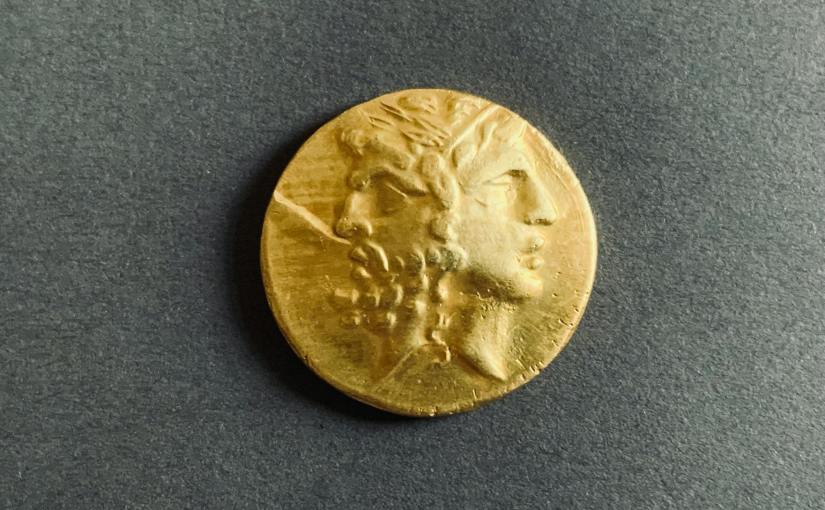
The ancient Roman god, Janus, has two faces. One looks forward into the future, the other, backward toward the past. He is the god of beginnings and endings, the god of change. Janus rules thresholds, gates, and doorways. He is present when someone is born, when someone dies, and during transitional events, such as weddings and graduations. The month of January is named for him.
 
Janus was the only Roman god without a Greek counterpart. And to the Romans, he was the most powerful god of all. He was fate’s doorkeeper, and they did everything in their power to gain his favor. On New Year’s Day, the Romans were careful not to say anything derogatory about another person. They offered sweets and gifts of coins to strangers, abstained from foul language, and performed good deeds in hope of creating conditions that would encourage luck and prosperity in the coming year.
 
Change has been rampant and unforgiving over the last several years. The COVID-19 pandemic was the most significant interrupter in modern times, upending jobs and marriages, travel plans, and the trajectory of nearly everyone’s lives. Currently, we in the United States are living with an unprecedented amount of uncertainty, never knowing what the fascist regime that controls our government will do from one day to the next, or how its whims will affect our lives.

In September 2020, my mother died after losing a short but brutal battle with lung cancer. In 2021, my adult daughter moved out of the house into a home of her own. Over a four-month period in 2022, I lost three of my close friends to cancer as well. My father-in-law died suddenly of heart failure in 2023.
 
These events have been heartbreaking and difficult, but most of them have led to positive new beginnings. After losing so many people to cancer, I have made it a priority to take better care of myself physically and mentally. I make time to do things I enjoy. I have been trying to socialize and travel more often, and have given up caring about anyone else’s opinions about what I do or don’t do. My relationship with my daughter has evolved and grown stronger, and after years of mourning my mother, my stepfather is now in a relationship with a wonderful woman who is a perfect fit for him.
 
We’re entering Janus’ season. In just a few short weeks, 2025 will be over. There’s no way of knowing what will happen in the year to come, but here’s to hoping the God of Doors will look upon all of us with kindness.

ENP

The Magic of Untranslatable Words

I’ve always believed that written or spoken words, with their ability to communicate our thoughts, wishes, discoveries, joys, and sorrows — sometimes across time and space — carry with them a bit of magic. On the printed page, whispered into a waiting ear, or shouted from the rooftops, language forms the bedrock upon which society and culture are built. 

I’m particularly captivated by words from other languages that cannot be easily translated into English. These often convey ideas and situations we’re all familiar with, but for some reason, when it came to creating English words to describe them, they never quite made the cut. 

For example, ya’arburnee, an Arabic word, expresses the hope that you will die before someone you love because you wouldn’t be able to bear living without them. Literally, it means “may you bury me.” The Japanese have boketto, which describes the act of staring blankly into the distance. From Yiddish there is luftmensch, which refers to someone who is not successful in life or business due to his or her unrealistic ideas and goals. The French have voisinages, a word that refers to the relationships among or between neighbors. And in Brazilian Portuguese, there’s cafuné, a word that describes the motion one makes when running their fingers through a lover’s hair. (Leave it to the Brazilians to require a word just for this.)

Perhaps one of my favorite, and I think one of the most beautiful “untranslatable” words, is saudade, a Portuguese term that conveys a longing for a person, place or time you recollect fondly but know you will very likely never be able to experience again. Derived from the Latin solitate, or “solitude,” saudade acknowledges, mourns, even celebrates the discarded bits of ourselves that lie scattered across the landscape of our lives. 

Saudade also implies a feeling of gratefulness, the glow we feel in our hearts when we remember how lucky we are to have had particular experiences and people in our lives. Like an empty chair at the family dinner table that reminds us of the person who once filled it, the empty spaces within us take on the silhouettes of those who left them behind.

Saudade is different than nostalgia or reminiscences, which are often about remembering with a sort of affection occurrences and relationships no longer relevant in our lives. Even if it’s rooted in the past, saudade lives in the present.

Portuguese art, literature and traditional fado music, which literally means “fate” or “destiny,” are all heavily informed by the concept of saudade. The Portuguese, along with the people living in Portugal’s former colonies, such as Cape Verde and Brazil, have built an entire culture around their unapologetic, deep and passionate feelings about just about everything, from romantic love to sports teams. They approach life with the notion that all emotions, happy or sad, are worth experiencing because collectively they are what make us human. 

Since my daughter moved into her own condo, I’ve come to know saudade well. Madelaine’s absence from our house has often been difficult, as her absence is often a presence all its own. I sometimes find myself thinking about the days before she started kindergarten, when I was a stay-at-home mom. Back then, we were together all the time, sometimes 24 hours a day for weeks on end when my husband was traveling for work. We ate all our meals together. I helped her get dressed every morning. We shopped together and went for walks around the neighborhood. In the wintertime, we snuggled on the couch under a blanket while we watched her favorite show, “Arthur,” on TV. Some days I longed to get away, to have another adult to talk to. There were times when I lost my patience and did things I now regret. 

I grieve the loss of the baby that Madelaine was, and the loss of myself as a young mother. But these memories also bring with them a powerful and bittersweet happiness. I’m grateful I was able to spend so much time with her when she was young, and I believe the time we spent together helped her become the intelligent, thoughtful, successful young woman she is today. The sadness my memories bring helps me better appreciate the time she and I spend together now. Because I know someday I’ll look back at these moments with longing, too.

ENP

Summertime Magic

I still remember the satisfying feeling brought on by cleaning all the papers out of my desk and tossing them directly into the trash on the last day of school — no need to so much as glance at any of them. The day’s rising heat brought with it the promise of beach days, long, lazy afternoons punctuated by grape Popsicles, and running leaps through the backyard sprinkler. 

Summer meant visits from the neighborhood ice cream truck, rainbow-colored snow cones, and clusters of sweaty kids clutching damp dollar bills. My sister and I raced around the neighborhood on our bikes (no helmets! no shoes!), completely disregarded all advice regarding sunscreen, and stayed up well past our bedtime every night waiting for the sun to finally go down. Everything we did seemed to have an aura of magic to it.

I’ve spent a lot of time thinking about that magic and how I might try to recapture some of it.

When I was growing up, my friends and I were fully present during our summer vacations, no matter what we were doing. We weren’t thinking about all the chores we were supposed to do or that school was starting soon. Whether we were playing kickball with the neighborhood kids, making Italian ice runs to the corner store, or just hanging out on the porch trying to keep cool, that time was ours. We weren’t going to let anyone or anything take it away from us.

It’s rare these days to have any amount of time that’s truly our own. We’re accessible 24/7 on our phones. Our attention is constantly being drawn in ten directions at once by television monitors, emails, the daily news cycle. We’re always worried about the state of our country, the possibility of war, corrupt, evil politicians, the bills we have to pay, the kind of world we’ll leave behind for our kids.

All of those things are pressing, but they’re not going away, at least not anytime soon.

Summer is fleeting. It’s time we took all took a step back and carved out some time to enjoy the smell of freshly cut grass, the way the air smells when a sudden rainstorm hits the hot pavement. We can count the fireflies as they hover and flash on summer nights, and wake up early to hear the songs of morning birds.

We can dig holes in the sand and eat ice cream cones, read novels, stare at the sky, turn the music up loud in the car. We can do whatever we want if we let ourselves, even if it’s just for an hour or a lunch break or between phone calls. It doesn’t even need to cost anything.

The magic is still out there. Go and find it.

ENP

Redefining Success: Beyond Income and Wealth

In the contemporary United States, a person’s success is most often measured by their income.

While the size of someone’s paycheck often correlates with other types of achievement, such as educational attainment, it says nothing about a person’s character or whether the things they do on a regular basis have the potential to improve lives or make the world a safer, healthier, more beautiful, or more just place.

Income on its own says nothing about a person’s happiness. It cannot tell us whether someone looks forward to getting up in the morning or whether they face each day with a measure of dread. The size of one’s bank account does not indicate whether its owner is living in a way that supports his or her values, interests, talents, and wellbeing, whether they are able to do the things they enjoy, or how their lifestyle affects their interpersonal relationships, the environment, or their community as a whole.

Money is necessary to pay for our housing and necessities, to take care of our loved ones, and to do many of the things we enjoy. But after these requirements are comfortably met, is accumulating more wealth worthwhile if it means sacrifcing happiness and meaning in our lives?

Most of the successful people I know are not rich. They don’t own BMWs, yachts, or vacation homes, but neither are they starving. They are nurses, musicians, teachers, firefighters, artists, farmers, photographers, tour guides, chefs, artisans, plumbers, winemakers, carpenters, and writers who wake up every morning enthusiastic to start their days because they get to do something they enjoy, because their work carries meaning and value that surpasses its assessed economic worth. 

Truly successful people nurture their relationships. They have the time and energy to pursue their hobbies and interests, to learn new skills, to visit new places and discover things about the world and themselves. They make time to watch sunsets. They appreciate the beauty in simplicity. Successful people are happy much of the time because they are rewarded by things that are not, and never will be, for sale.

Real success lies somewhere between presence and productivity, security and curiosity. It deflects judgement. To be successful is to continually improve upon one’s knowledge and understanding of the world. Successful people aren’t afraid of hard work. They take pride in the things they do and make, and ask for advice when they need it. They care about the legacies they leave behind.

No one is getting out of here alive. Whether or not their efforts lead to financial gain, those who use their time on this planet wisely, who understand that wealth and achievement are not necessarily one in the same, will always be the most successful.

ENP

Lost World III

The elementary school I went to was built in 1909. The brick building was a replacement for an older wooden school that had been built sometime in the mid-19th century. My grandfather and his three brothers had also gone to the school. It’s where they learned English.

Named for Josiah Quincy III—a lawyer who served as mayor of Boston, in the U.S. House of Representatives, and as president of Harvard University— Quincy School was located in my town’s working class neighborhood. It was founded to educate the children of the French-Canadian, Irish, Italian, and Polish workers who labored in the mills on Mother Brook or worked for the wealthy families on the town’s west side.

Most of the students at Quincy School were the children or grandchildren of immigrants. Some were immigrants themselves. Everyone was Catholic. I didn’t realize it at the time, but many of the students were also poor. There were kids in my grade who wore the same clothes to school every day, who never had anything to eat at snack time. Some of them didn’t have warm clothes or coats to wear in the winter.

A lot of the time, it was these kids who got into trouble for acting up in class or talking back to the teacher. They would have their desks moved to the sides of the classroom, facing the wall, so they could “concentrate” better. Looking back, I think these kids were probably hungry. Or maybe they were just trying to get some adult to notice them, to see that they needed help.

Bullying was a problem, especially for kids who were new to the school. In the second grade, a new girl came to our class in the middle of the year. She was French-Canadian and tiny for her age. The moment she arrived, the popular girls decided they didn’t like her. Their treatment of this small girl was brutal. I regret not telling our teacher about it. But I was seven years old and deathly afraid that, if I did, they would turn on me, too.

Because of its age, Quincy School lacked things that were common in newer school buildings. We didn’t have a gym, for example. When the weather allowed it, we would have phys ed class outside. Our gym teacher was a husky Polish guy who called us by our last names. He used to mark out spaces in the schoolyard for us to run relays or jump rope with orange traffic cones, which he called “pylons.” I thought everyone called them that until I was in my mid-twenties.

There was no cafeteria, either. Kids who ate lunch at school had to eat in their classrooms. If you had to buy lunch, it would come in a pre-packed paper bag. Usually, it was something non-perishable. But sometimes, and I will never know why anyone thought this was a good idea, it was cold fried chicken.

You knew ahead of time that it was going to be a chicken day because all the paper bags would be soaked through with grease by nine a.m. Also, there was the smell. Perhaps the worst thing, though, was the mess.

After lunch, all the desks would be covered in chicken grease. The teachers would hand out rolls of brown paper towels and some kind of industrial-grade purple spray. We did our best to clean our desks with this stuff, but it was almost impossible to get all the grease off.

Some kids went home for lunch. For a few years, I was one of them. Every day at noon, they’d let us out the door without a second thought, even students as young as six. I liked eating lunch at home because it was a nice a break. There were no teachers to tell you to stop talking or hassle you about finishing your milk. I liked the quiet, and that there were no other kids around to make trouble. I don’t remember ever being reminded about what time I had to be back at school, but somehow I always made it.

Quincy School was loaded with asbestos. The floor tiles were made of it. Every heat and hot water pipe in the place was wrapped in layers of the stuff. We used to pick at this insulation while we were waiting in line to go to recess. I liked the way it came apart in sheets. I think about this every time I see one of those home improvement shows where workers are removing asbestos from a house wearing respirators and hazmat suits, a giant vacuum tube sucking out the ambient dust. Their precautions always feel like overkill.

The blackboards at Quincy School were made of natural slate, and they were actually black. Chalk glided across them like silk. They had fancy woodwork boarders that had been varnished so many times that they had taken on a high gloss. Anything written on these chalkboards was easily erased without a trace. They were magnificent.

First grade was my favorite year. My teacher was a no-nonsense Yankee with a heavy Boston accent. She wore wrap skirts and Kelly green chinos and taught every last one of us how to read and write. Sometimes we took turns reading poems aloud. The poem I loved most was Nothing Gold Can Stay by Robert Frost. I always volunteered to read it, and can still recite most of it from memory.

When I was in the fifth grade, our principal, an elegant French-Canadian man who was a veteran of the Second World War, came into our classroom to tell us that the school was closing at the end of the year. There weren’t as many kids as there used to be, he told us, so the town no longer needed all of its elementary schools. Quincy School’s students would be going to another school, about a mile away, in the fall.

After hearing this news, I felt sad and lost. I was worried about what was going to happen to me. Quincy was the only school I had ever known. I dreaded the idea of having to go to a new school with kids I didn’t know. Even worse, we found out later that the town had sold the school building to a contractor who planned to tear it down and build houses on the land.

The morning they demolished the building, most of the neighborhood came out to watch. An enormous wrecking ball tore through its brick walls. Broken pieces of varnished woodwork and shards of slate were mixed with the smashed bricks. A bulldozer pushed the rubble into piles. I remember my mother being horrified that no one had tried to save anything before the building was destroyed. They hadn’t even bothered to take the clocks down or the light fixtures. Everything was gone.

Many years later, someone who had worked for the town told me that Quincy School had been torn down because it was in “disrepair.” It was, of course. But I’ve never been able to shake the feeling that the real reason the school was sold for scrap was because the kids who went there were from working class, immigrant families. The town knew none of us would fight back.

Along with the other kids in our neighborhood, my sister and I each took a brick from the school home as a keepsake. With a piece of chalk, I wrote the lines to Nothing Gold Can Stay on the back of mine. It seemed appropriate at the time, and I suppose it was.

For most of my life, I’ve used that brick as a paperweight. It’s a reminder of the place I came from. It’s also reminds me that anything, even the most solid of buildings, can be transitory unless people are invested in its survival. We only get to keep the things for which we fight, all the rest becomes history.

ENP

Winter

I’ve never been one of those people who dislikes winter. I don’t really mind the cold, and I love snowshoeing and cross-country skiing, even though I’m pretty bad at the latter. There’s something invigorating about being out in the woods in the cold air. I love seeing animal tracks and deer beds, and tiny red-breasted nuthatches and chickadees eating the seeds from pine cones. There are usually very few other people around. It’s peaceful. It helps me get my thoughts in order.

So far, this winter has been tough, though. Even though we’ve had a lot of snow, it’s been too dangerously cold and windy in the mountains to spend any time up there. Even getting out in our local forests hasn’t been easy because of the weather. And I’ve been sick. Since the end of January, I’ve had some kind of awful virus that just won’t quit. It’s wearing on me, and it’s making it difficult to get anything done. I’m getting better, at least I think so. It’s just not happening quickly.

I’ve decided to take next week off to finally goddamn finish my third novel and get it off to beta readers. It’s so close to being done. I’ll work twelve hours a day if I have to in order to get it finished by the end of the month. At this point, it’s the best I can do to try to redeem at least part of the winter.

ENP

Flames

It snowed last night. When I went outside this morning to shovel my driveway, the air carried with it the faintest scent of spring. This happens every winter but it’s usually later in the season. For most of my life, early February has been a time of unrelenting ice.

I don’t mind shoveling snow. If it’s not that deep, I actually prefer to shovel it by hand rather than use the snowblower. It’s good exercise, and the snowblower is heavy and difficult to use. Clearing the driveway with the snowblower often feels like just as much work as shoveling, and I don’t really like all the noise it makes.

Today, shoveling snow was a welcome distraction from the news reports detailing all the ways in which my country, the United States, is being consumed by flames. I haven’t been able to sleep because I can see the end in the fascists’ means.

They’re using an old playbook, one created in 46 BCE by Julius Caesar, who was made dictator for life by the Roman Senate in the aftermath of his civil war, a conflict of his own design that reduced Roman society to rubble, making it possible for him to take down the 300-year-old republic.

Hitler used Germany’s economic instability as a cudgel to destroy its democratic institutions and institute racist economic and social policies, fueling his rise from chancellor to Fürher in less than eighteen months. If you’ve been wondering what the real purpose of our current administration’s nonsensicle trade tariffs might be, look no further.

This is the big picture, which is bad enough, but my real anxiety stems from more personal concerns: My daughter is a teacher at urban elementary school where many of the students are immigrants. If her school is invaded by ICE agents, I know she’ll stand up to them. She would do anything to protect her kids. I’m sickened by the thought of what might happen to her.

My husband was laid off from his job last September. I’m even more worried about him finding a new one now that I was before. The economy is poised to crash. The stock market already has.

I resent being made to feel this way. I, like many people, have worked hard all my life. I’ve earned everything I have. I’ve been a good citizen, paid my taxes. I don’t deserve it.

I also know that the fear and anxiety everyone is feeling right now is intentional on the part of our sham government: A nation of people who fear for their families and futures will agree to almost anything.

This is isn’t the post I wanted to publish today. I wanted to write something else, about music actually. But this is where I am, where all of us are right now. The best I can hope for is to be proved wrong.

ENP

Crossroads

The beginning of 2025 finds my life at a crossroads. I’m very close to finishing my third novel, a project on which I’ve been working for years and desperately want to complete. At the same time, I seem unable to focus on it. My husband was laid off from his job at the end of September, leaving us adrift in a gulf of uncertainty.

Do I sequester myself in some quiet place where I won’t be distracted for a couple of weeks to finish my book? Should I put the book aside for the time being and look for steady nine-to-five work? Or should I try to find more freelance jobs so I can have a flexible schedule and make more money at the same time, allowing me to still work on the novel? If I do this, will I be too tired to work on the book anyway?

Perhaps I should try to bushwhack my own path, combining these options in such a way that I’ll be able to accomplish most of what I want?

I’ve been stuck, waiting for a sign, for some sort of messenger to point the way, getting nothing done in the meantime.

In Western folklore, crossroads often symbolize liminal spaces, places between worlds, middle passages that are neither in one realm nor another. In medieval Europe, the bodies of executed criminals and people who had committed suicide were often buried at crossroads as they were considered a sort of no man’s land, places set apart from the world from which the souls of the dead would be unable to escape.

Lacking a map or any sense of direction, I’ve discovered that exiting a crossroads, where no path is clearly defined, can be almost as difficult for the living.

In many cultures, crossroads are places where demons and spirits appear unexpectedly. In the early 20th century American South, many African Americans believed visiting a crossroads at certain times of day meant encountering the Devil. It brings to mind the frequently covered song, Cross Road Blues, by blues guitar pioneer Robert Johnson, originally released in 1937. According to legend, Johnson, who died mysteriously at age 27, acquired his impressive musical skills after selling his soul to the Devil at a crossroads.

Robert Frost’s famous poem The Road Not Taken, published in 1916, also comes to mind, as crossroads often symbolize indecision, uncertainty, or even regret in literature.

But crossroads can also be places of opportunity. By their nature, they are places where chance meetings are likely to occur, perhaps allowing favorable circumstances to unexpectedly manifest themselves.

Modern psychology says when we find ourselves at a crossroads, unable to decide which direction to take, it often means we are preparing to let go of something to which we are emotionally attached. I often feel this way lately. Whichever direction I choose to go, I’ll be leaving something behind. And because whatever I stand to potentially gain remains undefined, the risk involved in taking any one road seems great.

Robert Frost felt called to take the road “less traveled by,” knowing he’d probably never learn what he might have discovered had he chosen the other path. One of these days, the voice of wisdom will prevail and I’ll know what I should do, too. In the meantime, I’ll be keeping an eye out for the Devil.

ENP

Art is Power

I’ve been thinking about art lately, not only visual art but also literature and music. These things are an important part of my life, not just because I’m a writer but because they make me feel connected to something larger than myself, to other people, to memories I’d forgotten about. Whether I’m listening to music, reading a novel, or looking at a mural, art makes me feel grounded.

Whatever form they might take, we have known for a long time that the arts help foster a sense of community among people by lifting up and celebrating universal human experiences. They give us hope, promote mutual understanding, and can engender feelings of strength and empowerment.

Novels, songs, photographs, and paintings let us know we’re not alone, that there’s a light, however faint, waiting for us someplace in an often too-dark world.

It doesn’t happen often, but there have been times when a painting, photograph, or piece of music has moved me to tears. I once stood in the middle of a gallery at the Addison Gallery of American Art in Andover crying uncontrollably after looking at a photograph by Sally Mann.

It was an image of a young girl, about seven or eight years old, playing outdoors in dress-up clothes, her dirt-smudged cheeks a perfect foil for the string of pearls around her neck. The expression on her face was one of pure ferocity: Try to stop me. I dare you.

The photograph evoked a time in my early life—in the young lives of nearly all women—when I was fearless, bold, when I was in full possession of my own power and could wield it at will for my own sake and enjoyment, without consideration for the way my behavior would be viewed by anyone, especially members of the opposite sex. Try to stop me. I dare you.

The girl in that photo was me, before I was told that it was time I started dressing and and acting a certain way, that I should lose ten pounds, cross my legs, keep my voice down. Until the moment I set eyes on that image, I’d forgotten all about her. In some ways, that photograph gave me back a part of myself that I’d lost.

The arts communicate thoughts and ideas in a way nothing else can, directly from the heart and mind of one person to the heart and mind of another, even across continents and centuries. It’s for this reason that the arts, and creative people themselves, have historically been viewed as threats by the governments of certain countries, especially by autocratic regimes.

In the 1930s, Hitler’s Gestapo arrested any creative person whose work didn’t conform to Nazi ideology, destroying their studios, dismissing them from their jobs, even sending them to concentration camps.

As part of their mission to squash dissent, authoritarian governments continue this practice today. In 2011, artist and filmmaker Ai Weiwei was arrested and jailed by the Chinese government. And in 2021, Cuba’s president, Miguel Diaz-Canel Bermudez, had artists Luis Manuel Otero Alcantara and Maykel Osorbo arrested on trumped up charges and imprisoned after closed-door trials.

Authoritarians have also sought to use art’s influence as a means toward their own ends.

Artists of which Hitler approved were given the task of creating pieces that supported the narrative the Nazis wished to put forth, works that often depicted strong, blond Aryans conducting wholesome work in an idyllic German countryside.

The Third Reich commissioned several musical compositions to excite crowds and celebrate their perceived achievements, some of which were performed live as Jews were marched to their graves.

A similar phenomenon has often been seen in dictators commissioning images of themselves, not only to boost their own egos but to implant in people’s minds the idea that they are omnipresent and all-powerful.

Josef Stalin ordered hundreds of images of himself to be created, paintings and sculptures that plastered the Soviet landscape during the first half of the twentieth century. The same thing can be seen today in North Korea, Syria, and Turkmenistan.

Making and consuming visual art, music, and literature can also be an act of resistance. This has historically been the case in many countries, even in the United States. Some of these American works include Andy Warhol’s 1964 silkscreen Race Riot; Keith Haring’s 1989 painting Ignorance = Fear / Silence = Death, created to protest the government’s lack of response to the AIDS epidemic; Dorothea Lange’s powerful photographs of migrant workers; and the well known The Problem We All Live With, painted by Norman Rockwell in 1964 to draw attention to the school desegregation crisis in the South.

Since the election, much has been written speculating about how the creative community in the United States will fare under a government that has historically been hostile toward it. Some have predicted art’s demise or at least its decline. But I disagree with this idea. Like the human spirit, one of art’s greatest strengths is in its resilience, in its ability to rise up under the most adverse of circumstances.

As long as the arts provide us with a source of strength, hope, and inspiration people will fight to protect and preserve them. And as long as we have them as part of our lives, our culture and we ourselves will persevere.

*A version of the essay was published on RichardHowe.com.

ENP

The Summer of ’92

The excessive heat this season reminds of the summer after my junior year of college. I don’t know if it was as hot back then, in 1992, but it certainly felt like it. The house in which I grew up was built in the late 19th century. There was no air conditioning. 

My younger sister and I didn’t even have window AC units in our bedrooms. (Our mother did, of course.) Nat and I had to cope with cheap oscillating fans set up on our night tables. Mine squeaked and rattled every time it turned.

One of our neighbors, a guy named Leo who was a few years older than I, had recently gotten out of the Marines. He had graduated from high school when I was a sophomore, so I didn’t know him well. I had older friends who knew him, though. I’d run into him at a party at the beginning of the summer. We’d talked for a few minutes, mostly about our neighborhood and the friends we had in common. 

Leo didn’t mention anything to me about his experience in the Marines at that party, but just about everyone knew he’d been one of the first troops on the ground during the Invasion of Panama in December 1989, Operation Just Cause, during which the U.S. removed that country’s de facto dictator, notorious drug lord, General Manuel Noriega. Leo was also a veteran of the Gulf War, Operation Desert Storm, a short-lived armed conflict that lasted from August 1990 through February 1991 that almost no one remembers or cares about now.

Desert Storm was launched after Iraq’s then-dictator, Saddam Hussein, invaded and occupied the neighboring country of Kuwait on the premise that Kuwait was drilling in an Iraqi oil field. After Hussein ignored the United Nations Security Council’s demands that Iraq withdraw, the U.S. and U.K. deployed troops to the region.

Even at the time, many Americans viewed the Gulf War as a waste of resources. Some protested it, saying it was nothing but blood for oil, which, among other things, it was.

“It wasn’t a real war,” you’d hear older veterans of other wars say about Desert Storm. But Leo still got to march in our town’s Flag Day parade alongside them wearing his dress blues, a sight that brought me to tears. I’m still not sure why.

The other thing about Desert Storm that most people have forgotten, or maybe never wanted to know, is that people died. A college friend of mine named Heather, who was also a Desert Storm vet, lost her fiancé in the war. He was killed when the truck he was driving was hit by an Iraqi missile. She kept his memorial flag in a glass case in her dorm room beside a framed picture of the two of them dressed in their desert fatigues.

Like 250,000 other Desert Storm veterans, Heather suffered from Gulf War Syndrome, a chronic, multi-symptomatic disease that no one, not even the government, recognized as being real at the time, or for many years afterward. These days, you can look Gulf War Syndrome up online. Some sources say it might have been caused by exposure to chemical weapons, namely the lethal nerve agent sarin, but no one is really sure.

I don’t know whether Leo had Gulf War Syndrome, but he did have post-traumatic stress disorder.

In the early 1990s, there was an economic recession in the United States. Jobs were hard to get, especially if you were young and didn’t have a lot of work experience. After he got out of the Marines, Leo found a job driving an armored truck, delivering cash to banks. Once in a while, I’d see him driving the hulking vehicle around town.

One steamy morning in July 1992, my mother came upstairs to my bedroom to tell me someone was at the front door, asking for me. It was Leo. He’d parked the armored truck in our driveway—something no one could get away with now considering just about every commercial vehicle on the road is tracked by GPS.

“I saw your car, so I figured you were home,” he said, as we sat down on the porch steps. “I hope you don’t mind me coming over. You seem nice, someone who’s easy to talk to.”

He told me a story about the Invasion of Panama: He and a few other Marines were hiding out in a barn. The Panama Defense Forces sent a cow into the building with a bomb strapped around its middle. The bomb, and the cow, exploded within feet of Leo and the other Marines. Leo was lucky. The soldier crouched down beside him was killed.

“I can’t handle loud noises anymore,” Leo told me. “Sometimes I can’t sleep thinking about that day. I can’t even really describe it to you; it was so bad. You’re the only person I’ve talked to about it besides my mom.”

After that, Leo began stopping by on a regular basis. My mother complained about the armored truck being in the driveway, so he started parking it out front. 

Sometimes Leo would talk about other harrowing events that had taken place while he was in the Marines, but not often. He mostly told me about the places he’d gotten to travel and the people he’d met. He talked about his family—his stepfather was a cop; his younger brother played the drums—and the things he wanted to do now that he was home. We’d talk about music, the bands we liked, and whether we had seen them live. Leo was softspoken, thoughtful, polite—traits that would have seemed out of character for a Marine if I hadn’t gotten to know him.

Leo and I always sat on the porch. We never went anywhere else. He never asked me out on a date, and he never called to talk to me on the phone. I don’t even think he had my number. I know I never had his.

None of that was the point. Looking back, our relationship was perhaps of the purest kind: Our hearts were friends. Thinking about it now, I’m reminded of something the 1970s Boston storyteller, Brother Blue, used to say: “From the middle of me, to the middle of you.”

The term “post-traumatic stress disorder” didn’t mean much to me back then. At twenty-one, I had no frame of reference for it. But it was obvious that Leo had issues with which he needed help. I don’t know if treatment was available to him or, if it was, whether he ever sought it out. I never asked, mostly because I got the feeling that he liked talking to me because I listened to what he had to say without judgement, without offering half-assed advice about things I would never fully understand.

I didn’t see Leo again after I returned to college that fall. I moved to Boston right after I graduated. A year later, my mother sold our house and moved to another town forty minutes away. About fifteen years ago, I heard that Leo had gotten married and was working as a firefighter, news that made me hopeful that he was OK.

I still think about Leo sometimes, especially over the past few years, since Russia invaded Ukraine. Leo shaped the way I view war. It’s sometimes a necessary evil. But for most of history, war has been a product of governments, often fortified by private capital, flexing their muscles to get what they want—schoolyard bullies beating up little kids to get their lunch money.

All wars, justified or not, are fought by everyday human beings, people with families and friends who love them, most of them heartbreakingly young. The luckiest go home afterward and do their best to put their lives back together. In order to make it possible to go on, most manage to attach some kind of meaning to the violence and suffering. But the toll is always huge, sometimes more than any one person can afford.

ENP

*NO AI TRAINING