Behind the Scenes of My Third Novel

Over the past month, I’ve been working to finish the manuscript of my third novel. It’s a love story set in ÃŽle d’Orleans, a historic island in the Saint Lawrence River near Québec City, meant to be the first in a series of three books.

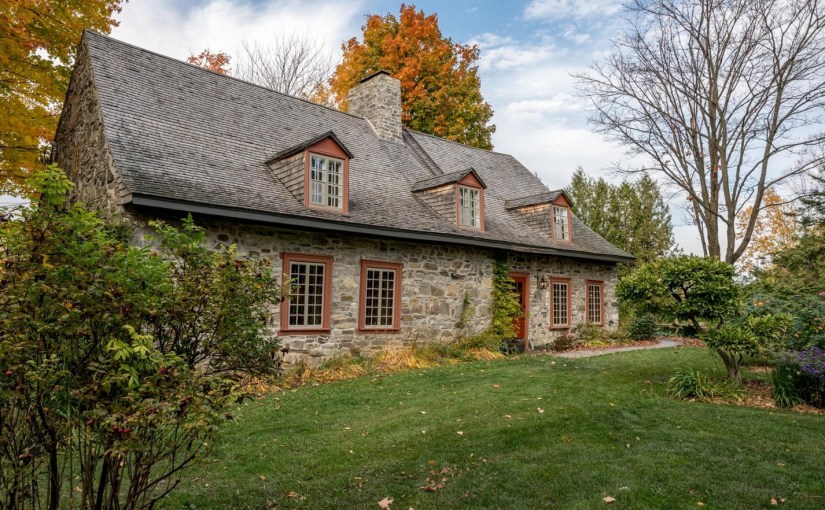
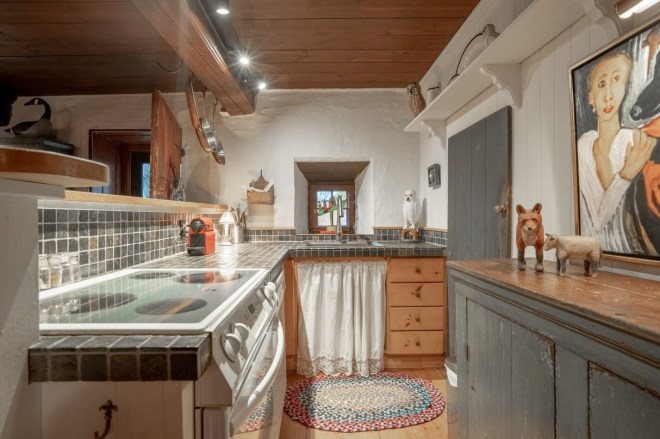
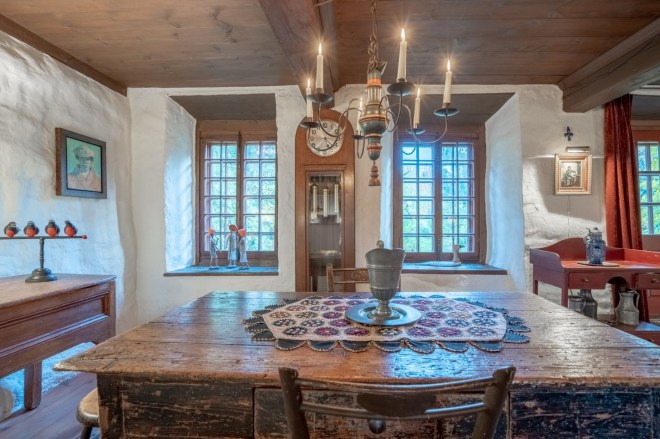
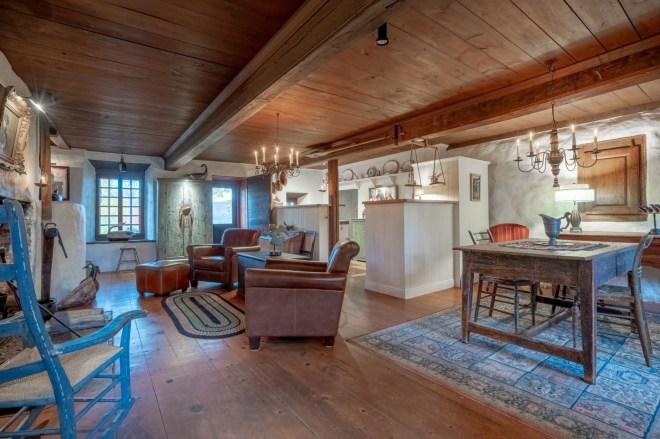
Even with air conditioning, it’s been tough to stay focused in the ridiculous heat we’ve been having. One thing that’s helped is looking at photographs of the island. It’s a beautiful place, so I thought I’d share some of the photos here. The house in the pictures was the inspiration for my main character’s house.

Stay tuned for more news about this book, hopefully soon.

ENP

Summertime Magic

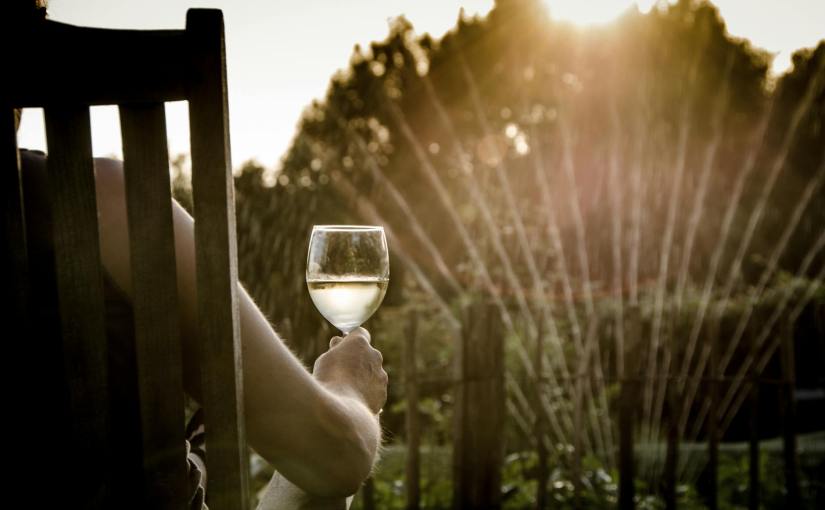
I still remember the satisfying feeling brought on by cleaning all the papers out of my desk and tossing them directly into the trash on the last day of school — no need to so much as glance at any of them. The day’s rising heat brought with it the promise of beach days, long, lazy afternoons punctuated by grape Popsicles, and running leaps through the backyard sprinkler. 

Summer meant visits from the neighborhood ice cream truck, rainbow-colored snow cones, and clusters of sweaty kids clutching damp dollar bills. My sister and I raced around the neighborhood on our bikes (no helmets! no shoes!), completely disregarded all advice regarding sunscreen, and stayed up well past our bedtime every night waiting for the sun to finally go down. Everything we did seemed to have an aura of magic to it.

I’ve spent a lot of time thinking about that magic and how I might try to recapture some of it.

When I was growing up, my friends and I were fully present during our summer vacations, no matter what we were doing. We weren’t thinking about all the chores we were supposed to do or that school was starting soon. Whether we were playing kickball with the neighborhood kids, making Italian ice runs to the corner store, or just hanging out on the porch trying to keep cool, that time was ours. We weren’t going to let anyone or anything take it away from us.

It’s rare these days to have any amount of time that’s truly our own. We’re accessible 24/7 on our phones. Our attention is constantly being drawn in ten directions at once by television monitors, emails, the daily news cycle. We’re always worried about the state of our country, the possibility of war, corrupt, evil politicians, the bills we have to pay, the kind of world we’ll leave behind for our kids.

All of those things are pressing, but they’re not going away, at least not anytime soon.

Summer is fleeting. It’s time we took all took a step back and carved out some time to enjoy the smell of freshly cut grass, the way the air smells when a sudden rainstorm hits the hot pavement. We can count the fireflies as they hover and flash on summer nights, and wake up early to hear the songs of morning birds.

We can dig holes in the sand and eat ice cream cones, read novels, stare at the sky, turn the music up loud in the car. We can do whatever we want if we let ourselves, even if it’s just for an hour or a lunch break or between phone calls. It doesn’t even need to cost anything.

The magic is still out there. Go and find it.

ENP

Redefining Success: Beyond Income and Wealth

In the contemporary United States, a person’s success is most often measured by their income.

While the size of someone’s paycheck often correlates with other types of achievement, such as educational attainment, it says nothing about a person’s character or whether the things they do on a regular basis have the potential to improve lives or make the world a safer, healthier, more beautiful, or more just place.

Income on its own says nothing about a person’s happiness. It cannot tell us whether someone looks forward to getting up in the morning or whether they face each day with a measure of dread. The size of one’s bank account does not indicate whether its owner is living in a way that supports his or her values, interests, talents, and wellbeing, whether they are able to do the things they enjoy, or how their lifestyle affects their interpersonal relationships, the environment, or their community as a whole.

Money is necessary to pay for our housing and necessities, to take care of our loved ones, and to do many of the things we enjoy. But after these requirements are comfortably met, is accumulating more wealth worthwhile if it means sacrifcing happiness and meaning in our lives?

Most of the successful people I know are not rich. They don’t own BMWs, yachts, or vacation homes, but neither are they starving. They are nurses, musicians, teachers, firefighters, artists, farmers, photographers, tour guides, chefs, artisans, plumbers, winemakers, carpenters, and writers who wake up every morning enthusiastic to start their days because they get to do something they enjoy, because their work carries meaning and value that surpasses its assessed economic worth. 

Truly successful people nurture their relationships. They have the time and energy to pursue their hobbies and interests, to learn new skills, to visit new places and discover things about the world and themselves. They make time to watch sunsets. They appreciate the beauty in simplicity. Successful people are happy much of the time because they are rewarded by things that are not, and never will be, for sale.

Real success lies somewhere between presence and productivity, security and curiosity. It deflects judgement. To be successful is to continually improve upon one’s knowledge and understanding of the world. Successful people aren’t afraid of hard work. They take pride in the things they do and make, and ask for advice when they need it. They care about the legacies they leave behind.

No one is getting out of here alive. Whether or not their efforts lead to financial gain, those who use their time on this planet wisely, who understand that wealth and achievement are not necessarily one in the same, will always be the most successful.

ENP

Lost World III

The elementary school I went to was built in 1909. The brick building was a replacement for an older wooden school that had been built sometime in the mid-19th century. My grandfather and his three brothers had also gone to the school. It’s where they learned English.

Named for Josiah Quincy III—a lawyer who served as mayor of Boston, in the U.S. House of Representatives, and as president of Harvard University— Quincy School was located in my town’s working class neighborhood. It was founded to educate the children of the French-Canadian, Irish, Italian, and Polish workers who labored in the mills on Mother Brook or worked for the wealthy families on the town’s west side.

Most of the students at Quincy School were the children or grandchildren of immigrants. Some were immigrants themselves. Everyone was Catholic. I didn’t realize it at the time, but many of the students were also poor. There were kids in my grade who wore the same clothes to school every day, who never had anything to eat at snack time. Some of them didn’t have warm clothes or coats to wear in the winter.

A lot of the time, it was these kids who got into trouble for acting up in class or talking back to the teacher. They would have their desks moved to the sides of the classroom, facing the wall, so they could “concentrate” better. Looking back, I think these kids were probably hungry. Or maybe they were just trying to get some adult to notice them, to see that they needed help.

Bullying was a problem, especially for kids who were new to the school. In the second grade, a new girl came to our class in the middle of the year. She was French-Canadian and tiny for her age. The moment she arrived, the popular girls decided they didn’t like her. Their treatment of this small girl was brutal. I regret not telling our teacher about it. But I was seven years old and deathly afraid that, if I did, they would turn on me, too.

Because of its age, Quincy School lacked things that were common in newer school buildings. We didn’t have a gym, for example. When the weather allowed it, we would have phys ed class outside. Our gym teacher was a husky Polish guy who called us by our last names. He used to mark out spaces in the schoolyard for us to run relays or jump rope with orange traffic cones, which he called “pylons.” I thought everyone called them that until I was in my mid-twenties.

There was no cafeteria, either. Kids who ate lunch at school had to eat in their classrooms. If you had to buy lunch, it would come in a pre-packed paper bag. Usually, it was something non-perishable. But sometimes, and I will never know why anyone thought this was a good idea, it was cold fried chicken.

You knew ahead of time that it was going to be a chicken day because all the paper bags would be soaked through with grease by nine a.m. Also, there was the smell. Perhaps the worst thing, though, was the mess.

After lunch, all the desks would be covered in chicken grease. The teachers would hand out rolls of brown paper towels and some kind of industrial-grade purple spray. We did our best to clean our desks with this stuff, but it was almost impossible to get all the grease off.

Some kids went home for lunch. For a few years, I was one of them. Every day at noon, they’d let us out the door without a second thought, even students as young as six. I liked eating lunch at home because it was a nice a break. There were no teachers to tell you to stop talking or hassle you about finishing your milk. I liked the quiet, and that there were no other kids around to make trouble. I don’t remember ever being reminded about what time I had to be back at school, but somehow I always made it.

Quincy School was loaded with asbestos. The floor tiles were made of it. Every heat and hot water pipe in the place was wrapped in layers of the stuff. We used to pick at this insulation while we were waiting in line to go to recess. I liked the way it came apart in sheets. I think about this every time I see one of those home improvement shows where workers are removing asbestos from a house wearing respirators and hazmat suits, a giant vacuum tube sucking out the ambient dust. Their precautions always feel like overkill.

The blackboards at Quincy School were made of natural slate, and they were actually black. Chalk glided across them like silk. They had fancy woodwork boarders that had been varnished so many times that they had taken on a high gloss. Anything written on these chalkboards was easily erased without a trace. They were magnificent.

First grade was my favorite year. My teacher was a no-nonsense Yankee with a heavy Boston accent. She wore wrap skirts and Kelly green chinos and taught every last one of us how to read and write. Sometimes we took turns reading poems aloud. The poem I loved most was Nothing Gold Can Stay by Robert Frost. I always volunteered to read it, and can still recite most of it from memory.

When I was in the fifth grade, our principal, an elegant French-Canadian man who was a veteran of the Second World War, came into our classroom to tell us that the school was closing at the end of the year. There weren’t as many kids as there used to be, he told us, so the town no longer needed all of its elementary schools. Quincy School’s students would be going to another school, about a mile away, in the fall.

After hearing this news, I felt sad and lost. I was worried about what was going to happen to me. Quincy was the only school I had ever known. I dreaded the idea of having to go to a new school with kids I didn’t know. Even worse, we found out later that the town had sold the school building to a contractor who planned to tear it down and build houses on the land.

The morning they demolished the building, most of the neighborhood came out to watch. An enormous wrecking ball tore through its brick walls. Broken pieces of varnished woodwork and shards of slate were mixed with the smashed bricks. A bulldozer pushed the rubble into piles. I remember my mother being horrified that no one had tried to save anything before the building was destroyed. They hadn’t even bothered to take the clocks down or the light fixtures. Everything was gone.

Many years later, someone who had worked for the town told me that Quincy School had been torn down because it was in “disrepair.” It was, of course. But I’ve never been able to shake the feeling that the real reason the school was sold for scrap was because the kids who went there were from working class, immigrant families. The town knew none of us would fight back.

Along with the other kids in our neighborhood, my sister and I each took a brick from the school home as a keepsake. With a piece of chalk, I wrote the lines to Nothing Gold Can Stay on the back of mine. It seemed appropriate at the time, and I suppose it was.

For most of my life, I’ve used that brick as a paperweight. It’s a reminder of the place I came from. It’s also reminds me that anything, even the most solid of buildings, can be transitory unless people are invested in its survival. We only get to keep the things for which we fight, all the rest becomes history.

ENP
Winter

I’ve never been one of those people who dislikes winter. I don’t really mind the cold, and I love snowshoeing and cross-country skiing, even though I’m pretty bad at the latter. There’s something invigorating about being out in the woods in the cold air. I love seeing animal tracks and deer beds, and tiny red-breasted nuthatches and chickadees eating the seeds from pine cones. There are usually very few other people around. It’s peaceful. It helps me get my thoughts in order.

So far, this winter has been tough, though. Even though we’ve had a lot of snow, it’s been too dangerously cold and windy in the mountains to spend any time up there. Even getting out in our local forests hasn’t been easy because of the weather. And I’ve been sick. Since the end of January, I’ve had some kind of awful virus that just won’t quit. It’s wearing on me, and it’s making it difficult to get anything done. I’m getting better, at least I think so. It’s just not happening quickly.

I’ve decided to take next week off to finally goddamn finish my third novel and get it off to beta readers. It’s so close to being done. I’ll work twelve hours a day if I have to in order to get it finished by the end of the month. At this point, it’s the best I can do to try to redeem at least part of the winter.

ENP

2025 Leominster French-Canadian Festival

I’m happy to announce that I will be at the Leominster French-Canadian Festival on June 21 selling and signing copies of The River Is Everywhere alongside other Franco-American authors, musicians, and artisans. The festival will be held rain or shine at the Leominster Eagles Club at 456 Litchfield St. from 3 to 8 p.m. Visit the festival’s event page for more information and a list of vendors. I hope to see you there!

ENP

Flames

It snowed last night. When I went outside this morning to shovel my driveway, the air carried with it the faintest scent of spring. This happens every winter but it’s usually later in the season. For most of my life, early February has been a time of unrelenting ice.

I don’t mind shoveling snow. If it’s not that deep, I actually prefer to shovel it by hand rather than use the snowblower. It’s good exercise, and the snowblower is heavy and difficult to use. Clearing the driveway with the snowblower often feels like just as much work as shoveling, and I don’t really like all the noise it makes.

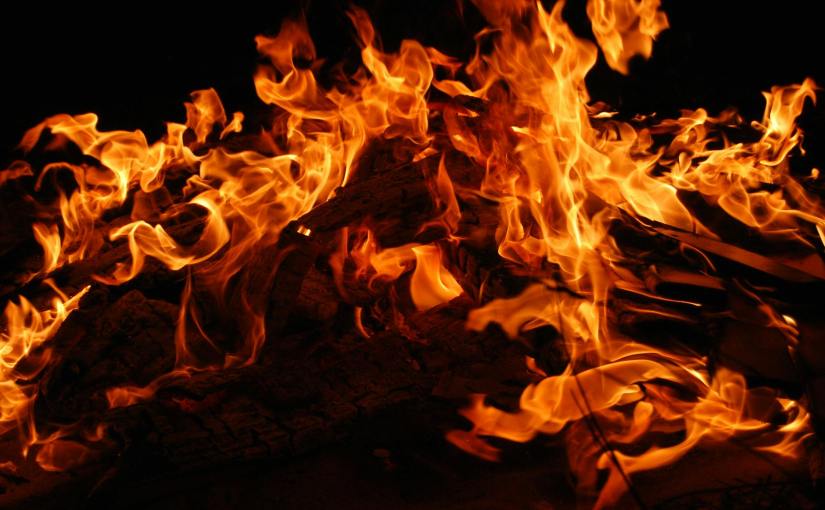
Today, shoveling snow was a welcome distraction from the news reports detailing all the ways in which my country, the United States, is being consumed by flames. I haven’t been able to sleep because I can see the end in the fascists’ means.

They’re using an old playbook, one created in 46 BCE by Julius Caesar, who was made dictator for life by the Roman Senate in the aftermath of his civil war, a conflict of his own design that reduced Roman society to rubble, making it possible for him to take down the 300-year-old republic.

Hitler used Germany’s economic instability as a cudgel to destroy its democratic institutions and institute racist economic and social policies, fueling his rise from chancellor to Fürher in less than eighteen months. If you’ve been wondering what the real purpose of our current administration’s nonsensicle trade tariffs might be, look no further.

This is the big picture, which is bad enough, but my real anxiety stems from more personal concerns: My daughter is a teacher at urban elementary school where many of the students are immigrants. If her school is invaded by ICE agents, I know she’ll stand up to them. She would do anything to protect her kids. I’m sickened by the thought of what might happen to her.

My husband was laid off from his job last September. I’m even more worried about him finding a new one now that I was before. The economy is poised to crash. The stock market already has.

I resent being made to feel this way. I, like many people, have worked hard all my life. I’ve earned everything I have. I’ve been a good citizen, paid my taxes. I don’t deserve it.

I also know that the fear and anxiety everyone is feeling right now is intentional on the part of our sham government: A nation of people who fear for their families and futures will agree to almost anything.

This is isn’t the post I wanted to publish today. I wanted to write something else, about music actually. But this is where I am, where all of us are right now. The best I can hope for is to be proved wrong.

ENP

Crossroads

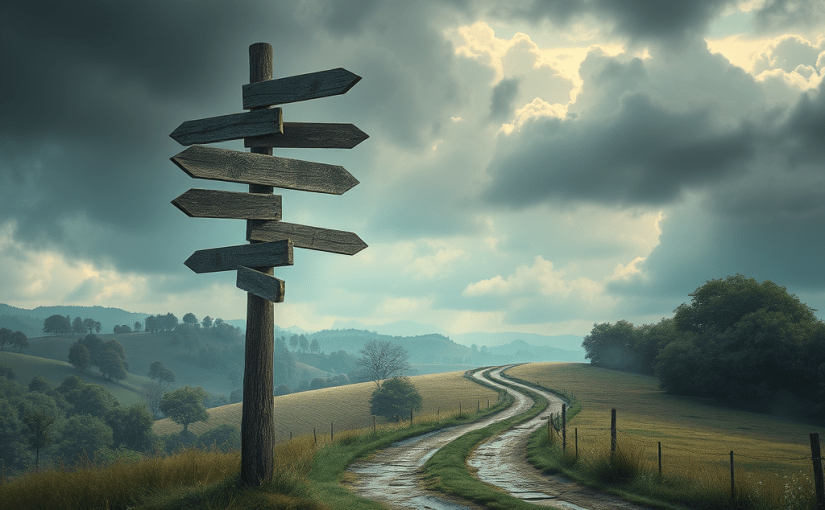
The beginning of 2025 finds my life at a crossroads. I’m very close to finishing my third novel, a project on which I’ve been working for years and desperately want to complete. At the same time, I seem unable to focus on it. My husband was laid off from his job at the end of September, leaving us adrift in a gulf of uncertainty.

Do I sequester myself in some quiet place where I won’t be distracted for a couple of weeks to finish my book? Should I put the book aside for the time being and look for steady nine-to-five work? Or should I try to find more freelance jobs so I can have a flexible schedule and make more money at the same time, allowing me to still work on the novel? If I do this, will I be too tired to work on the book anyway?

Perhaps I should try to bushwhack my own path, combining these options in such a way that I’ll be able to accomplish most of what I want?

I’ve been stuck, waiting for a sign, for some sort of messenger to point the way, getting nothing done in the meantime.

In Western folklore, crossroads often symbolize liminal spaces, places between worlds, middle passages that are neither in one realm nor another. In medieval Europe, the bodies of executed criminals and people who had committed suicide were often buried at crossroads as they were considered a sort of no man’s land, places set apart from the world from which the souls of the dead would be unable to escape.

Lacking a map or any sense of direction, I’ve discovered that exiting a crossroads, where no path is clearly defined, can be almost as difficult for the living.

In many cultures, crossroads are places where demons and spirits appear unexpectedly. In the early 20th century American South, many African Americans believed visiting a crossroads at certain times of day meant encountering the Devil. It brings to mind the frequently covered song, Cross Road Blues, by blues guitar pioneer Robert Johnson, originally released in 1937. According to legend, Johnson, who died mysteriously at age 27, acquired his impressive musical skills after selling his soul to the Devil at a crossroads.

Robert Frost’s famous poem The Road Not Taken, published in 1916, also comes to mind, as crossroads often symbolize indecision, uncertainty, or even regret in literature.

But crossroads can also be places of opportunity. By their nature, they are places where chance meetings are likely to occur, perhaps allowing favorable circumstances to unexpectedly manifest themselves.

Modern psychology says when we find ourselves at a crossroads, unable to decide which direction to take, it often means we are preparing to let go of something to which we are emotionally attached. I often feel this way lately. Whichever direction I choose to go, I’ll be leaving something behind. And because whatever I stand to potentially gain remains undefined, the risk involved in taking any one road seems great.

Robert Frost felt called to take the road “less traveled by,” knowing he’d probably never learn what he might have discovered had he chosen the other path. One of these days, the voice of wisdom will prevail and I’ll know what I should do, too. In the meantime, I’ll be keeping an eye out for the Devil.

ENP

The Shortest Day

You hear a lot about seasonal affective disorder this time of year. Many people find the lack of sunlight depressing, but I don’t mind December’s dark days.

I love how quiet our neighborhood is after the sun sets. No one is outside mowing their lawn. There are no leaf blowers drowning out the music on the radio; no dogs barking at passing strangers. The kids are all inside, their bicycles and baseball gloves tucked away until spring.

I like to spend time in the woods late on December afternoons. The bare branches of sugar maples and white oaks filter the sun’s last, long shafts of light and for a few enchanted minutes the forest floor glows. Deer gather along the treeline looking to browse what’s left of last summer’s swaying grass. When the sun finally sets, the whole sky catches on fire.

On the winter solstice a few years ago, Rob and I drove to Harold Parker State Forest in Andover. The sky was overcast. The layer of crisp snow covering the trail cracked beneath our boots. We spotted the tracks of pacing coyotes by the shore of Salem Pond, and could plainly see the places where beavers had hauled themselves out of the water on the hunt for fresh twigs. We followed the trail of a rafter of turkeys for a while, the waggish birds’ tracks eventually drifting off into the brush. After the hazy white disc of the sun disappeared over the icy pond, leaving the place to the owls and fishers and other creatures of the night, we hiked back to the car feeling like we’d emerged from a dream.

Last year on the shortest day, I met my friend Liz at the Crane Estate in Ipswich. We hiked over the grassy dunes and watched as streaks of pink and lavender formed in the sky above Plum Island. Loons from the north country floated on the sea—their winter home. The air was cold and dry, the kind the makes you feel more alive just for breathing.

A lot of animals hibernate this time of year: bears, and chipmunks, and the chirping wood frogs that fill up vernal pools in the spring. Dark days are good for resting.

On December mornings, Rob and I lie in bed long past the time we normally get up, flannel sheets covering our noses. We talk quietly, waiting for the dawn, our three cats curled up on the rug by the heater. Over the years we’ve been together, these moments have come to define peace.

Long nights lend themselves to reflection. I sit by the radiator in my office and think about my friends who died this year, how much I miss them and what I would say to them if I could. In the gray silence, I reflect on the things we’ve done since last December, the places we went, people we met. I think about my young adult daughter and all the adventures she’s yet to have, and I pray for her to be happy and safe, that she’ll be able to learn from her mistakes and stay strong when life gets hard. I make plans for the future, and wonder what the following year will bring, where we might go when the sun returns.

Often, in my mind, I confuse the winter solstice with New Year’s Day. It always feels like a new beginning to me, much more so than the first of January ever has. Several civilizations celebrated the New Year on the solstice. The Old Norse had Yule, a three-day festival marking the annual return of the light. The Zuni Native American tribe has observed Shalako for centuries, a series of dances that celebrate the New Year by re-enacting the creation of the world. In Wales, the winter solstice celebration of Alban Arthan has persisted since pre-history. It marks the birth of the New Sun, which brings with it a new year and renewed life.

I know there are many people who can’t wait for spring’s longer, warmer days, but I’m happy to savor the serenity this time of year brings, to soak up its stillness so that I can recall it amid the bustle that will return soon enough.

ENP

* A version of this essay appeared on RichardHowe.com on Dec. 14, 2022.

Books Make Great Holiday Gifts

The holiday shopping season is here! If you’d like to purchase a signed copy of The River Is Everywhere or The Blue Bottle for your favorite reader or for yourself, you can buy books directly from me. Copies of either novel are $20 each including US shipping. (Shipping costs to addresses outside the US vary.) Send me a note via this site’s contact page for more info. Happy Holidays!

ENP