Lost World II

When I was growing up, there was a woman who went to our church whose family owned an old farm in central Massachusetts. One day each winter, she would invite anyone who wanted to come to go sledding in the farm’s apple orchard. Everyone looked forward to this outing, especially the kids. The orchard’s sledding hill was steep and wide. It seemed to go on almost forever, ending only at the point where its snow-covered grass met the January sky.

I can still remember the smell of the woodsmoke drifting out of the farmhouse’s chimney when we dragged our sleds out of the car. My sister and I had the cheap plastic ones you could buy at the grocery store, the red kind with yellow handles on the sides. One family always brought a four-seat toboggin, which was fun the first few times you tried it. But the enormous wooden sled would inevitably be abandoned once we got tired of dragging it back up the hill.

Some kids had the round, inflatable sleds that mimicked the look of tires. These were by far the fastest, barely skimming the surface of the snow as they flew by. The flat, plastic blue sleds were our least favorite. They were hard to straighten out after spending months rolled into tubes for storage. They were so lightweight, if you weren’t paying attention they would often slide right down the hill without you.

Most of the adults hung out in the warm farmhouse, sipping mulled wine as they watched us through its antique windows, their wavy glass panes distorting the view like the mirrors in a funhouse. But a few grownups always came outside with us, usually fathers. Sometimes they would sled, too, but mostly they supervised, standing at the top of the hill before the rows of dark, gnarled trees, arms folded, ready to jump at the first sign of a crash or injury. 

Eventually, a pair of mothers would be seen climbing the hill—there always seemed to be two. They’d converse for a bit with the fathers, their long down coats brushing at their ankles, before telling us we needed to come inside and warm up. 

Even on sunny days, it was always bitterly cold. Your hair and mittens would freeze solid and you’d lose the feeling in your fingers and toes. It wasn’t like our winters are now, where the temperature often rises to well above freezing, melting all the snow and ice and leaving behind yawning pools of mud.

Inside, the farmhouse smelled like wet wool and smoldering maple logs. Built in the seventeenth century, its floors were made from foot-wide old growth pine boards, grooved in the places where countless feet had walked across them: farmers wearing handmade boots, running toddlers, women carrying pies. You could feel the centuries of life in the place. It leaked right out of the horsehair plaster walls.

We drank hot cocoa from paper cups and ate cookies sprinkled with sugar while sitting on a hand-braided rug in the front of the woodstove, our boots piled up by the door. Steaming mittens and damp socks decorated the stove’s cast iron surface. Some kids, mostly boys, kept their snow pants on, waiting for the moment they would be allowed to go outside again. 

Our second time out never lasted as long as the first. We always seemed to get cold faster, most likely because we were soaked to the skin, but also because the temperature would start to drop as night came on. Our last sled run of the day often ended just as the sun settled on the western horizon.

On the drive home, my sister and I would usually fall asleep in the car. 

The last time I went sledding at the farm, I was in the sixth grade. The family who owned the land sold it after that. Today, the old farmhouse is long gone. The apple orchard is occupied by a Target store. It was built high on the sledding hill, so you can see it from the highway. 

I drive by the place sometimes. I always wonder if there’s anything left that I might recognize, a stray apple tree maybe, or a glacial erratic that was too large to move. I’ve never checked, though, even after all these years. I suppose I don’t really want to know. I prefer to remember the farm the way it was, full of laughter and magic, all covered in a deep layer of snow.

ENP

*NO AI TRAINING

Stick Season

Up in the White Mountains, locals call this time of year “stick season.” As you might guess, the name comes from the deciduous trees, now bare after a brief few weeks of showing off their colorful foliage. From a distance, the green of the conifer trees growing on the mountainsides—spruce, balsam, hemlock, and white pine—stands out among the patches of gray created by the stands of naked maple and beech trees. Golden tamaracks, the only deciduous conifer trees I know of, can occasionally be spotted among the swaths of green as they prepare to shed their needles for the winter.

Stick season is my favorite time of year in the mountains. Blocked by foliage during the summer, the views stretch far and wide. In spite of sunset coming earlier, the forest is brighter. There’s no snow yet, at least not much, so the ski areas are still closed. Traffic, even on weekends, is at a minimum. Hotel rooms are cheap and plentiful. Parking at trailheads is almost always open.

The best thing about stick season is the quiet. I can hike in the still forest and listen to the calls of boreal chickadees and imagine the mountains as they were before people flocked to them. Occasionally, I cross paths with another person on the trail who, like me, can see beauty in places where many others don’t. We nod and say hello, fellow travelers among the sticks.

ENP

*NO AI TRAINING

Everyday Magic

Back in the early summer, I went for a hike at the state forest near my house. I’ve been there many times, during every season, and I know the woodland pretty well. Along my regular route, there’s a side trail that leads to a ledge overlooking a pond. I don’t always visit the ledge, but this day I did. The first thing I noticed was a pile of what looked like white balloon skins. After looking more closely, I discovered a few more piles, all of them beside shallow holes dug into the sandy soil. Then it dawned on me: turtles! I had come across a nursery where mother turtles had laid their eggs in the spring. The baby turtles had recently hatched, leaving their egg casings behind.

It was amazing to me that I’d been to that exact spot so many times and had never noticed how alive it was.

Magic is everywhere if you’re open to seeing it. Sometimes it’s in the way the sun reflects off my birdbath, creating a dancing globe of light on the tree behind it. It’s in the miniature green bees that visit my garden, the pollinating insects almost too small for me to see without my glasses. There’s magic in a toddler’s smile, and in the look of delight on their face when you smile back.

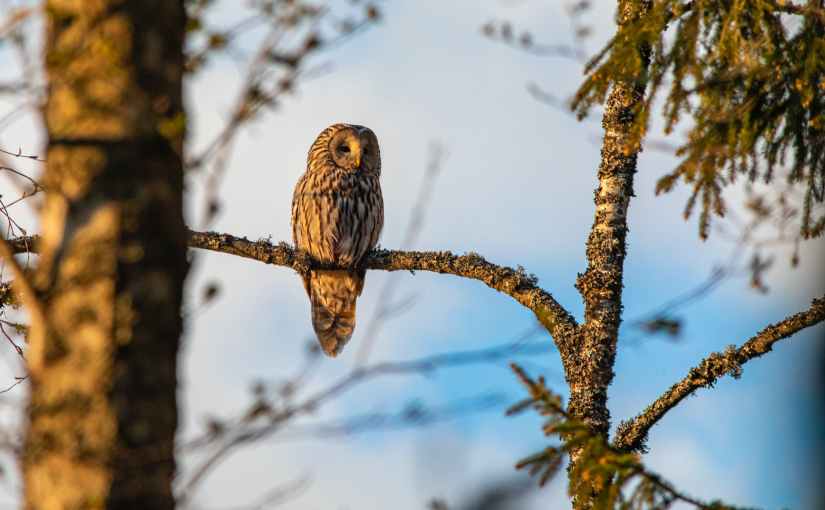
A couple of weeks before I discovered the turtle hatchery, I was with a friend at the same state forest by the same pond, but in a different spot. My friend pointed to an oak limb stretching out over the water. “Look at that bird,” he said. “It’s huge.” An adult barred owl was perched on the branch, its eyes trained on the pond. As we stood and watched, the owl swooped down and grabbed something just below the surface with its talons and flew up into the canopy, never making a sound.

Just yesterday, I was on the porch at Mount Holyoke’s Summit House, a 19th century hotel in Hadley, Massachusetts, that is today a museum and visitors center. Looking down at a flower bed below where I was standing, I spotted a tiny iridescent green bird bouncing from blossom to blossom. The hummingbird made several trips to the flowers, stopping occasionally to rest on top of a nearby fence. Several people walked right past the little jewel, most of them much closer to the bird than I was, but they were all too preoccupied to notice him. On the hummer’s final trip between the flowerbed and the fence, he flew up to the spot where I was standing and landed briefly on the railing beside me. It was as if he knew I’d been watching him.

If you’re quiet and pay close attention to your surroundings, there’s almost no limit to the magical things you can find. I used to think I needed to travel the world to find inspiring, wonderful things to help mitigate life’s hardships and disappointments, and help me come up with ideas for my writing, but that’s not the case at all. Everything I need is wherever I happen to be.

ENP