The Magic of Untranslatable Words

I’ve always believed that written or spoken words, with their ability to communicate our thoughts, wishes, discoveries, joys, and sorrows — sometimes across time and space — carry with them a bit of magic. On the printed page, whispered into a waiting ear, or shouted from the rooftops, language forms the bedrock upon which society and culture are built. 

I’m particularly captivated by words from other languages that cannot be easily translated into English. These often convey ideas and situations we’re all familiar with, but for some reason, when it came to creating English words to describe them, they never quite made the cut. 

For example, ya’arburnee, an Arabic word, expresses the hope that you will die before someone you love because you wouldn’t be able to bear living without them. Literally, it means “may you bury me.” The Japanese have boketto, which describes the act of staring blankly into the distance. From Yiddish there is luftmensch, which refers to someone who is not successful in life or business due to his or her unrealistic ideas and goals. The French have voisinages, a word that refers to the relationships among or between neighbors. And in Brazilian Portuguese, there’s cafuné, a word that describes the motion one makes when running their fingers through a lover’s hair. (Leave it to the Brazilians to require a word just for this.)

Perhaps one of my favorite, and I think one of the most beautiful “untranslatable” words, is saudade, a Portuguese term that conveys a longing for a person, place or time you recollect fondly but know you will very likely never be able to experience again. Derived from the Latin solitate, or “solitude,” saudade acknowledges, mourns, even celebrates the discarded bits of ourselves that lie scattered across the landscape of our lives. 

Saudade also implies a feeling of gratefulness, the glow we feel in our hearts when we remember how lucky we are to have had particular experiences and people in our lives. Like an empty chair at the family dinner table that reminds us of the person who once filled it, the empty spaces within us take on the silhouettes of those who left them behind.

Saudade is different than nostalgia or reminiscences, which are often about remembering with a sort of affection occurrences and relationships no longer relevant in our lives. Even if it’s rooted in the past, saudade lives in the present.

Portuguese art, literature and traditional fado music, which literally means “fate” or “destiny,” are all heavily informed by the concept of saudade. The Portuguese, along with the people living in Portugal’s former colonies, such as Cape Verde and Brazil, have built an entire culture around their unapologetic, deep and passionate feelings about just about everything, from romantic love to sports teams. They approach life with the notion that all emotions, happy or sad, are worth experiencing because collectively they are what make us human. 

Since my daughter moved into her own condo, I’ve come to know saudade well. Madelaine’s absence from our house has often been difficult, as her absence is often a presence all its own. I sometimes find myself thinking about the days before she started kindergarten, when I was a stay-at-home mom. Back then, we were together all the time, sometimes 24 hours a day for weeks on end when my husband was traveling for work. We ate all our meals together. I helped her get dressed every morning. We shopped together and went for walks around the neighborhood. In the wintertime, we snuggled on the couch under a blanket while we watched her favorite show, “Arthur,” on TV. Some days I longed to get away, to have another adult to talk to. There were times when I lost my patience and did things I now regret. 

I grieve the loss of the baby that Madelaine was, and the loss of myself as a young mother. But these memories also bring with them a powerful and bittersweet happiness. I’m grateful I was able to spend so much time with her when she was young, and I believe the time we spent together helped her become the intelligent, thoughtful, successful young woman she is today. The sadness my memories bring helps me better appreciate the time she and I spend together now. Because I know someday I’ll look back at these moments with longing, too.

ENP

Success and Perseverance

It feels like I’ve been editing the manuscript of my third novel for ages now. With every pass I make on it, I keep thinking it will be the last time I’ll need to go through its 300+ pages. But I always seem to find more sections that need to be rewritten, more passive voice that needs to be removed, more modifiers to kill. I’ve actually lost track of the number of times I’ve gone over the entire thing.

As frustrating as this can be, with every round I complete, I know the manuscript is improving and that, eventually, it will be done.

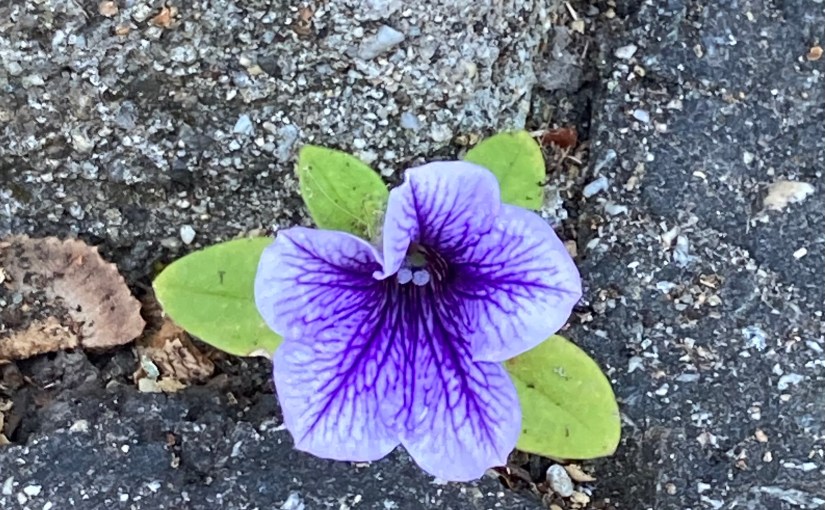
I found this petunia growing out from the foundation of my garage this morning. I haven’t had petunias in years, so I don’t know how it got there. But it reminded me that almost anything is possible if we refuse to be deterred from our goals.

My novel will be finished soon, and it will represent the best work I can do. I won’t settle for less than that just because rewriting and editing are tedious and time consuming, just because I really want it to be done. Almost anything worthwhile requires work.

May you refuse to be deterred from your goals no matter how long it takes to reach them.

ENP

The Shortest Day

You hear a lot about seasonal affective disorder this time of year. Many people find the lack of sunlight depressing, but I don’t mind December’s dark days.

I love how quiet our neighborhood is after the sun sets. No one is outside mowing their lawn. There are no leaf blowers drowning out the music on the radio; no dogs barking at passing strangers. The kids are all inside, their bicycles and baseball gloves tucked away until spring.

I like to spend time in the woods late on December afternoons. The bare branches of sugar maples and white oaks filter the sun’s last, long shafts of light and for a few enchanted minutes the forest floor glows. Deer gather along the treeline looking to browse what’s left of last summer’s swaying grass. When the sun finally sets, the whole sky catches on fire.

On the winter solstice a few years ago, Rob and I drove to Harold Parker State Forest in Andover. The sky was overcast. The layer of crisp snow covering the trail cracked beneath our boots. We spotted the tracks of pacing coyotes by the shore of Salem Pond, and could plainly see the places where beavers had hauled themselves out of the water on the hunt for fresh twigs. We followed the trail of a rafter of turkeys for a while, the waggish birds’ tracks eventually drifting off into the brush. After the hazy white disc of the sun disappeared over the icy pond, leaving the place to the owls and fishers and other creatures of the night, we hiked back to the car feeling like we’d emerged from a dream.

Last year on the shortest day, I met my friend Liz at the Crane Estate in Ipswich. We hiked over the grassy dunes and watched as streaks of pink and lavender formed in the sky above Plum Island. Loons from the north country floated on the sea—their winter home. The air was cold and dry, the kind the makes you feel more alive just for breathing.

A lot of animals hibernate this time of year: bears, and chipmunks, and the chirping wood frogs that fill up vernal pools in the spring. Dark days are good for resting.

On December mornings, Rob and I lie in bed long past the time we normally get up, flannel sheets covering our noses. We talk quietly, waiting for the dawn, our three cats curled up on the rug by the heater. Over the years we’ve been together, these moments have come to define peace.

Long nights lend themselves to reflection. I sit by the radiator in my office and think about my friends who died this year, how much I miss them and what I would say to them if I could. In the gray silence, I reflect on the things we’ve done since last December, the places we went, people we met. I think about my young adult daughter and all the adventures she’s yet to have, and I pray for her to be happy and safe, that she’ll be able to learn from her mistakes and stay strong when life gets hard. I make plans for the future, and wonder what the following year will bring, where we might go when the sun returns.

Often, in my mind, I confuse the winter solstice with New Year’s Day. It always feels like a new beginning to me, much more so than the first of January ever has. Several civilizations celebrated the New Year on the solstice. The Old Norse had Yule, a three-day festival marking the annual return of the light. The Zuni Native American tribe has observed Shalako for centuries, a series of dances that celebrate the New Year by re-enacting the creation of the world. In Wales, the winter solstice celebration of Alban Arthan has persisted since pre-history. It marks the birth of the New Sun, which brings with it a new year and renewed life.

I know there are many people who can’t wait for spring’s longer, warmer days, but I’m happy to savor the serenity this time of year brings, to soak up its stillness so that I can recall it amid the bustle that will return soon enough.

ENP

* A version of this essay appeared on RichardHowe.com on Dec. 14, 2022.

New Podcast Interview

I was recently a guest on the Trevor Roberts Talkfest podcast. We discussed Franco-American history and culture and my second novel The River Is Everywhere. It’s especially exciting because the podcast is based on the West Coast, where few people know anything about Franco-Americans or French Canadians. Trevor was a great host and I enjoyed talking with him.

Episode 40 – Rivers, Roots, and Revelation: Emilie-Noelle Provost’s Franco-American Coming-of-Age Tale is available now on Apple Podcasts, Spotify, iHeart Radio, Amazon Music, Buzzsprout, Podchaser and anywhere else you can listen to podcasts. A video version of my conversation with Trevor will be out soon.

ENP

French-Canadian Legacy Podcast

I’m happy to share that French-Canadian Legacy Podcast episode 102, featuring my interview with Jesse Martineau, is now live. We talked about my second novel, The River Is Everywhere, the coming-of-age story of a Franco-American teenager, and some other things, too. Visit this link for details and ways to listen.

Author Talk

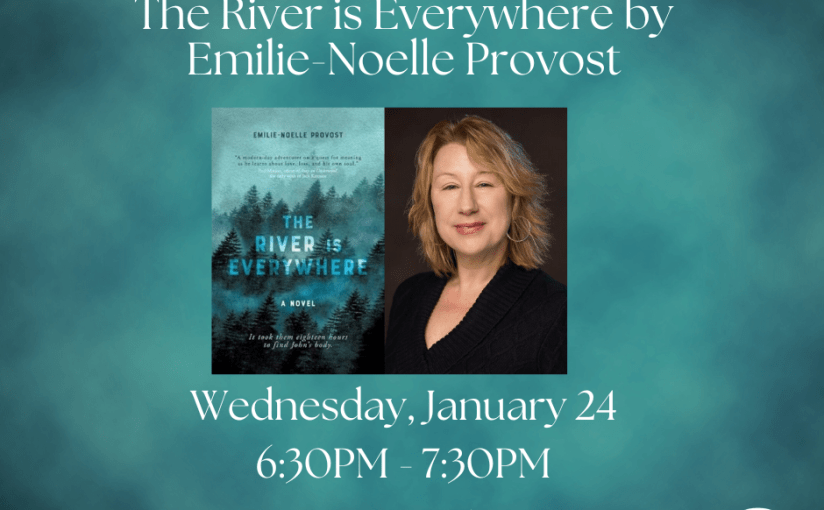
I’ll be at the Pollard Memorial Library in Lowell on January 24 from 6:30 to 7:30 p.m. to talk about my novel, The River Is Everywhere. I’ll also be doing a short reading from the book. Bring your copies for signing. In the event of inclement weather, the talk will be held virtually.

Admission is free, but registration is required so that the library can email the Zoom link to participants if the talk is moved to a virtual platform.

I hope to see you there!

*NO AI TRAINING

The Chairs of Summer

Over the past few years, my husband and I have spent several weekends at the Eagle Mountain House in Jackson, New Hampshire. We began staying at the hotel because it’s close to many of the places we like to go hiking. One of the best things about the hotel, built in 1879, is its enormous wrap-around front porch lined with wooden rocking chairs.

As we sipped coffee on the hotel’s porch on a recent Sunday morning, I started thinking about these chairs: the generations of summer visitors who have sat in them; the conversations they’ve had; the marriage proposals; the breaking of bad news; the cocktails people have enjoyed while taking in the mountain views.

Eagle Mountain’s sturdy rockers reminded me of similar ones on the porch of the historic Gosport Hotel on Star Island, located off the coast of Portsmouth, New Hampshire. I spent several summers hanging out in these chairs growing up. As much as my life changed over those years, the chairs, solid and hard-worn, were always the same.

At the house where I lived as a kid, we had a set of heavy wooden outdoor chairs with removable vinyl cushions. Hand-me-downs from a family member who no longer wanted them, these chairs were monstrosities. It took two adults to move one. The cushions soaked up rainwater like sponges, and if you happened to stub a toe on one of the chairs’ legs, you’d be hopping around for ten minutes, howling. When my friends came over, we usually sat on the lawn.

The first summer I lived on my own, after graduating from college, I bought two green plastic chairs at a hardware store. I lived in Boston and didn’t have a car, so I carried them the three blocks back to my apartment. My roommate and I put the chairs out on our miniature back porch, which overlooked the kitchen of a Chinese restaurant. We spent much of that summer sitting in them while grilling burgers on our rickety hibachi and drinking gin and tonics out of plastic cups.

My husband bought me a foldable canvas sand chair with the Rolling Rock beer logo on it—a promotional item he’d found at a liquor store—when I was pregnant with our daughter. It’s one of the most comfortable beach chairs I’ve owned, but as that summer wore on and my belly grew bigger, I frequently needed his help to get out of it and back into a standing position.

When our daughter was a toddler, we got her a pint-size white resin chair, just the right size for a two-year-old. She used to like to sit outside in it to eat lunch, a 5-gallon bucket serving as her dining table. We were living in our first house at the time. When we sold it we got rid of most of our outdoor furniture, but not that chair. She’ll be 25 this year, and that little seat is still stored up in the rafters of our garage.

For a number of summers, my husband complained about the fact that it’s nearly impossible to find the old fashioned aluminum-frame chairs—the foldable kind with backs and seats woven from vinyl straps—that his parents had when he was growing up. Several years ago, quite by accident, my daughter and I found these chairs for sale at a discount store, and bought one for him for Father’s Day. As a surprise, we put a fancy bow on the chair and set it up in the middle of the garage so he’d find it when he took the trash out. Its metal frame digs into the back of your legs after you’ve been sitting in it for a while, but it’s still the only chair he uses whenever we host a barbecue.

We’ve wiled away many pleasant summer afternoons in the four red plastic Adirondack chairs we bought when we moved into the house where we live now. But they only seem to last a season or two before they have to be replaced. We’re down to two of these chairs now—both sure to break soon. We’re not home a lot on weekends anymore, so we still haven’t decided what to replace them with.

Weighing a mere two pounds each and folding neatly into custom carrying cases, our newest summer chairs are stored in the back of our car. Made of polyester mesh and steel, these two comfy high-tech seats are ideal for relaxing and enjoying drinks and snacks after a long hike. They weren’t inexpensive, but they were worth every penny.

Note: A version of this essay appeared in the July/August 2021 issue of Merrimack Valley Magazine.

ENP

*NO AI TRAINING

Merci Beaucoup!

Thank you to everyone who came to The River Is Everywhere book launch event on March 22. It was amazing to actually see the room full, and I still can’t believe the books sold out! Special thanks to the Dracut Library for hosting the event, and to the Lowell Book Company for handling book sales. Thanks as well to Kevin Harkins of Harkins Photography for taking photos. I very much appreciate all the support.

ENP

Book Release Event

Just a short post to announce that the book release event for The River Is Everywhere will be held on March 22 at 6:30 p.m. at the Parker Memorial Library in Dracut, Mass. I’d love to see you there if you are in the area. Special thanks to the Lowell Book Company for helping me make it happen. Now I just need to remember how to speak in front of group of people.

ENP

New Novel Coming Soon!

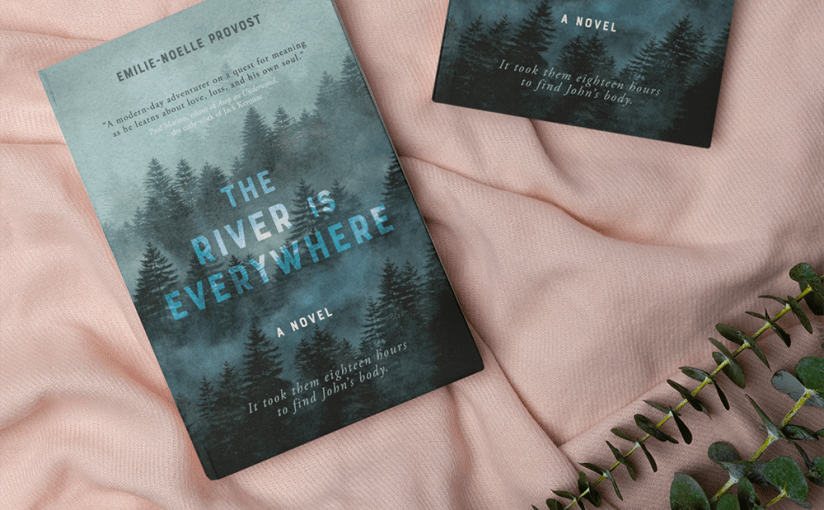
This is just a quick post to let everyone know that, at long last, The River Is Everywhere will be released on March 14. The book is currently available for pre-order on Amazon and Barnes and Noble. I should have information about the book’s launch event soon. When I do, I’ll post it here.

In the meantime, you can check out some of the book’s early reviews on Goodreads.

Once the book is launched, I will be available for readings and to meet with book clubs, either in person or virtually. For more information about either of these, send me a message via my contact page and I’ll get back to you soon.

If you are a member of the media who would like to write a review of The River Is Everywhere, send me a message and I will arrange for you to receive an advanced reader copy of the book.

ENP