The Shortest Day

You hear a lot about seasonal affective disorder this time of year. Many people find the lack of sunlight depressing, but I don’t mind December’s dark days.

I love how quiet our neighborhood is after the sun sets. No one is outside mowing their lawn. There are no leaf blowers drowning out the music on the radio; no dogs barking at passing strangers. The kids are all inside, their bicycles and baseball gloves tucked away until spring.

I like to spend time in the woods late on December afternoons. The bare branches of sugar maples and white oaks filter the sun’s last, long shafts of light and for a few enchanted minutes the forest floor glows. Deer gather along the treeline looking to browse what’s left of last summer’s swaying grass. When the sun finally sets, the whole sky catches on fire.

On the winter solstice a few years ago, Rob and I drove to Harold Parker State Forest in Andover. The sky was overcast. The layer of crisp snow covering the trail cracked beneath our boots. We spotted the tracks of pacing coyotes by the shore of Salem Pond, and could plainly see the places where beavers had hauled themselves out of the water on the hunt for fresh twigs. We followed the trail of a rafter of turkeys for a while, the waggish birds’ tracks eventually drifting off into the brush. After the hazy white disc of the sun disappeared over the icy pond, leaving the place to the owls and fishers and other creatures of the night, we hiked back to the car feeling like we’d emerged from a dream.

Last year on the shortest day, I met my friend Liz at the Crane Estate in Ipswich. We hiked over the grassy dunes and watched as streaks of pink and lavender formed in the sky above Plum Island. Loons from the north country floated on the sea—their winter home. The air was cold and dry, the kind the makes you feel more alive just for breathing.

A lot of animals hibernate this time of year: bears, and chipmunks, and the chirping wood frogs that fill up vernal pools in the spring. Dark days are good for resting.

On December mornings, Rob and I lie in bed long past the time we normally get up, flannel sheets covering our noses. We talk quietly, waiting for the dawn, our three cats curled up on the rug by the heater. Over the years we’ve been together, these moments have come to define peace.

Long nights lend themselves to reflection. I sit by the radiator in my office and think about my friends who died this year, how much I miss them and what I would say to them if I could. In the gray silence, I reflect on the things we’ve done since last December, the places we went, people we met. I think about my young adult daughter and all the adventures she’s yet to have, and I pray for her to be happy and safe, that she’ll be able to learn from her mistakes and stay strong when life gets hard. I make plans for the future, and wonder what the following year will bring, where we might go when the sun returns.

Often, in my mind, I confuse the winter solstice with New Year’s Day. It always feels like a new beginning to me, much more so than the first of January ever has. Several civilizations celebrated the New Year on the solstice. The Old Norse had Yule, a three-day festival marking the annual return of the light. The Zuni Native American tribe has observed Shalako for centuries, a series of dances that celebrate the New Year by re-enacting the creation of the world. In Wales, the winter solstice celebration of Alban Arthan has persisted since pre-history. It marks the birth of the New Sun, which brings with it a new year and renewed life.

I know there are many people who can’t wait for spring’s longer, warmer days, but I’m happy to savor the serenity this time of year brings, to soak up its stillness so that I can recall it amid the bustle that will return soon enough.

ENP

* A version of this essay appeared on RichardHowe.com on Dec. 14, 2022.
Pen & Ink

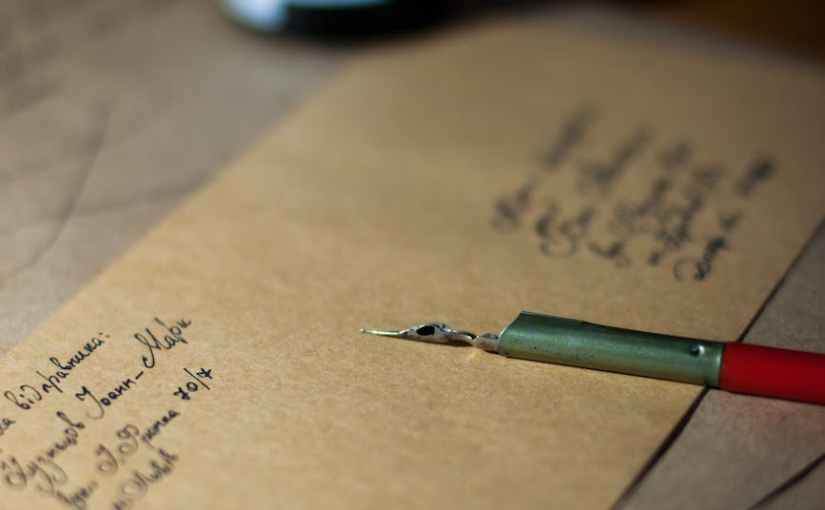
I recently returned home from a weekend away to discover that an unexpected package had come in the mail. It was from an old college friend who lives in northern Maine. She still means a lot to me, though we don’t see one another often. Inside the package was a book, an illustrated copy of the French fairy tale The White Cat, along with a beautiful handwritten letter and a photograph of her two teenage sons.

“When I saw this book, I thought of you,” my friend wrote. It was one of the nicest surprises I’ve had in a long time.

In this age of text messages, email, and Zoom calls, handwritten letters almost seem like outdated relics of communication, items to be shelved alongside rotary-dial telephones and telegraph machines. And while I think having the ability to send some forms of correspondence electronically is a godsend, paying my electricity bill online, for example, I believe it’s time for the handwritten personal letter to make a comeback. 

I can think of few better ways to let someone know how much you care about them than to sit down in a quiet place away from distractions, choose a beautiful piece of stationery, and spend time creating a document in your own handwriting that’s meant for that person alone.

Growing up, I wrote letters constantly, sometimes two or three a day. It was the only way I could communicate with friends who lived too far away to call, which in some cases was only a few towns over. (“Long distance” calls cost a bundle then, and were generally reserved for special occasions or emergencies.) I had a large collection of stationery, pens, and note cards, and relatives would often give me books of postage stamps as Christmas or birthday gifts.

In addition to writing letters to friends, I had pen pals in far away places, some of whom I never met. One of my pen pals in high school, a person I wrote to for years, lived in a small town in Vermont, a place so vastly different from my urban neighborhood near Boston that I had trouble imagining what it was like. Through his letters, I came to know Vermont’s culture, food, weather, and landscape in a way that was second only to being there.

In college, I corresponded with a friend who was studying in Japan, amassing a collection of exotic postage stamps and snapshots. I received letters weekly from another friend, a Mormon who was serving his mission in Las Vegas’ underbelly. I still remember the sad and sometimes grisly tales he told about things he saw and experienced there.

When I was a senior in college, I often wrote letters to my sister, who was a homesick freshman at a different university. I still have her replies. Among the only letters I have ever received from her, they tell the story of the time we became friends, rather than siblings who had no choice about our relationship.

I also have shoeboxes full of letters from high school and college boyfriends, some of them serious and more than an inch thick when folded into their envelopes. Others are humorous. One of them begins, “I can’t wait to see what you look like after you get your braces off.”

When my daughter, Madelaine, started college in 2016, I sent her several letters. They sat in her mailbox for months because it never occurred to her to check it. Although I love my smartphone and can’t imagine living or working without texting or the internet, I feel lucky to be a Gen Xer — fluent in both 20th and 21st century technology. Most people Madelaine’s age will never know what it’s like to stand by the window waiting for the mail to be delivered, or the thrill of opening the mailbox to find a much-anticipated envelope. 

Along with the news of the day, letters deliver their writers. Individual personalities, tastes, and moods are revealed by the choice of paper, the color of the ink, and in the unique slant of someone’s handwriting. Each is a singular creation, making a handwritten letter to communication what “slow food” is to cuisine. Like home-baked bread or a plump heirloom tomato, I’d forgotten how good letters could be until I received one.

ENP

Note: A version of this essay appeared in the September-October 2019 issue of Merrimack Valley Magazine.

*NO AI TRAINING